The $2 million wake-up call
Last month, a seed-stage fintech startup lost a $2 million annual contract three weeks before closing. The procurement team at their Fortune 500 prospect took one look at their shiny new SOC 2 Type 1 report and said, “We need Type 2.”
The founders had spent $15,000 and two months getting that Type 1 report. They thought they were being smart, moving fast. Now they faced a choice: wait six more months for Type 2 while their runway burned, or walk away from the deal.
This scenario plays out hundreds of times each quarter across the startup ecosystem. Companies rush to get SOC 2 Type 1, thinking it will unlock enterprise sales, only to discover their prospects want more. Meanwhile, others spend six to twelve months pursuing Type 2, watching deals slip away to competitors who moved faster with Type 1.
The conventional wisdom says Type 1 is a snapshot and Type 2 is a movie. That metaphor misses what actually matters: your deal pipeline, your buyer personas, and how much runway you have to burn. The real question is not which type is “better” but which one matches your business reality right now.
What auditors actually check
Pull quote: “Type 1 asks ‘did you design it right?’ Type 2 asks ‘did it actually work for months?‘”
Forget the textbook definitions for a moment. When an auditor walks into your office (or more likely, joins your Zoom), here is what they are actually looking for.
For Type 1, they want to see your blueprint. Do you have the right controls designed? Are your policies written? Can you show them your security architecture diagram? They are checking if you built the house according to code, but they are not testing if the plumbing actually works. The entire audit happens over a few days to a couple of weeks. You show them your controls exist and are properly designed as of a specific date. Did you think through the security implications? Do you have a plan?
Type 2 is different. The auditor wants to see your controls operating consistently over time. They will pull samples from different months. If you claim you do quarterly access reviews, they want to see evidence from Q1, Q2, and Q3. If your policy says you encrypt backups, they will check backups from January, April, and September. The audit observation period runs for at least three months, often six to twelve.
The critical difference: Type 1 proves you know what you should be doing. Type 2 proves you actually did it, repeatedly, without fail.
Recruit CRM learned this the hard way. They sailed through their Type 1 audit in three days. Their security controls looked pristine on paper. Six months later, when they went for Type 2, the auditor found they had not been conducting the monthly vulnerability scans their policy required. They had the scanning tool, they had the policy, but they had only run scans twice in six months. The Type 2 audit exposed the gap between intention and execution.
When Type 1 makes business sense
Three situations make Type 1 the right choice, despite its limitations.
First: you have enterprise deals walking out the door today. When prospects are asking for “any SOC 2 report” and your sales team is hearing “we just need something for our files,” Type 1 can unstick those deals. You can go from zero to report in 30-45 days if you hustle.
Pull quote: “Many prospects now reject Type 1 reports entirely, but SMB and mid-market often just need the checkbox”
Second: your company is less than eighteen months old. You literally cannot demonstrate controls operating over time because you have not existed long enough. Auditors understand this. Your prospects might too. A Type 1 report shows you are taking security seriously from day one, even if you cannot yet prove long-term operational discipline.
Third: you just implemented major infrastructure changes. Maybe you migrated from AWS to Google Cloud, or completely rebuilt your authentication system. Your old controls no longer apply. Type 1 lets you validate your new design quickly while you build up the operational history for Type 2.
Kin Analytics exemplifies when Type 1 works. This 11-person data warehousing startup was four months into a sales cycle with a large hospital system. The security team demanded a SOC 2 report before moving to contract. Kin’s founders spent three days with an auditor, walked away with a Type 1 report, and closed the deal two weeks later. The hospital’s CISO later admitted they mainly needed evidence that Kin was not completely winging it on security.
But here is what Kin discovered six months later: their next three enterprise prospects all rejected the Type 1 report. They ended up rushing into a Type 2 audit anyway. The Type 1 bought them six months and one customer. Whether that trade-off works depends entirely on your specific pipeline.
The hidden costs nobody mentions
The audit fees are just the beginning. The real costs of SOC 2 hide in the shadows of your P&L.
Pull quote: “The actual Type 2 audit fee might be $30,000, but the true cost approaches $150,000 when you factor in everything”
Start with the obvious: audit fees. Type 1 runs $7,000 to $15,000 depending on your complexity and auditor. Type 2 costs $20,000 to $50,000, sometimes more if you have multiple products or complex infrastructure. But that is table stakes.
Now add the hidden time sink. For Type 2, someone on your team will spend two to three hours every week collecting evidence, updating documentation, and managing the audit process. Over a six-month audit period, that is 50-75 hours of work. If your Head of Engineering is doing this (and in most startups, they are), you are burning $7,500 to $11,000 worth of their time just on evidence collection.
The control implementation costs hit harder. Both Type 1 and Type 2 require the same controls, but Type 2 forces you to actually operate them consistently. Those quarterly access reviews? Someone needs to do them. The monthly vulnerability scans? Someone needs to run them, review them, and document the remediation. The security awareness training? Every new employee needs to complete it within 30 days, and you need to track it.
Bytescale calculated their true Type 2 costs: $30,000 for the audit, $40,000 in engineering time over six months, $25,000 in new security tools, and $20,000 in outside consultants to help prepare. Total damage: $115,000. But they also calculated the return: after getting Type 2, their enterprise deal close rate jumped from 12% to 34%. They reduced time spent on security questionnaires by 70%.
The automation platforms change this equation dramatically. Thoropass, Vanta, and similar tools run $15,000 to $30,000 annually but can cut evidence collection time by 60-80%. They continuously monitor your controls and automatically gather evidence. Instead of spending three hours weekly on compliance, you spend three hours monthly. The math usually works out if you are closing enterprise deals, but it is another cost most founders do not anticipate.
Why does everyone underestimate this so badly? Because audit firms quote the audit fee, not the total cost of compliance. And because first-time founders assume their existing processes will naturally meet SOC 2 requirements. They rarely do.
Transitioning from Type 1 to Type 2
You got Type 1. Some deals closed, others did not. Now the board wants Type 2. Here is how to make the transition without starting from scratch.
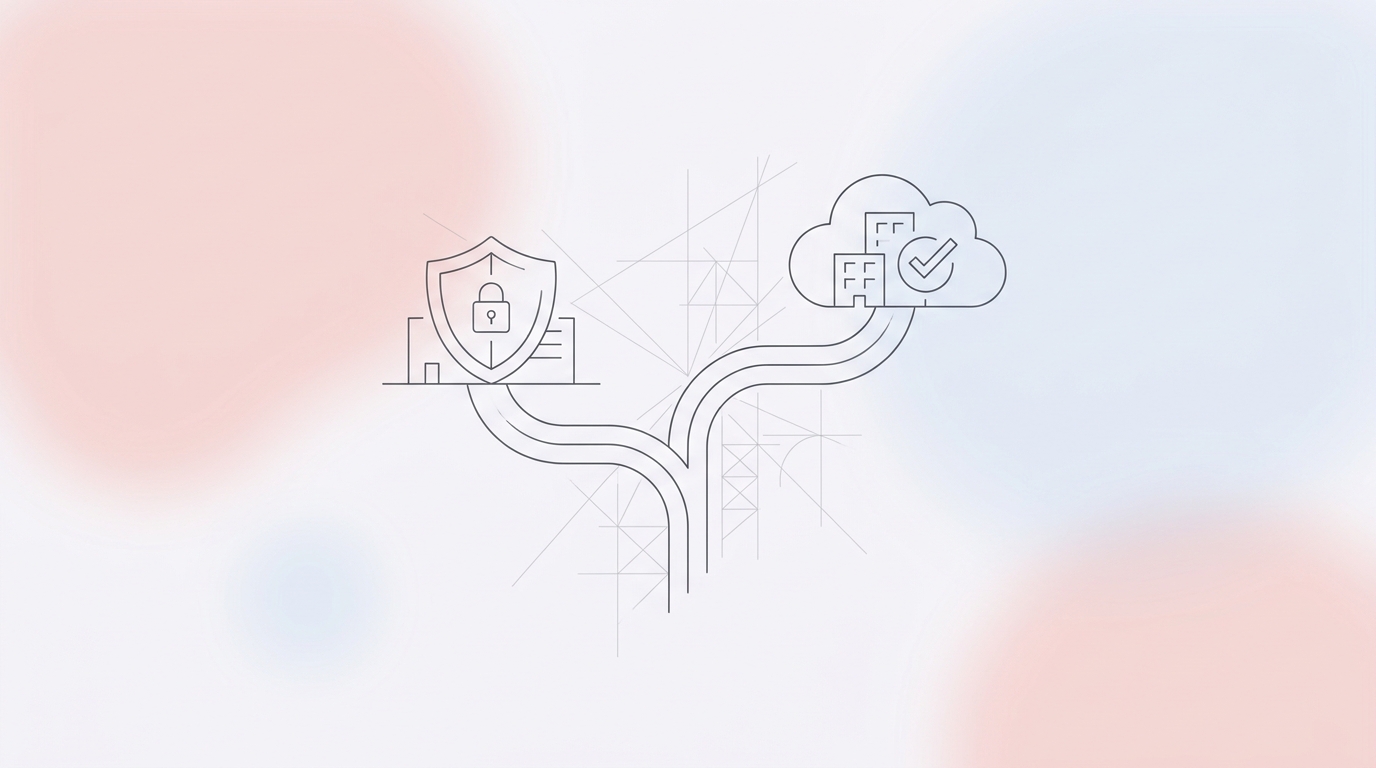
The good news: your Type 1 controls become the foundation for Type 2. You do not throw away anything. The policies you wrote, the controls you implemented, the security architecture you documented, it all carries forward. Think of Type 1 as building the kitchen; Type 2 is actually cooking meals in it every day for six months while someone watches.
Pull quote: “Smart companies start their Type 2 audit observation period the day after their Type 1 audit ends”
Start your Type 2 observation period immediately after getting Type 1. Do not wait. Every day you delay is another day before you can deliver a Type 2 report to prospects. The clock for Type 2 starts ticking the moment you designate the observation period start date. If you wait three months to begin, you just added three months to your Type 2 timeline.
The operational transition is where companies stumble. Type 1 let you say “we conduct access reviews quarterly.” For Type 2, you need evidence of actually conducting them. Set up recurring calendar invites for every control activity. Create a simple spreadsheet tracking when each control was performed and by whom. Take screenshots, save logs, document everything. The auditor will ask for samples, and “we forgot to do it that month” is not an acceptable answer.
Companies using automation platforms transition 67% faster, according to data from Thoropass. The platform enforces the control schedule, automatically collects evidence, and alerts you when something needs attention. Without automation, someone needs to own this religiously. That someone is usually already overwhelmed with their actual job.
The bridge letter strategy helps during transition. After your Type 1 expires but before Type 2 is ready, your auditor can issue a bridge letter stating you are currently under Type 2 examination. Some prospects accept this as temporary evidence of ongoing compliance. Not all, but enough to keep some deals moving.
One critical tip: use the same auditor for both Type 1 and Type 2. They already understand your environment, your controls, and your team. Switching auditors means starting the education process over, adding weeks to your timeline and thousands to your costs.
The decision framework
Here is the framework successful companies use to choose between Type 1 and Type 2.
Start with your pipeline reality. List every deal over $100,000 in your next six months. For each, note whether the prospect has explicitly asked for SOC 2, and if so, which type. Call your champions and directly ask: “Would SOC 2 Type 1 be sufficient, or do you need Type 2?” The answers might surprise you. Many procurement teams have rigid requirements, others are flexible if you can explain your security posture clearly.
Next, consider your customer profile. Selling to Fortune 500? You need Type 2, full stop. Selling to 50-person startups? Type 1 often suffices. Healthcare, finance, and government buyers lean heavily toward Type 2. Marketing technology and sales tools buyers often accept Type 1. There are exceptions, but these patterns hold.
Factor in your funding timeline. If you are raising Series A in six months and need enterprise logos to juice your valuation, Type 1 might get you those reference customers faster. If you just raised and have eighteen months of runway, go straight to Type 2 and do it right.
Consider competitive dynamics. If your main competitor has Type 2, your Type 1 report becomes a liability in competitive deals. Procurement teams love to disqualify vendors on compliance technicalities. Do not give them the ammunition.
Pull quote: “If you have six months runway before enterprise sales matter, skip Type 1 entirely and go straight to Type 2”
The three-month Type 2 option changes the calculus. Instead of a six or twelve-month observation period, you can get Type 2 with just three months of operating history. It is more expensive per month (the auditor needs to work faster), and some buyers view shorter observation periods skeptically, but it is real Type 2. For venture-backed startups racing against runway, three-month Type 2 often beats Type 1.
The decision tree simplifies to this: If you need SOC 2 in the next 45 days to close immediate deals, get Type 1. If you can wait three to six months, go straight to Type 2. If you are not sure, ask your prospects directly. Their answer is the only one that matters.
Playing the long game
The smartest companies view SOC 2 not as a compliance checkbox but as a business acceleration tool. They understand that security questionnaires will keep coming whether you have SOC 2 or not, but the report dramatically shortens those conversations.
The real ROI comes from deal velocity. Before SOC 2, the average enterprise sales cycle runs 6-9 months, with 2-3 months stuck in security review. After SOC 2 Type 2, that security review drops to 2-3 weeks. For a company closing $2 million in annual contract value per quarter, shortening sales cycles by two months means an extra $4 million in recognized revenue per year.
Start preparing for Type 2 even if you get Type 1 first. Build the operational muscle early. Run your controls consistently from day one. Document everything. When you inevitably need Type 2, you will be ready to start the observation period immediately.
Choose your auditor based on your buyer’s expectations, not just price. Big Four firms (Deloitte, PwC, EY, KPMG) cost more but carry weight with Fortune 500 procurement teams. Smaller firms work fine for SMB and mid-market buyers. Ask your prospects which auditors they respect. One founder discovered their key prospect specifically trusted BDO audits because of a prior relationship. Switching auditors added $8,000 to their costs but closed a $3 million deal.
Having the right security policies in place before you start the audit process saves significant time. Our guide to 10 essential information security policy examples covers the foundational documents auditors expect to see.
Build compliance into your culture, not bolt it on. The companies that struggle with Type 2 treat security as a separate activity from building product. The ones that succeed make security part of how they naturally operate. Every new feature considers security implications. Every new hire gets security training. Every vendor gets evaluated for risk. When the auditor shows up, you are not scrambling to prove compliance; you are just showing them how you normally work.
The transition from Type 1 to Type 2 is not just about meeting auditor requirements. It is about building a security program that scales with your business. The controls you implement for SOC 2 become the foundation for ISO 27001, HIPAA, PCI DSS, and whatever else your enterprise buyers throw at you later. If ISO 27001 is on your roadmap, understanding the real costs of certification early will help you plan the budget and timeline.
Your prospects do not actually care whether you have Type 1 or Type 2. They care whether you will protect their data, maintain availability, and not become a headline about the latest security breach. The SOC 2 report is just evidence. The more comprehensive your evidence, the faster deals close.
Choose based on your business reality today, but build for where you need to be in twelve months. If that means starting with Type 1, fine. But start operating like you are already under Type 2 observation. When the time comes to upgrade, and it will come, you will be ready.
The companies winning enterprise deals are not the ones with the fanciest security programs. They are the ones who understood early that compliance is a growth accelerator, not a cost center. They picked the right SOC 2 approach for their stage, executed it efficiently, and used it to systematically remove friction from their sales process.
That $2 million deal the fintech startup lost? They got Type 2, went back to the same prospect eight months later, and closed a $3.5 million contract. The delay hurt, but they learned the lesson: in enterprise sales, the right compliance at the wrong time is still wrong. Pick your path based on your pipeline, not your preferences.