· Jane Iamias · business proposal examples · 24 min read
10 Powerful Business Proposal Examples for 2025
Explore our curated list of 10 expert-vetted business proposal examples. Get actionable templates and tips for B2B SaaS, enterprise sales, and more.
Crafting a compelling business proposal is often the final, critical step between a promising conversation and a closed deal. For B2B SaaS and enterprise vendors, however, a generic template rarely suffices when engaging with sophisticated buyers like CIOs and CTOs, or when navigating complex RFPs and security addenda. The difference between a proposal that gets signed and one that gets ignored lies in its strategic construction and its ability to communicate value with precision.
This guide moves beyond basic outlines, offering a deep dive into 10 meticulously analysed business proposal examples. We will deconstruct each document to reveal the tactics that work, providing section-by-section explanations, customisable sample language, and practical review checklists. You will learn how to structure everything from a technical security proposal to a sales-focused partnership agreement.
Our focus is on actionable insights. We’ll explore the strategic elements behind each example, showing you how to articulate your solution’s value, build trust with key decision-makers, and create documents that serve as powerful sales tools. By understanding the anatomy of these successful proposals, you can refine your approach, shorten your sales cycles, and more effectively convert high-value opportunities into secured revenue. This collection is your blueprint for creating proposals that don’t just present information, they persuade and win.
1. Service Proposal for Consulting Services
A service proposal for consulting services is a cornerstone document used by firms like McKinsey & Company, Deloitte, and Boston Consulting Group to secure high-value engagements. It’s a strategic blueprint outlining how a consultancy will diagnose and solve a potential client’s specific business challenges. Unlike a generic sales pitch, this type of proposal is highly customised, demonstrating a profound understanding of the client’s industry, operational pain points, and strategic objectives.

These documents are not merely about listing services; they are persuasive arguments built on data, expertise, and a clear vision for the client’s success. The structure typically includes a deep dive into the problem statement, a detailed methodology, project scope, specific deliverables, team qualifications, a precise timeline, and a transparent fee structure.
Strategic Analysis
The core strength of a top-tier consulting proposal is its diagnostic precision. It reframes the client’s perceived problem into a solvable challenge with measurable outcomes. For example, instead of just acknowledging a client’s desire for “digital transformation,” a proposal from Accenture would break this down into specific workstreams like “supply chain process automation” or “customer data platform implementation.”
Key Insight: The best consulting proposals sell a specific, quantifiable outcome, not just a block of consulting hours. They transform abstract goals into a concrete project plan, making the investment feel tangible and justified for stakeholders like the CIO or CTO.
Actionable Takeaways
To create compelling service proposals that resonate with enterprise clients, B2B vendors should adopt a similar, consultative approach.
- Customise Extensively: Avoid generic templates. Reference specific conversations, use the client’s internal terminology, and align your solution directly with their stated quarterly or annual goals. This shows you’ve listened carefully.
- Quantify the Value: Don’t just list features; calculate the potential return on investment (ROI). For a security addendum, this could mean quantifying the cost of a potential data breach versus the cost of your solution.
- Showcase Your A-Team: Include brief biographies of the key team members who will work on the project. This is particularly crucial when selling to technical leaders who want to know they are working with peers.
2. Software Development Project Proposal
A software development project proposal is a highly technical and detailed document used by development agencies and enterprise service providers like IBM or Infosys to secure custom software projects. It serves as a comprehensive plan that translates a client’s business needs into a tangible development roadmap. This document moves beyond a simple quote, meticulously detailing the project’s scope, technology stack, architecture, development phases, and resource allocation.

This type of business proposal is crucial for aligning technical and business stakeholders. It typically includes wireframes or mock-ups, a breakdown of sprints or milestones, definitions of key deliverables, and a transparent cost analysis. The goal is to provide absolute clarity and mitigate risk by defining every aspect of the project before any code is written, often building upon a detailed business requirements document.
Strategic Analysis
The strength of a winning software development proposal lies in its architectural clarity and risk mitigation. It demonstrates not just what will be built, but how it will be built securely, scalably, and efficiently. For instance, a proposal from a firm like TCS for a new e-commerce platform wouldn’t just list features; it would include a system architecture diagram, justify the choice of a microservices-based approach over a monolith, and detail the CI/CD pipeline.
Key Insight: Elite software proposals sell confidence, not just code. They address the unspoken concerns of a CTO or Head of Engineering, such as technical debt, scalability, and long-term maintenance, proving you are a strategic partner, not just a team of coders.
Actionable Takeaways
To craft software development proposals that win over technical decision-makers and secure high-value projects, focus on precision and foresight.
- Define Clear Acceptance Criteria: For each feature or user story, specify the exact conditions that must be met for it to be considered complete. This prevents scope creep and future disputes.
- Visualise the Solution: Include wireframes, mock-ups, or even interactive prototypes. Visual aids make the abstract concept of the software tangible and help stakeholders envision the final product.
- Incorporate Contingency: Add a contingency buffer (typically 10-20%) to your timeline and budget. This demonstrates experience and prepares the client for unforeseen challenges, building trust through transparency.
3. Marketing Campaign Proposal
A marketing campaign proposal is a persuasive document crafted by advertising agencies or in-house marketing teams to secure approval and budget for a specific promotional initiative. Far more than a simple creative brief, this proposal outlines the entire strategic framework, from market analysis and target audience segmentation to campaign execution and performance measurement. It’s the business case for a marketing investment, used by global firms like WPP and Ogilvy to align stakeholders on a shared vision.
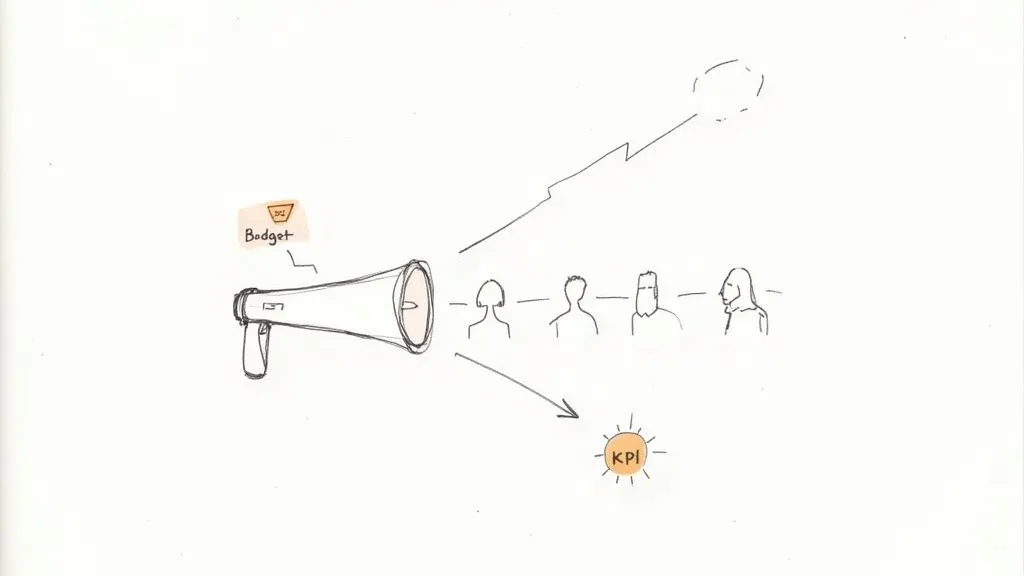
These documents connect creative concepts to commercial outcomes. They typically include a competitor analysis, a detailed media plan, budget allocation across channels, creative mock-ups, a content calendar, and clearly defined key performance indicators (KPIs). The goal is to demonstrate a rigorous, data-informed approach to achieving specific business goals, such as lead generation or brand awareness.
Strategic Analysis
The most effective marketing campaign proposals are built on a foundation of insightful market positioning. They don’t just present a clever slogan; they justify why a particular creative direction and channel mix will resonate with a specific audience segment and outmanoeuvre competitors. For instance, a proposal from Publicis Groupe for a new B2B SaaS product would detail how a LinkedIn-focused content strategy targeting VPs of Engineering will generate more qualified leads than a broader social media campaign.
Key Insight: A winning marketing proposal sells a predictable return, not just a creative idea. By clearly defining success metrics and proposing an A/B testing framework upfront, it transforms a creative expense into a measurable growth investment for a CMO or Head of Sales.
Actionable Takeaways
To develop marketing proposals that secure buy-in and drive results, SaaS and enterprise vendors should adopt a similarly strategic, data-first mindset.
- Define Success Metrics Early: Before discussing creative concepts, agree on the primary KPIs. Will success be measured by click-through rate, cost per lead, or pipeline contribution? This aligns everyone’s expectations.
- Visualise the Plan: Use charts to illustrate budget allocation and projected reach. Include a content calendar or timeline to show the campaign cadence, making the plan tangible and easy to understand.
- Present Creative Options: Offer two or three distinct creative concepts with a clear rationale for each. This gives stakeholders a sense of ownership and allows for collaborative decision-making.
4. Construction and Renovation Proposal
A construction and renovation proposal is a highly detailed document used by firms like Turner Construction or Bechtel Corporation to bid on residential, commercial, or infrastructure projects. This proposal serves as a comprehensive plan, detailing every facet of the project from inception to completion. It moves far beyond a simple quote, providing a granular breakdown of costs, materials, timelines, and safety protocols.
This document is foundational for establishing trust and managing expectations. It typically includes architectural drawings, material specifications, labour and equipment costs, a phased project timeline, safety compliance measures, and warranty details. For large-scale projects, it acts as the master reference document for clients, architects, and subcontractors.
Strategic Analysis
The strength of a winning construction proposal lies in its transparent risk management. It doesn’t just outline the ideal path; it anticipates potential issues and presents clear processes for handling them. For instance, instead of just providing a total cost, a sophisticated proposal from Skanska would itemise costs and explicitly include a 10-15% contingency fund, explaining its purpose for unforeseen circumstances.
Key Insight: Elite construction proposals sell certainty and professionalism. They meticulously define the change order process, payment milestones, and include proof of insurance and bonding, which reassures clients that the project is protected from financial and operational risks.
Actionable Takeaways
To create construction proposals that win high-value contracts, contractors must demonstrate meticulous planning and transparency.
- Itemise Everything: Break down costs for materials, labour, permits, and equipment. This transparency builds trust and allows clients to understand exactly where their investment is going.
- Define the “What Ifs”: Clearly document the process for handling change orders. Specify how new requests will be quoted, approved, and integrated into the project timeline and budget to prevent scope creep and disputes.
- Show, Don’t Just Tell: Include detailed drawings, 3D visualisations, and a portfolio of similar completed projects. Providing references and proof of insurance adds a powerful layer of credibility that sets you apart from the competition.
5. E-Commerce Solution Proposal
An e-commerce solution proposal is a specialised document designed to persuade a business to adopt a new or upgraded online retail platform. It goes far beyond a simple quote for a website, detailing a comprehensive strategy for building a digital sales channel. Vendors like Shopify Plus partners, Adobe Commerce developers, and BigCommerce agencies use these proposals to outline everything from platform selection and custom design to payment gateway integration and inventory management.
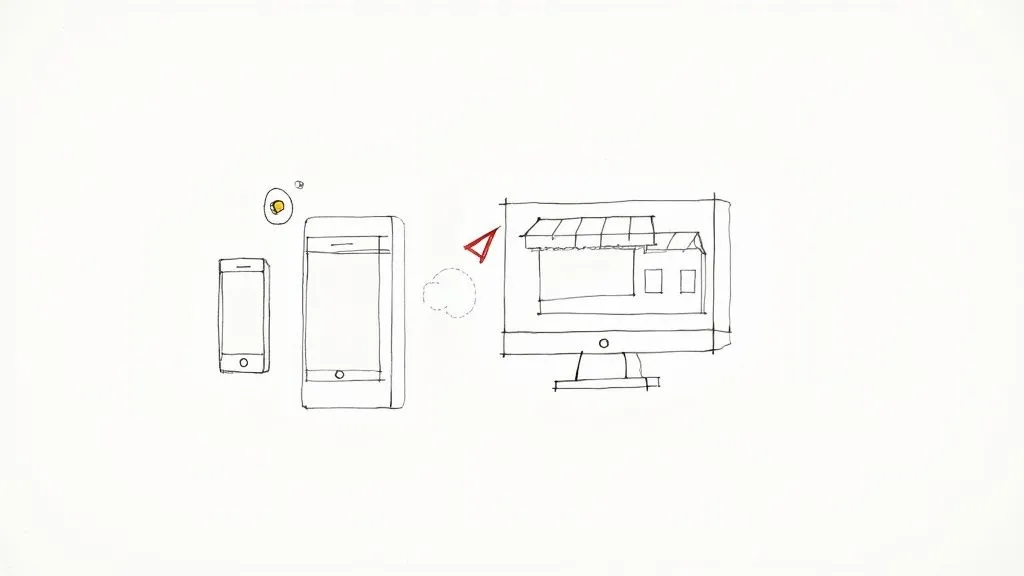
This type of business proposal example is critical for companies aiming to establish or scale their online revenue streams. The document must articulate a clear vision for the client’s digital storefront, connecting technical features directly to commercial goals like increased conversion rates and higher average order values. It typically includes a phased implementation roadmap, projected ROI calculations, and a detailed plan for customer support and training.
Strategic Analysis
The most effective e-commerce proposals focus on the entire commercial ecosystem, not just the technology stack. They address how the platform will integrate with existing business systems like ERPs and CRMs, and how it will support marketing and customer service functions. For instance, a proposal for a Salesforce Commerce Cloud implementation wouldn’t just list its features; it would demonstrate how its AI-powered personalisation can increase customer lifetime value.
Key Insight: A winning e-commerce proposal is a business case, not a technical manual. It sells a future revenue stream by clearly projecting financial outcomes like break-even points and long-term profitability, making the investment tangible for decision-makers like the CEO or Head of Sales.
Actionable Takeaways
To craft e-commerce proposals that close deals, vendors should think like a strategic partner, not just a developer.
- Provide a Phased Roadmap: Break down the project into manageable phases, such as “Phase 1: MVP Launch” and “Phase 2: International Expansion.” This makes a large investment feel less daunting and shows a clear path to value.
- Specify Security and Compliance: Explicitly detail security measures and fraud prevention tools. Highlighting compliance with standards like PCI DSS is crucial for building trust, especially when handling customer payment data. You can find more details in our guide about the Payment Card Industry Data Security Standard (PCI DSS).
- Define Success Metrics: Propose specific key performance indicators (KPIs) you will track, such as conversion rate, average order value (AOV), and cart abandonment rate. This demonstrates a focus on delivering measurable business results.
6. HR and Recruitment Services Proposal
An HR and recruitment services proposal is a specialised document used by agencies like Robert Half or Kforce to secure client contracts for talent acquisition. It outlines a detailed plan for sourcing, vetting, and placing qualified candidates for specific roles, whether for permanent hires, temporary staffing, or executive searches. This proposal goes beyond a simple CV submission; it is a strategic document that demonstrates a deep understanding of the client’s organisational culture, talent gaps, and business objectives.
These documents are persuasive blueprints for building a client’s team. They articulate the agency’s unique value proposition through a structured approach, typically including an analysis of the role requirements, a multi-channel sourcing strategy, a rigorous screening methodology, candidate delivery timelines, and transparent fee structures, often including placement guarantees.
Strategic Analysis
The strength of a compelling recruitment proposal lies in its alignment with the client’s culture and specific role needs. It shows that the agency isn’t just a “CV factory” but a strategic partner invested in finding a long-term fit. For instance, a proposal from an executive search firm like Heidrick & Struggles would focus less on volume and more on a discreet, targeted search methodology, emphasising its network and rigorous assessment of leadership qualities for a C-suite position.
Key Insight: The most effective HR proposals sell confidence and risk mitigation, not just candidates. They frame the recruitment process as a managed project with clear milestones and quality assurances, making the investment in an agency fee a predictable and justifiable business decision for an HR Director or hiring manager.
Actionable Takeaways
To create winning HR and recruitment services proposals, vendors must demonstrate a partnership mindset.
- Define Success Metrics Clearly: Don’t just promise to deliver candidates. Propose clear KPIs like “time-to-fill,” “candidate-to-interview ratio,” and “90-day retention rate.” This turns your service into a measurable outcome.
- Detail the Vetting Process: Explain your screening methodology in detail. Mention specific skill assessments, behavioural interview techniques, and reference check protocols you employ. This builds trust in the quality of your candidate shortlist.
- Include a Replacement Guarantee: Offering a guarantee (e.g., a free replacement if the candidate leaves within three months) is a powerful way to de-risk the decision for the client and shows you are confident in the quality of your placements.
7. IT Infrastructure and Cybersecurity Proposal
An IT infrastructure and cybersecurity proposal is a highly technical document created by providers like Cisco Systems or Palo Alto Networks. It outlines the plan for implementing, upgrading, or securing a client’s core technology systems. This type of business proposal example moves beyond services to detail specific hardware, software, network architecture, and security protocols designed to enhance system reliability and defend against threats.
The document serves as both a sales tool and a technical blueprint. It must persuade executive decision-makers of its value while assuring the CTO or CISO of its technical soundness. It typically includes a risk assessment, proposed architectural diagrams, clear Service Level Agreements (SLAs), and a phased implementation plan to minimise operational disruption. When developing a proposal, understanding the fundamental components of IT Infrastructure is essential for clarity and completeness.
Strategic Analysis
The strength of a leading cybersecurity proposal lies in its risk-based justification. It doesn’t just list security products; it maps them directly to specific, identified vulnerabilities discovered during an initial audit. For instance, a proposal from a firm like CrowdStrike would detail how its Falcon platform addresses specific endpoint vulnerabilities relevant to the client’s industry, such as ransomware threats common in the healthcare sector.
Key Insight: Elite proposals translate technical specifications into business continuity outcomes. They articulate how a proposed firewall configuration or cloud migration strategy directly reduces the financial and reputational risk of a data breach or system downtime, making the investment a board-level decision.
Actionable Takeaways
To build a proposal that satisfies both technical and executive reviewers, vendors should focus on clarity, risk mitigation, and operational planning.
- Visualise the Solution: Use detailed architectural diagrams and network maps to visually explain the proposed changes. This helps technical stakeholders validate the design and gives executives a tangible sense of the project’s scope.
- Define SLAs Precisely: Clearly state metrics for uptime, response times, and support availability. Quantifiable commitments build trust and provide a clear framework for measuring performance post-implementation.
- Include a Change Management Plan: Address the human element. Outline the plan for employee training, user acceptance testing, and communication to ensure the new infrastructure is adopted smoothly and effectively.
8. Facilities Management and Maintenance Proposal
A facilities management and maintenance proposal is a comprehensive document submitted by service providers like Sodexo or AECOM to manage a client’s physical properties. This proposal details the operational plan for maintaining buildings, covering everything from daily cleaning and landscaping to critical repairs, security, and preventative maintenance. It’s a vital tool for securing long-term contracts for commercial, industrial, or residential complexes.
Unlike a simple quote, this business proposal example is a detailed service level agreement (SLA) in waiting. It outlines specific schedules, response times for emergencies, quality standards, and the technology used for tracking tasks. The proposal aims to provide assurance that the client’s property will be safe, clean, and fully operational, protecting their asset value and ensuring a positive environment for occupants.
Strategic Analysis
The strength of an effective facilities management proposal lies in its operational clarity and risk mitigation. It moves beyond a list of services to present a proactive system for property care. For instance, instead of just offering “HVAC maintenance,” a strong proposal from a firm like Compass Group would specify the frequency of filter changes, seasonal system checks, and guaranteed response times for system failures, linking these actions to energy efficiency and tenant comfort.
Key Insight: Top-tier proposals sell peace of mind, not just cleaning and repair services. They demonstrate a clear, documented system for every eventuality, from routine upkeep to emergency response, making the provider seem like an indispensable operational partner rather than just another vendor.
Actionable Takeaways
To craft a facilities management proposal that stands out and wins long-term contracts, service providers should focus on building trust through detail and foresight.
- Detail Service Level Agreements (SLAs): Be explicit. Define response times for different priorities (e.g., “urgent,” “high,” “normal”) and specify the frequency of every single service, from window cleaning to fire safety inspections.
- Define Quality and Reporting: Outline how performance will be measured. Propose monthly performance reviews, detail your quality inspection process, and provide sample reports. This transparency shows accountability.
- Showcase Your Emergency Plan: Dedicate a section to emergency procedures. Include 24/7 contact details, escalation paths, and protocols for common scenarios like power outages or water leaks. This demonstrates preparedness and builds immense client confidence.
9. Training and Professional Development Proposal
A training and professional development proposal is a specialised document used by organisations like Coursera for Business or Dale Carnegie Training to offer corporate learning solutions. It’s designed to address specific skill gaps, leadership needs, or organisational development goals within a client’s company. This is far more than a simple course catalogue; it’s a strategic plan that aligns learning outcomes directly with the client’s business objectives, such as increasing sales team performance or improving engineering leadership.
These proposals articulate a clear learning journey for employees. The structure typically includes a needs analysis based on a pre-training assessment, customised curriculum details, delivery methods (e.g., in-person, virtual, blended), trainer qualifications, and, crucially, a framework for measuring the training’s impact on performance metrics.
Strategic Analysis
The strength of a persuasive training proposal lies in its alignment with organisational strategy. It connects the dots between a specific training programme and a high-level business goal. For example, a proposal from LinkedIn Learning wouldn’t just offer “project management courses”; it would frame it as a solution to “reduce project delivery times by 15% and improve cross-departmental collaboration,” directly addressing a COO’s key performance indicators.
Key Insight: Elite training proposals sell business impact, not just educational content. They provide a clear methodology for measuring ROI, whether through pre- and post-training assessments, performance reviews, or specific project outcomes, making the investment justifiable to a CFO or Head of L&D.
Actionable Takeaways
To craft training proposals that win corporate budgets, vendors should focus on demonstrating tangible value and a deep understanding of the client’s unique challenges.
- Conduct a Skills Gap Analysis: Before writing the proposal, offer a complimentary (or paid) needs assessment to identify specific competency gaps. This data-driven approach makes your proposed solution highly relevant and credible.
- Customise Content to Context: Tailor curriculum examples to the client’s industry and specific roles. Use their terminology and real-world scenarios they would encounter, showing the training is immediately applicable.
- Outline a Reinforcement Plan: Detail how learning will be supported post-training. This could include follow-up coaching, micro-learning modules, or manager toolkits to ensure the skills are retained and applied effectively.
10. Supply Chain and Logistics Proposal
A supply chain and logistics proposal is a highly technical document used by providers like DHL or C.H. Robinson to demonstrate how they can streamline a client’s operations. This is far more than a price list for shipping; it’s a strategic plan to reduce costs, improve efficiency, and increase visibility across a company’s entire value chain, from procurement to final delivery.
These proposals are data-intensive, often including detailed process maps of the client’s current state, benchmarking against industry standards, and specific calculations for potential cost savings. The document outlines a comprehensive solution covering warehouse management, transport, inventory control, and the technology needed to integrate these functions seamlessly.
Strategic Analysis
The most effective logistics proposals are built on a foundation of forensic-level due diligence. They show an intimate understanding of the client’s operational bottlenecks and financial pressures. For instance, a proposal from FedEx Logistics wouldn’t just offer “freight services”; it would present a detailed analysis showing how re-routing shipments through a specific hub could reduce average transit time by 18% and cut fuel costs by 6%.
Key Insight: Winning proposals in logistics are not about selling services, they are about selling meticulously calculated efficiency gains. They translate operational improvements directly into financial metrics like reduced carrying costs or improved cash conversion cycles, speaking the language of the CFO and COO.
Actionable Takeaways
To build compelling supply chain and logistics business proposal examples, vendors must move from service provider to strategic partner.
- Map the Current State: Use flowcharts and process maps to visually represent the client’s existing supply chain. This demonstrates a deep level of understanding and pinpoints the exact areas for improvement.
- Define Success Metrics Clearly: Don’t use vague terms like “improved efficiency”. Propose specific Key Performance Indicators (KPIs) such as “reduce order-to-delivery time by 25%” or “decrease inventory holding costs by 15%“.
- Include Risk and Contingency Plans: Show foresight by outlining potential risks (e.g., port closures, supplier delays) and presenting a clear contingency plan. This builds confidence and trust in your operational capabilities and is a critical part of any supply chain due diligence checklist.
10 Business Proposal Examples — Side-by-Side Comparison
| Proposal Type | 🔄 Implementation Complexity | ⚡ Resource Requirements | 📊 Expected Outcomes | 💡 Ideal Use Cases | ⭐ Key Advantages |
|---|---|---|---|---|---|
| Service Proposal for Consulting Services | Medium — strategic analysis, custom methodology | Medium — senior consultants, industry research, time | Clear strategy, defined deliverables, measurable KPIs | Organizational strategy, process improvement, transformation projects | Demonstrates expertise; scope control; client confidence |
| Software Development Project Proposal | High — technical design, integrations, iterative delivery | High — developers, QA, architects, tooling | Working software, milestone-based delivery, maintenance plan | Custom apps, platform builds, system integrations | Technical clarity; risk mitigation; acceptance criteria |
| Marketing Campaign Proposal | Medium — research + creative + media planning | Medium — creative team, media budget, analytics tools | Audience reach, engagement, KPI-driven performance | Product launches, brand awareness, lead generation | Data-driven targeting; measurable ROI; channel optimization |
| Construction and Renovation Proposal | High — regulatory compliance, site coordination | High — materials, skilled labor, equipment, permits | Completed build to spec, timeline and cost controls | New construction, major renovations, commercial projects | Detailed specs; fixed pricing options; quality assurance |
| E-Commerce Solution Proposal | Medium–High — platform choice, integrations, security | High — developers, payment systems, hosting, marketing | Online storefront, increased sales, analytics-driven insights | Retail digitization, omni‑channel expansion, direct-to-consumer | 24/7 sales capability; scalability; improved CX and analytics |
| HR and Recruitment Services Proposal | Low–Medium — sourcing workflows, screening processes | Medium — recruiters, ATS, assessment tools | Faster placements, improved candidate fit, reduced hiring burden | Volume hiring, executive search, temp staffing | Access to talent pools; reduced time-to-hire; screening expertise |
| IT Infrastructure and Cybersecurity Proposal | High — architecture design, security & compliance | High — hardware/cloud services, security specialists | Improved uptime, reduced breach risk, regulatory compliance | Cloud migration, security hardening, BCP/DR planning | Risk reduction; business continuity; compliance assurance |
| Facilities Management and Maintenance Proposal | Medium — operational processes, SLA setup | Medium — onsite staff, equipment, management systems | Consistent operations, predictable maintenance costs | Building maintenance, outsourced facility operations | Operational relief; consistent standards; preventive maintenance |
| Training and Professional Development Proposal | Medium — needs analysis, curriculum design | Medium — instructors, materials, assessment platforms | Skill improvement, higher engagement, measurable learning impact | Upskilling, leadership programs, onboarding initiatives | Improved capabilities; retention boost; customizable delivery |
| Supply Chain and Logistics Proposal | High — systems integration, network redesign | High — WMS/TMS, logistics partners, change management | Lower costs, faster delivery times, better visibility | Distribution optimization, scaling logistics, cost reduction | Cost savings; delivery reliability; enhanced supply visibility |
From Example to Execution: Supercharge Your Proposal Process
We’ve explored a diverse collection of business proposal examples, from detailed IT infrastructure projects to strategic marketing campaigns and comprehensive consulting engagements. Across each one, a powerful, unifying thread emerges: the most compelling proposals are never one-size-fits-all documents. They are meticulously researched, highly customised, and laser-focused on the client’s unique challenges and desired outcomes.
The examples demonstrate that a winning proposal does more than just list services and prices. It tells a story. It showcases a deep understanding of the client’s world, presents a clear and logical solution, and builds a rock-solid case for a return on their investment. It is part sales document, part strategic blueprint, and part partnership agreement.
Distilling the Core Principles of Winning Proposals
As you transition from reviewing these examples to crafting your own documents, keep these foundational takeaways at the forefront of your process:
- Client-Centricity is Non-Negotiable: Every section, from the executive summary to the pricing table, must be framed through the lens of client value. The focus should always be on their problem and your solution, not just on your company’s features or accolades.
- Data is Your Most Powerful Ally: Vague claims and empty promises fall flat. The strongest proposals are substantiated with data, case studies, specific metrics, and clear, quantifiable outcomes. This transforms your pitch from a hopeful suggestion into a credible business case.
- Clarity and Structure are Paramount: A confused prospect will never become a client. The best proposals guide the reader on a logical journey. They use clear headings, concise language, and a professional layout to make the information easy to digest and understand.
By internalising these principles, you move beyond simply filling in a template. You begin to think like a strategic partner, which is precisely the impression you need to make to win high-value enterprise deals.
Beyond the Proposal: Conquering the Entire Response Package
For B2B SaaS and enterprise vendors, the proposal is often just the tip of the iceberg. The real bottleneck frequently lies in the extensive and highly detailed security questionnaires, compliance addenda, and RFPs that accompany it. Your sales team can craft a perfect proposal, only to have the deal stall for weeks while your security and technical teams manually dig through documentation to answer hundreds of repetitive questions.
This manual process is not just slow; it’s a significant drain on your most valuable technical resources, pulling them away from innovation and core responsibilities. It introduces the risk of inconsistent or outdated answers, which can undermine the trust you’ve worked so hard to build.
This is where a strategic shift towards automation becomes a competitive necessity. Imagine a workflow where your team isn’t bogged down by finding the same information over and over again. An AI-powered platform like ResponseHub can create a centralised, intelligent Knowledge Base from your existing policies, previous questionnaires, and security documentation. This system can then automate up to 90% of responses to security queries, providing fully cited, verifiable answers in seconds.
By automating the repetitive, low-value work, you empower your team to focus on what truly matters: crafting the strategic, high-impact components of your proposal and building a stronger relationship with the prospective client. You can respond faster, more accurately, and with greater consistency, turning a major operational bottleneck into a decisive sales advantage. To significantly improve the efficiency and quality of your proposal creation, exploring a range of effective business document templates can be highly beneficial.
Ultimately, mastering the art of the business proposal is about more than just good writing. It’s about creating a scalable, efficient, and intelligent process that supports your entire sales cycle. By combining the strategic insights from these business proposal examples with the power of modern automation, you can not only win more deals but also build a more agile and successful organisation.