· Jane Iamias · templates for rfp · 27 min read
Templates for rfp: Free, Ready-to-Use Examples to Speed Up Procurement
Discover templates for rfp: 12 free, ready-to-use examples to speed up procurement for government, sectors, and private projects.
Crafting a Request for Proposal (RFP) is a high-stakes task. A well-structured document attracts high-quality bids, clarifies project requirements, and sets the foundation for a successful partnership. Conversely, a poorly constructed one leads to confusion, mismatched proposals, and wasted time for everyone involved. The secret to efficiency and clarity isn’t reinventing the wheel every time; it’s building from a solid, proven foundation. This is where using dedicated templates for RFP documents becomes a strategic advantage.
This guide moves beyond generic advice and curates 12 of the most effective and practical RFP templates available. We’ve organised a collection that spans official UK public-sector documents, including those aligned with the Procurement Act 2023, and versatile commercial formats designed for specific industries like technology and marketing. Adopting best practices in procurement, such as leveraging pre-built templates, is crucial for streamlining the entire process from start to finish.
Each entry in this list includes a direct download link, a brief analysis of what makes it useful, its ideal use case, and any potential limitations. Whether you need a simple framework for a small project or a comprehensive, compliant document for a major technology vendor selection, this resource will help you find the right starting point. Forget the blank page and start your procurement process with a structure designed for success.
1. GOV.UK — PPN 03/24 Standard Selection Questionnaire (SQ) templates
For any organisation targeting UK public sector contracts, the official GOV.UK portal is the definitive source for procurement documentation. This specific resource, Procurement Policy Note (PPN) 03/24, provides the most current Standard Selection Questionnaire (SQ) templates. While not a full narrative RFP template, the SQ is a critical preliminary stage in UK public procurement, used to assess supplier suitability before the full tender stage.
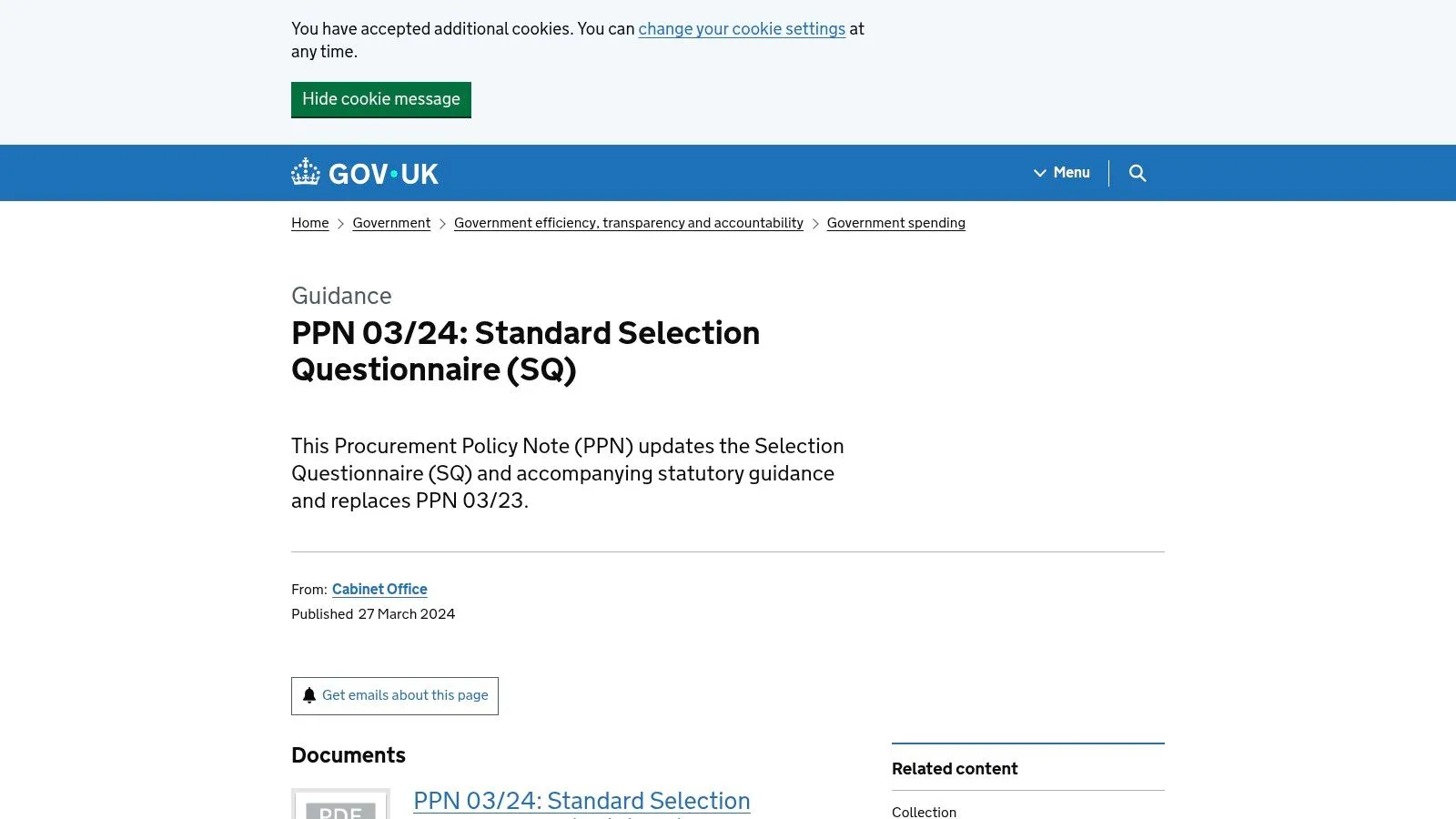
This resource stands out because it is the official, mandated format, ensuring your responses are compliant with current regulations like the Public Contracts Regulations (PCR) 2015 and the transition to the Procurement Act 2023. Using this template helps de-risk your submission by aligning it perfectly with the buyer’s evaluation framework. The interface is typical of the GOV.UK website: clean, accessible, and focused on clarity, with no sign-up or payment required to access the documents.
Practical Implementation
The downloadable Annex C contains the SQ itself. For response teams, this is an essential document to pre-populate within a knowledge base or response management platform. By preparing standardised answers for sections covering economic and financial standing, technical ability, and exclusion grounds, you can significantly accelerate your response to new public sector opportunities. Think of it as a foundational compliance checklist; having polished answers ready for these common questions allows your team to focus their energy on the more detailed, bespoke requirements of the subsequent Invitation to Tender (ITT) or RFP.
Key Details
- Best Use Case: Essential for any vendor responding to UK public sector tenders or for procurement teams issuing them.
- Focus: Pre-qualification and selection stage (SQ/PQQ), not the full narrative tender.
- Access: Free and direct download.
- Link: GOV.UK PPN 03/24
| Pros | Cons |
|---|---|
| Authoritative Source: Official UK Government template ensures compliance. | Limited Scope: Covers the selection stage only, not the entire RFP/ITT. |
| Completely Free: No cost or registration required for access. | Niche Terminology: Highly specific to UK public procurement language. |
| Up-to-Date: Aligned with the latest 2024 procurement legislation. | Not a Narrative Template: Lacks structure for project scope, technical requirements, or pricing. |
2. Procurement Pathway (UK Civil Service) — PA 2023 procurement templates
For organisations preparing for the UK’s new public procurement landscape, the Civil Service’s Procurement Pathway is an indispensable hub. It provides the official templates and guidance relating to the Procurement Act (PA) 2023, which is set to transform how the public sector buys goods and services. This resource is vital for both contracting authorities and suppliers needing to align their processes with the new legislation, specifically for the competitive flexible procedure.
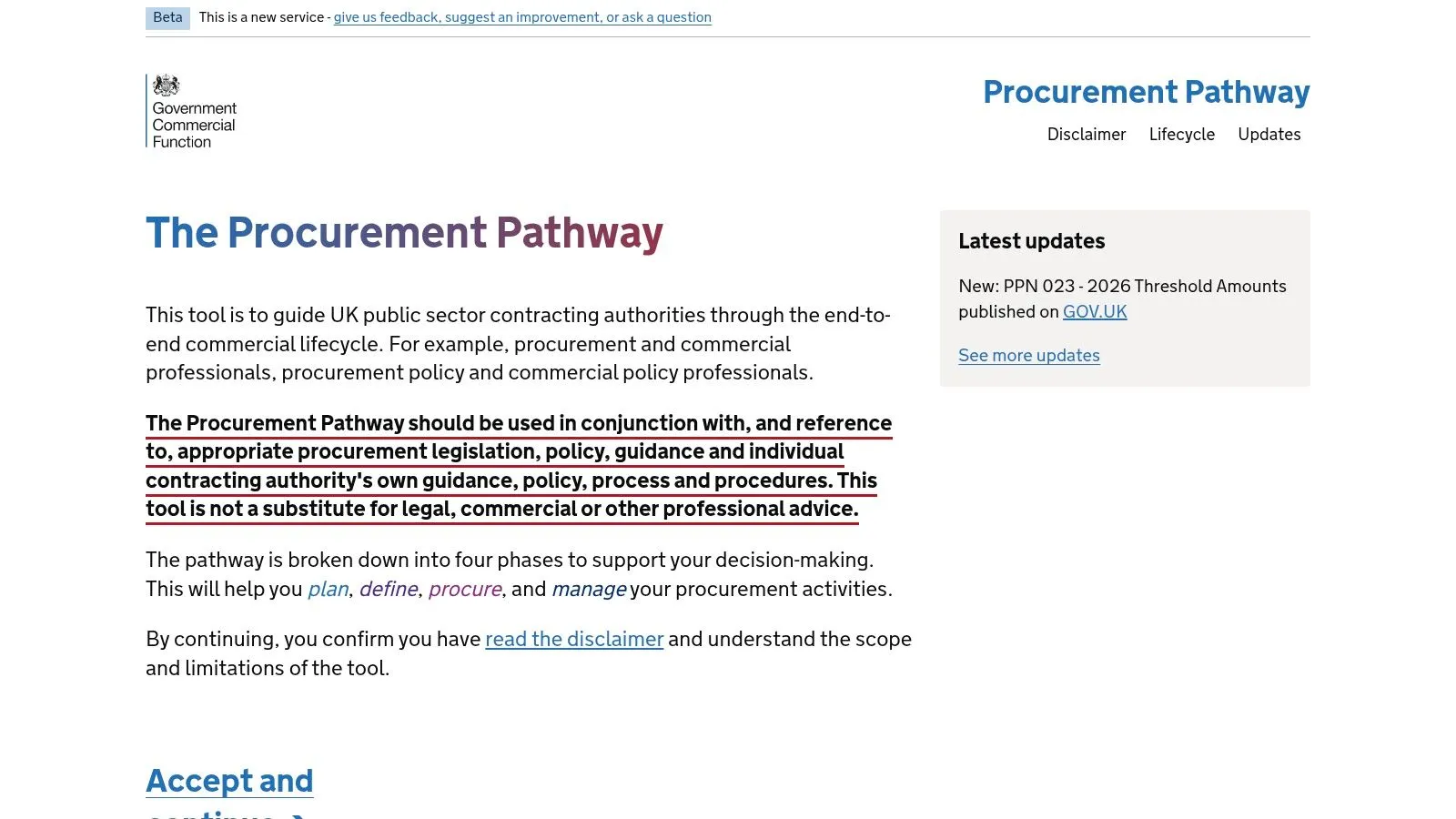
This platform stands out as the authoritative source for PA 2023 compliance. Rather than generic advice, it offers downloadable questionnaire templates mapped directly to the new procurement lifecycle stages. The interface is clean and functional, prioritising the direct delivery of information and documents without requiring sign-up. It ensures that both buyers and suppliers are using the correct, officially sanctioned formats for selection, de-risking the entire process from the outset.
Practical Implementation
The core asset here is the downloadable “Procurement-specific questionnaire template” designed for the Selection Stage under PA 2023. Response teams should treat this as the new standard, replacing older PQQ or SQ formats for any tenders run under the new Act. By pre-emptively mapping your company’s standard information to this new structure, you can gain a competitive edge. Understanding how these templates fit into the reformed cycle of procurement is crucial. Use this official resource to update your internal knowledge base and ensure your team is fluent in the new terminology and requirements well before they become mandatory.
Key Details
- Best Use Case: UK public sector suppliers and buyers transitioning to the Procurement Act 2023.
- Focus: Official selection stage questionnaire templates under the new UK procurement regime.
- Access: Free and direct download.
- Link: Procurement Pathway
| Pros | Cons |
|---|---|
| Authoritative Source: Official UK Government templates for the new Act. | Niche Focus: Highly specific to UK public sector procurement post-PA 2023. |
| Future-Proof Compliance: Ensures your processes align with upcoming legal changes. | Not a Narrative Template: Focuses on selection questions, not the full RFP scope. |
| Completely Free: No cost or registration needed to access documents. | UK-Centric Language: May be confusing for those unfamiliar with UK procurement law. |
3. NHS England — Procurement terms and templates (England)
For suppliers targeting the UK’s healthcare sector, the official NHS England website is an indispensable resource. It provides the standard terms and conditions for the procurement of non-clinical goods and services, which are fundamental components of any formal response. While not a complete narrative RFP template, these documents offer the contractual framework that underpins many NHS tenders, ensuring supplier proposals align with mandatory legal and commercial requirements.
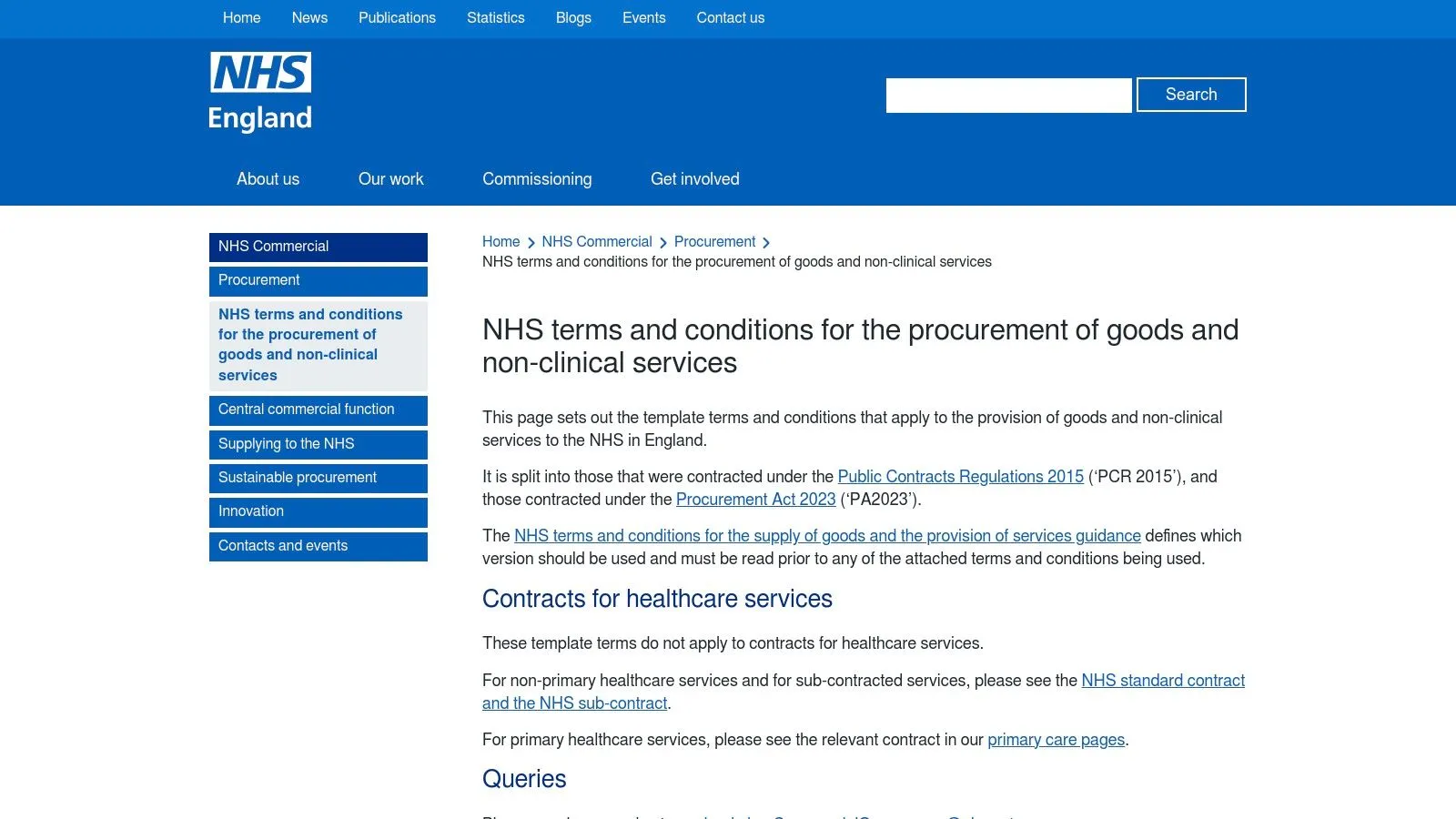
This resource is authoritative, providing the exact terms that will be expected in contracts issued under both the legacy Public Contracts Regulations (PCR) 2015 and the newer Procurement Act 2023. Familiarity with these templates for RFP appendices allows vendors to proactively align their own terms, pricing structures, and service level agreements with NHS expectations. The website itself is straightforward and function-focused, providing direct downloads of the relevant documents without any barriers like sign-ups or payments, making it a highly accessible compliance tool.
Practical Implementation
Response teams should treat these documents as a core part of their public sector knowledge base. Instead of reacting to these terms when an RFP is released, you can pre-emptively review and map your company’s standard commercial offerings against the NHS terms. This involves identifying any potential points of conflict or negotiation regarding liability, intellectual property, or payment schedules. Having this analysis completed ahead of time enables a much faster and more compliant commercial submission, demonstrating a sophisticated understanding of the NHS procurement landscape and freeing up resources to focus on the technical and value-based aspects of the proposal.
Key Details
- Best Use Case: Suppliers of non-clinical goods and services bidding for contracts with NHS bodies in England.
- Focus: Standardised contractual terms and conditions, not a full RFP authoring template.
- Access: Free and direct download.
- Link: NHS England Procurement Templates
| Pros | Cons |
|---|---|
| Authoritative Source: Official terms from NHS England ensure relevance and compliance. | Sector-Specific: Highly tailored to healthcare; not a general-purpose RFP template. |
| Aligns Commercials: Helps align supplier T&Cs with NHS procurement expectations. | Niche Scope: Does not cover clinical procurements, which use different standard contracts. |
| No Access Barriers: Completely free to download and use without registration. | Component Only: Provides contractual terms, not the structure for a full RFP response. |
4. Smartsheet — Free RFP templates and guides
For teams needing practical, downloadable templates alongside educational resources, Smartsheet offers a valuable library. This platform provides a collection of ready-to-use RFP documents in common formats like Word, Excel, and Google Docs, making them accessible to anyone, regardless of whether they use the Smartsheet software itself. This resource is particularly beneficial for those new to procurement or who need a solid foundation for structuring their request.

What makes Smartsheet stand out is its dual focus on providing both the tools and the knowledge to use them effectively. The site pairs its downloadable templates with comprehensive guides covering the entire RFP process, from initial drafting to final evaluation. While the user interface is clean, visitors should be aware that some content funnels towards a Smartsheet product sign-up. However, the core templates and guides remain freely accessible, offering a fantastic starting point for both issuers and responders.
Practical Implementation
The strength of Smartsheet’s offering lies in its immediate utility. A response team can download a relevant template (for example, a software RFP template) to understand the typical structure and questions they are likely to face. This allows them to proactively develop standardised answers and case studies for sections like implementation, support, and technical specifications. For procurement managers, these documents serve as an excellent, easily customisable base, saving significant time compared to creating an RFP from scratch. By using these established formats, you ensure all critical areas are covered. For more guidance on structuring your documents, you can explore various resources for a template for proposal request.
Key Details
- Best Use Case: Procurement managers creating their first RFP or response teams seeking common templates to prepare for.
- Focus: General-purpose RFP templates, process guides, and evaluation checklists.
- Access: Free and direct download (some content may encourage a product trial).
- Link: Smartsheet RFP Resources
| Pros | Cons |
|---|---|
| Broad Selection: Practical templates in multiple common file formats. | Product Nudges: Some pages guide users towards signing up for Smartsheet. |
| Educational Content: Excellent guides for those new to the RFP process. | Not Design-Focused: Templates are functional rather than visually stylised. |
| Freely Accessible: Core templates are available without a Smartsheet account. | Generalist Approach: May require significant customisation for highly niche industries. |
5. HubSpot — Free RFP templates and how‑to articles
HubSpot is well-known for its extensive library of marketing and sales resources, and its collection of RFP materials is no exception. It provides a valuable package containing free, well-structured RFP templates alongside detailed editorial guides. This combination is particularly useful for organisations new to the formal procurement process or those specifically looking to procure marketing, web design, or creative agency services.
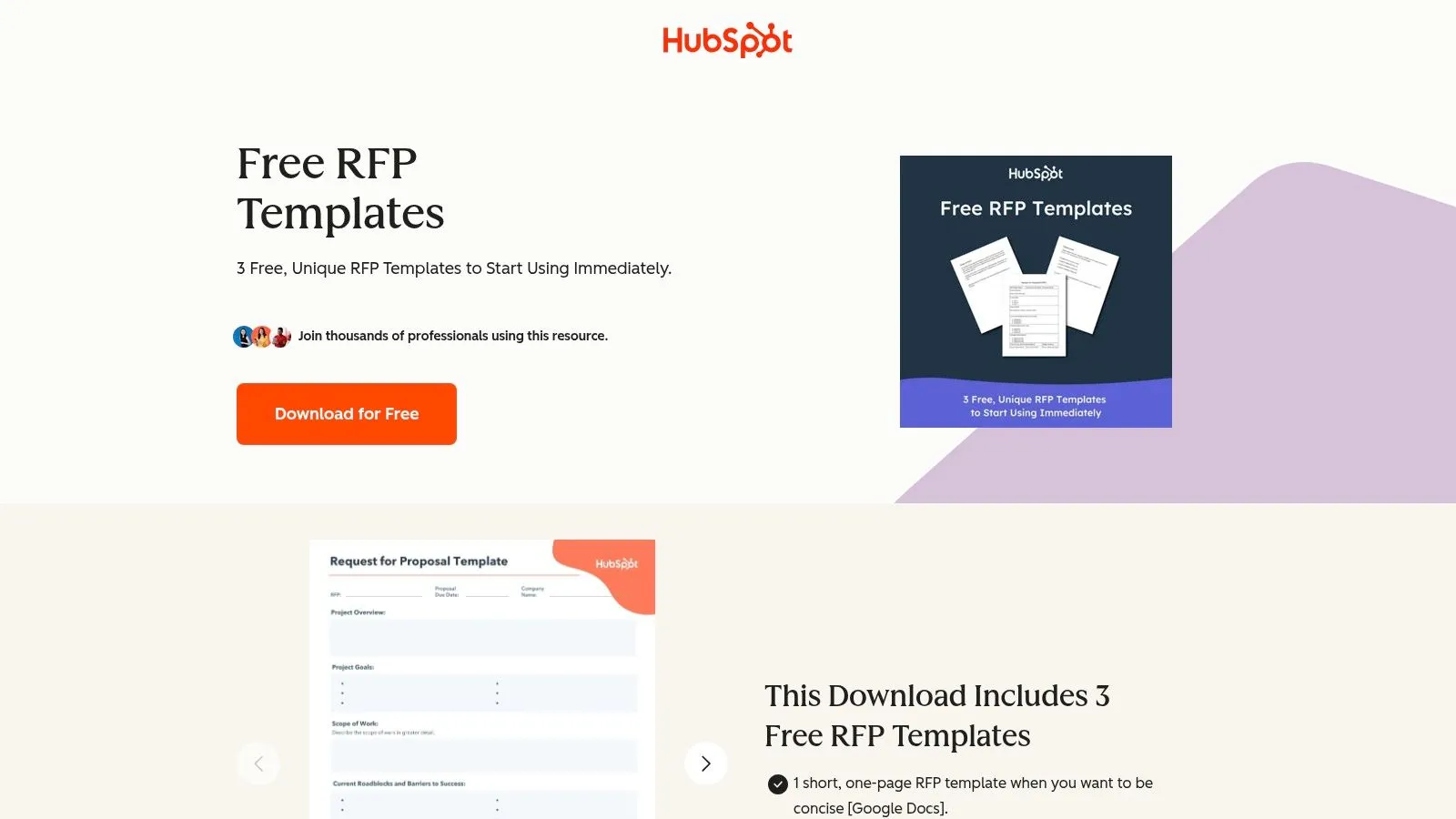
What makes this resource stand out is its dual focus. It doesn’t just provide downloadable documents; it educates the user on the entire RFP lifecycle. The templates (available as Google Docs or PDF) are clean and modern, covering concise, detailed, and pre-designed formats. However, accessing them requires submitting your contact details via a lead-capture form, a minor trade-off for high-quality, free content that benefits both those issuing RFPs and those responding to them.
Practical Implementation
The HubSpot package is ideal for small to medium-sized businesses needing to formalise their agency selection process. The “How to Write an RFP” guide can be used as a step-by-step manual for procurement or marketing managers tasked with creating their first major request. For response teams, the supplementary proposal templates and articles offer insights into what a buyer using a HubSpot-style template might be looking for. This makes it a great training tool for junior sales or bid team members, helping them understand the buyer’s perspective and structure their responses more effectively.
Key Details
- Best Use Case: Businesses creating or responding to marketing, creative, or web development RFPs.
- Focus: Complete RFP documents combined with educational how-to guides.
- Access: Free, but requires providing contact information via a web form.
- Link: HubSpot RFP Templates
| Pros | Cons |
|---|---|
| Comprehensive Package: Offers both templates and detailed instructional articles. | Registration Required: Access is gated behind a lead-capture form. |
| Well-Structured Content: The templates are modern, clean, and easy to adapt. | Marketing-Centric: Primarily geared toward agency and marketing service procurement. |
| Dual Perspective: Helpful for both issuers and responders of RFPs. | Less Suited for Technical Bids: May lack the depth required for complex IT or engineering RFPs. |
6. ProjectManager — Free Word RFP template
For procurement or project teams seeking a straightforward, no-frills starting point, ProjectManager offers a classic Request for Proposal template in a downloadable Microsoft Word format. This resource is designed for simplicity and speed, providing a foundational structure that can be quickly adapted for various projects without the complexity of more specialised platforms. It serves as an excellent entry point for those new to drafting RFPs or for smaller organisations needing a quick, brandable document.
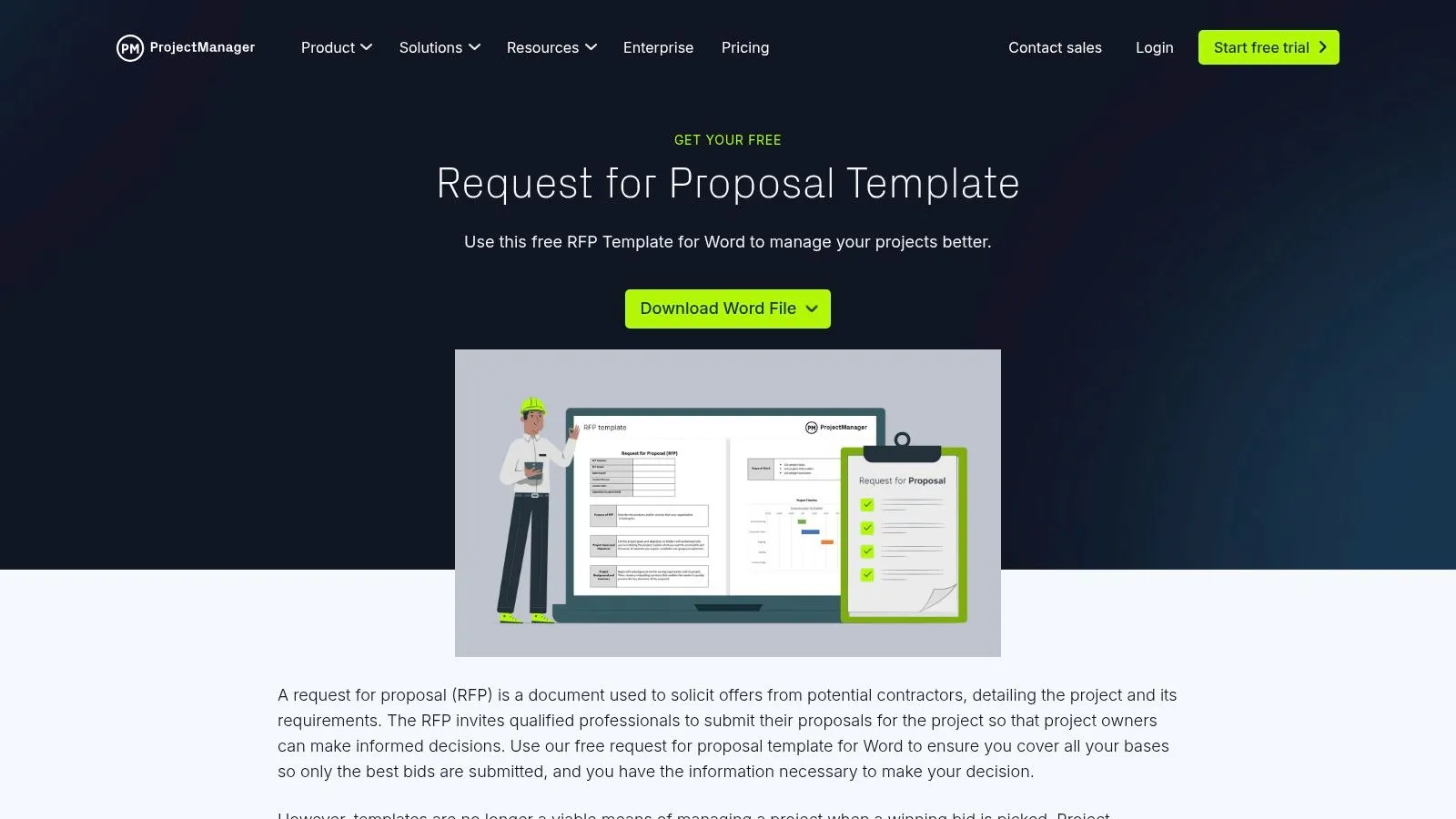
What makes this template stand out is its back-to-basics approach. It eschews complex features in favour of a universally accessible format. The accompanying webpage provides a concise overview of the RFP process, making it useful for junior team members. While part of a larger project management software suite, this specific template is offered completely free without requiring any sign-up or commitment, embodying a ‘grab-and-go’ philosophy that many busy teams will appreciate.
Practical Implementation
The Word document is immediately usable after download. Response teams can use this as a reference to understand a typical buyer’s structure, anticipating sections like ‘Project Goals’, ‘Scope of Work’, and ‘Evaluation Criteria’. For procurement teams issuing the RFP, the key is customisation. Delete irrelevant sections, add industry-specific questions, and insert your company branding. Because it’s a simple Word file, it integrates effortlessly into any existing document management system. Think of it as a blank canvas; it provides the essential outline, allowing you to focus on crafting precise questions rather than worrying about formatting.
Key Details
- Best Use Case: Small to mid-sized businesses or teams needing a fast, simple, and brandable RFP document.
- Focus: General purpose, editable Word RFP template for issuing to vendors.
- Access: Free and direct download.
- Link: ProjectManager Free Word RFP template
| Pros | Cons |
|---|---|
| No-Frills and Fast: Immediately downloadable and ready to edit in Word. | Limited Variety: It’s a single, generic template with no other options. |
| Completely Free: No registration or payment is required for access. | Minimal Guidance: Lacks the in-depth instructions found in more comprehensive toolkits. |
| Easy to Brand: Simple Word format makes adding logos and brand colours easy. | Basic Format: Does not include advanced features like automated scoring or collaboration. |
7. Canva — RFP templates in Canva Docs
For teams that prioritise brand consistency and visual appeal in their documentation, Canva offers a modern, design-centric approach to creating RFPs. Instead of traditional word processors, Canva Docs provides browser-based, collaborative templates for RFP creation that blend ease of use with professional aesthetics. This platform is ideal for creative agencies, marketing firms, or any business where the proposal’s presentation is as crucial as its content.
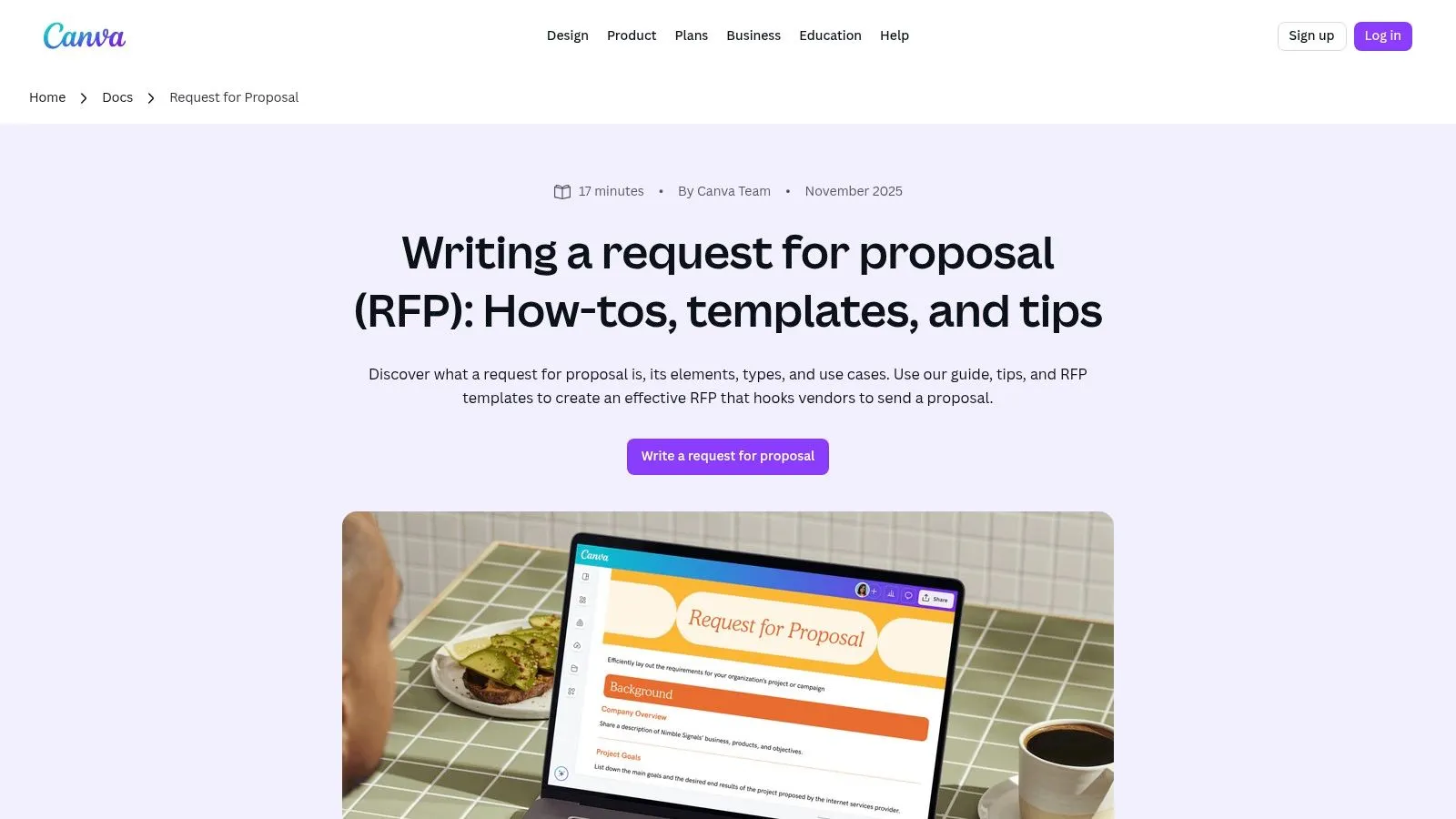
Canva stands out by making design accessible. Users can easily drag and drop brand elements like logos and colour palettes, ensuring every RFP aligns perfectly with their corporate identity. The platform’s real-time collaboration features allow multiple team members to edit and comment simultaneously, streamlining the drafting process. While a free Canva account is needed for the best experience and some premium assets require a Pro subscription, the core functionality is widely accessible.
Practical Implementation
The primary use for Canva is crafting the RFP issuance document itself, rather than a response. A procurement team can use a Canva template to build a visually engaging RFP that is clear, professional, and easy for vendors to navigate. Once finalised, the document can be shared via a link or exported as a high-quality PDF. The built-in guidance and structural suggestions within the templates help ensure all critical sections, from project background to submission guidelines, are included. This approach helps make a strong first impression on potential suppliers.
Key Details
- Best Use Case: Creating visually polished, branded RFPs for issuance to vendors, especially in creative or design-led industries.
- Focus: Issuing RFPs with a strong emphasis on design, branding, and collaborative editing.
- Access: Requires a free Canva account; some templates and assets are behind a Canva Pro subscription.
- Link: Canva RFP Docs
| Pros | Cons |
|---|---|
| Polished Designs: Easily create professionally designed, branded documents. | Account Required: Best experience requires at least a free Canva account. |
| Collaboration-Friendly: Excellent real-time editing for teams. | Design-Forward: May be unnecessarily complex for simple, text-only procurement needs. |
| User-Friendly Interface: Intuitive drag-and-drop editor is easy to learn. | Potential Costs: The best assets and features often require a paid Canva Pro plan. |
8. Envato Elements — Proposal/RFP-style template library
For teams prioritising visual impact and professional design in their submissions, Envato Elements offers a vast, subscription-based library of proposal templates. While not strictly “templates for RFP” in a procurement sense, these assets are invaluable for creating polished, brand-aligned response documents, especially for commercial or creative sector bids where presentation quality is paramount. The platform provides professionally designed files for Adobe InDesign, Microsoft Word, and PowerPoint.
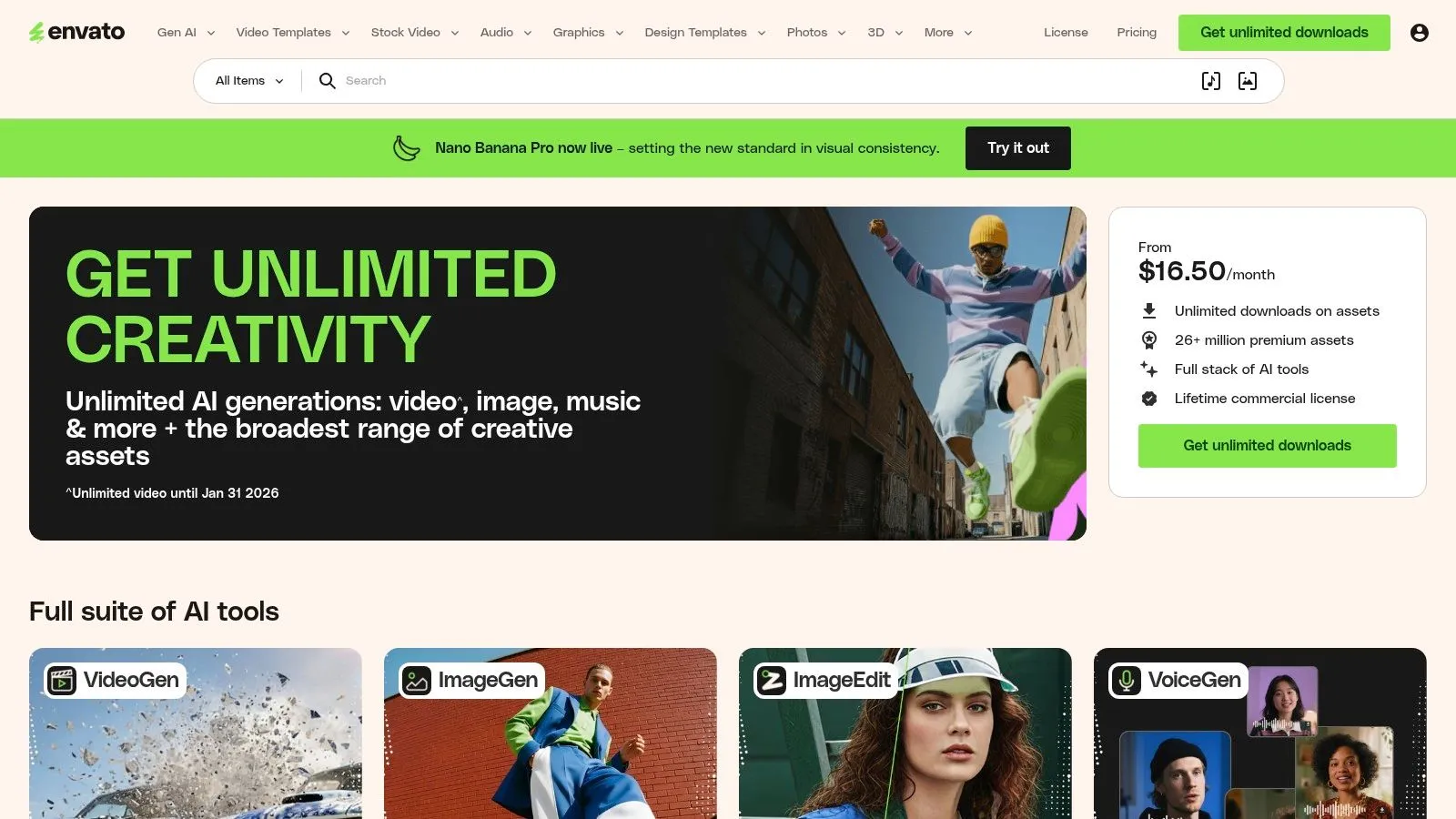
Envato Elements stands out due to the sheer volume and quality of its design assets. A single subscription grants unlimited downloads, which includes fonts, stock photos, and graphics to fully customise your document. This is ideal for marketing or sales teams who need to produce high-end proposals frequently without incurring per-asset costs. The interface is a straightforward marketplace, making it easy to search and filter by application (e.g., Word) or style.
Practical Implementation
The best way to leverage Envato is to select a small number of versatile templates that align with your brand identity. Customise these base templates in InDesign or Word with your company’s colours, logos, and typography, and save them as master documents. Your response team can then populate these pre-branded shells with the technical and narrative content for each specific RFP. This approach combines professional design with the efficiency of standardised content, ensuring every submission looks bespoke and high-quality without starting from scratch.
Key Details
- Best Use Case: Creative agencies, marketing teams, and businesses wanting high-production-value proposal documents.
- Focus: Visually-driven proposal and presentation design rather than technical RFP content.
- Access: Requires a paid monthly or annual subscription.
- Link: Envato Elements
| Pros | Cons |
|---|---|
| High Production Value: Professional, modern designs that elevate your submission’s appearance. | Subscription Required: Access is behind a paywall, not suitable for one-off needs. |
| Deep Selection: Thousands of options across multiple software platforms (Word, InDesign, etc.). | Design-Focused: Lacks procurement-specific content or section guidance found in other templates. |
| Commercial Licensing: Included with the subscription, simplifying usage rights for business documents. | Can Be Overwhelming: The sheer number of options can make finding the perfect template time-consuming. |
9. Template.net — RFP templates and bundles (free + premium)
For teams needing a high volume of diverse RFP documents, Template.net functions as a large marketplace rather than a single-source tool. It offers a vast library of sector-specific RFP bundles and individual proposal templates, making it a valuable resource when you need to quickly source a variety of formats, from construction to IT services. The platform is particularly useful for finding starting points in unfamiliar industries or for populating an internal library with multiple examples.
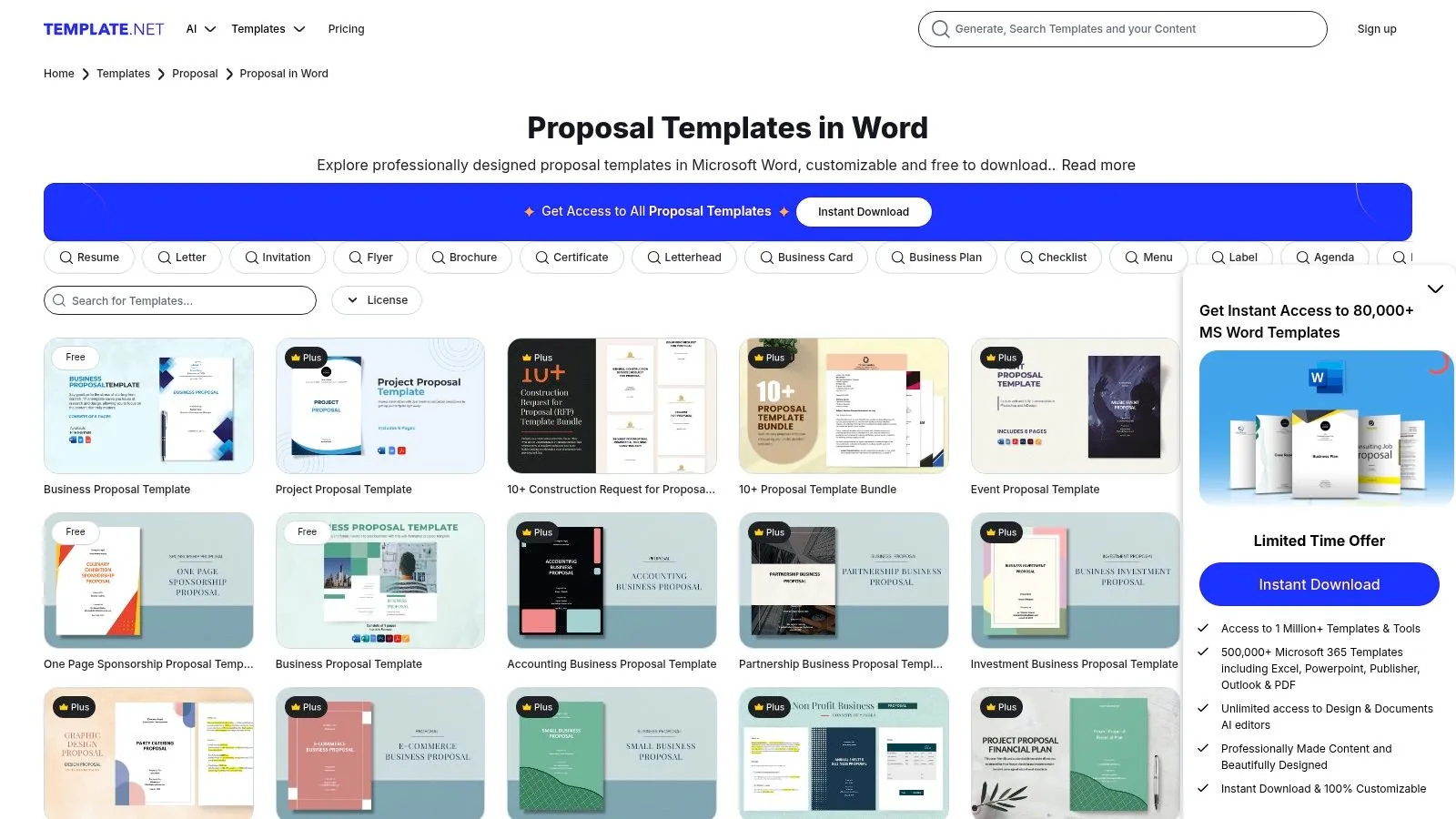
The primary advantage of Template.net is the sheer breadth of its collection and the accessibility of its files, which are commonly available in Word and Google Docs. This allows for immediate, low-friction editing without specialised software. However, the quality can be inconsistent across the library, as it aggregates content from various creators. Users should be prepared to vet individual documents, as some are more comprehensive than others. Access is mixed; many templates are free, while more polished or extensive bundles require a Pro subscription.
Practical Implementation
The best way to leverage Template.net is as a source of inspiration and structural frameworks. Download several free templates relevant to your industry and compare their sections on scope, evaluation criteria, and submission requirements. This helps in building a robust, composite internal master template. For response teams, these documents can serve as useful reference points to understand the kind of questions and formats they might encounter from different buyers. Always treat them as a foundation to be heavily customised, not as a final, ready-to-use document.
Key Details
- Best Use Case: Sourcing a wide variety of sector-specific RFP examples to build a custom template.
- Focus: General-purpose RFP and proposal documents across multiple industries.
- Access: Mix of free downloads and premium subscription-based access.
- Link: Template.net RFP Proposals
| Pros | Cons |
|---|---|
| Wide Variety and Volume: A large library covering many different sectors. | Inconsistent Quality: The standard varies significantly between templates. |
| Easy Editing: Templates are provided in familiar Word and Google Docs formats. | Premium Access Required: The best or most complete templates often require a paid Pro plan. |
| Good for Inspiration: Useful for seeing how different industries structure RFPs. | Generic Content: Many templates are basic and require substantial customisation. |
10. LegalTemplates — Free RFP template (Word/PDF)
For those needing to generate a straightforward, legally sound Request for Proposal without grappling with complex procurement software, LegalTemplates offers a highly practical solution. This platform functions as a guided document builder, walking you through a step-by-step questionnaire. It covers essential sections like project overview, scope of work, submission guidelines, and evaluation criteria, translating your inputs into a structured RFP document.
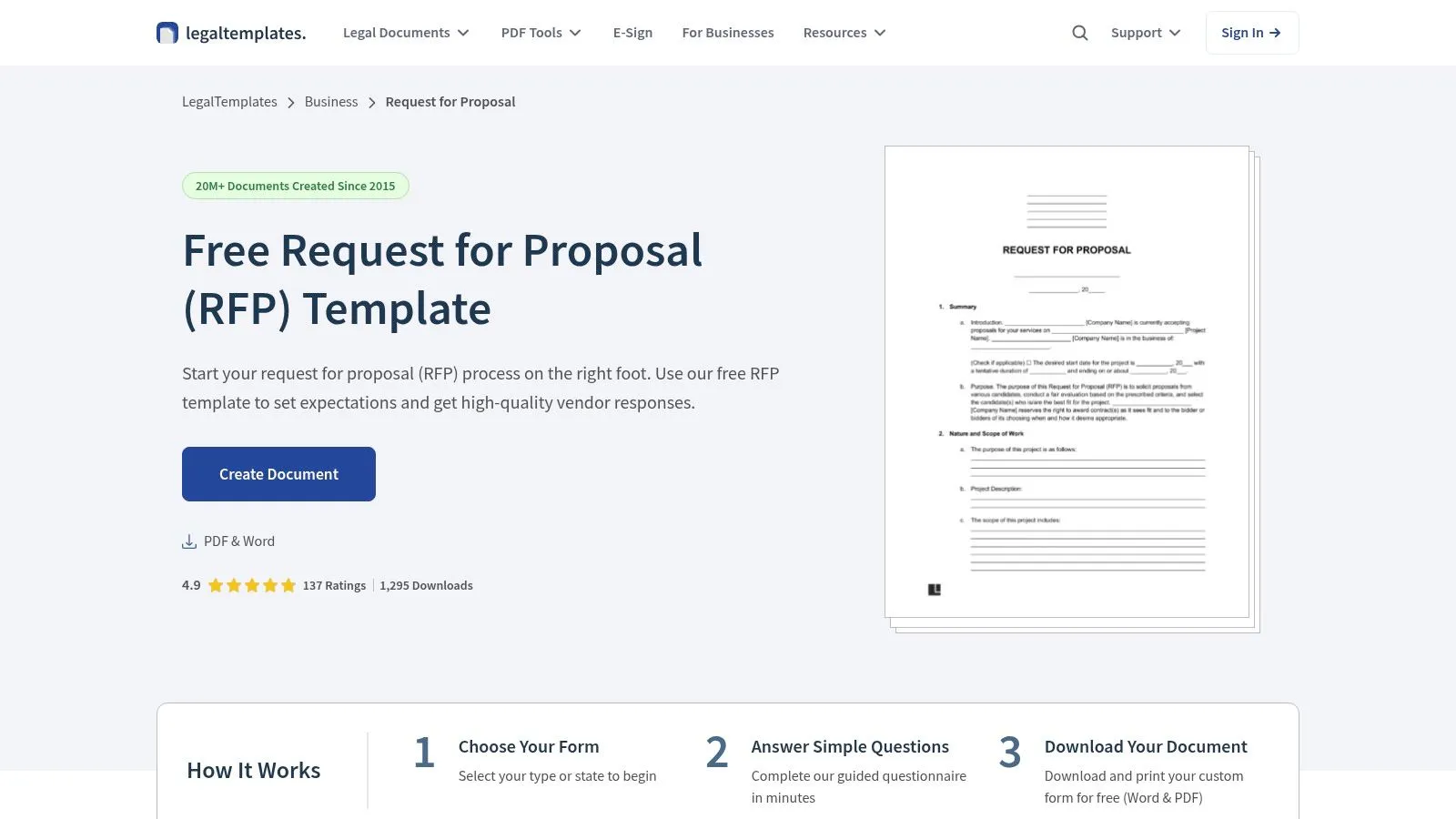
The primary advantage of LegalTemplates is its simplicity and speed. It strips away unnecessary design frills, focusing instead on producing a clean, plain-English framework that is easy for both the issuer and the vendor to understand. The user interface is intuitive, requiring no prior expertise in legal or procurement documentation. Once the prompts are completed, the final document can be instantly exported as a Word or PDF file, making it immediately ready for distribution.
Practical Implementation
This tool is ideal for smaller organisations or teams that lack a dedicated procurement department and need to quickly formalise a request for a service or product. The resulting Word document is fully editable, allowing your team to add more specific technical appendices, company branding, or detailed pricing tables after the initial draft is generated. Use it as a solid foundation to ensure all the core components of an RFP are covered, then customise it with project-specific details. This approach ensures you don’t miss crucial sections while saving significant drafting time.
Key Details
- Best Use Case: Small businesses or teams needing a fast, simple, and legally structured RFP draft.
- Focus: Core narrative RFP sections generated through a guided, step-by-step process.
- Access: Free to generate and download.
- Link: LegalTemplates RFP Generator
| Pros | Cons |
|---|---|
| Fast and Free to Use: Create and download a complete RFP in minutes at no cost. | Minimal Styling: The output is very basic and requires manual branding. |
| Clear, Simple Structure: The plain-English approach makes it easy to follow and complete. | Limited Sector Variants: Not tailored for highly specific or technical industries. |
| Instant Word/PDF Export: Provides an easily customisable Word document. | Lacks Advanced Features: No collaboration tools or complex formatting options. |
11. WordLayouts — Free RFP templates (Word/Google Docs/ODT)
WordLayouts offers a straightforward gallery of free, editable RFP templates for various specific industries. If you need a basic starting point for a niche sector like IT services, construction, web design, or even hotel services, this resource provides simple documents that can be downloaded in familiar formats like Word, Google Docs, and ODT without any registration.
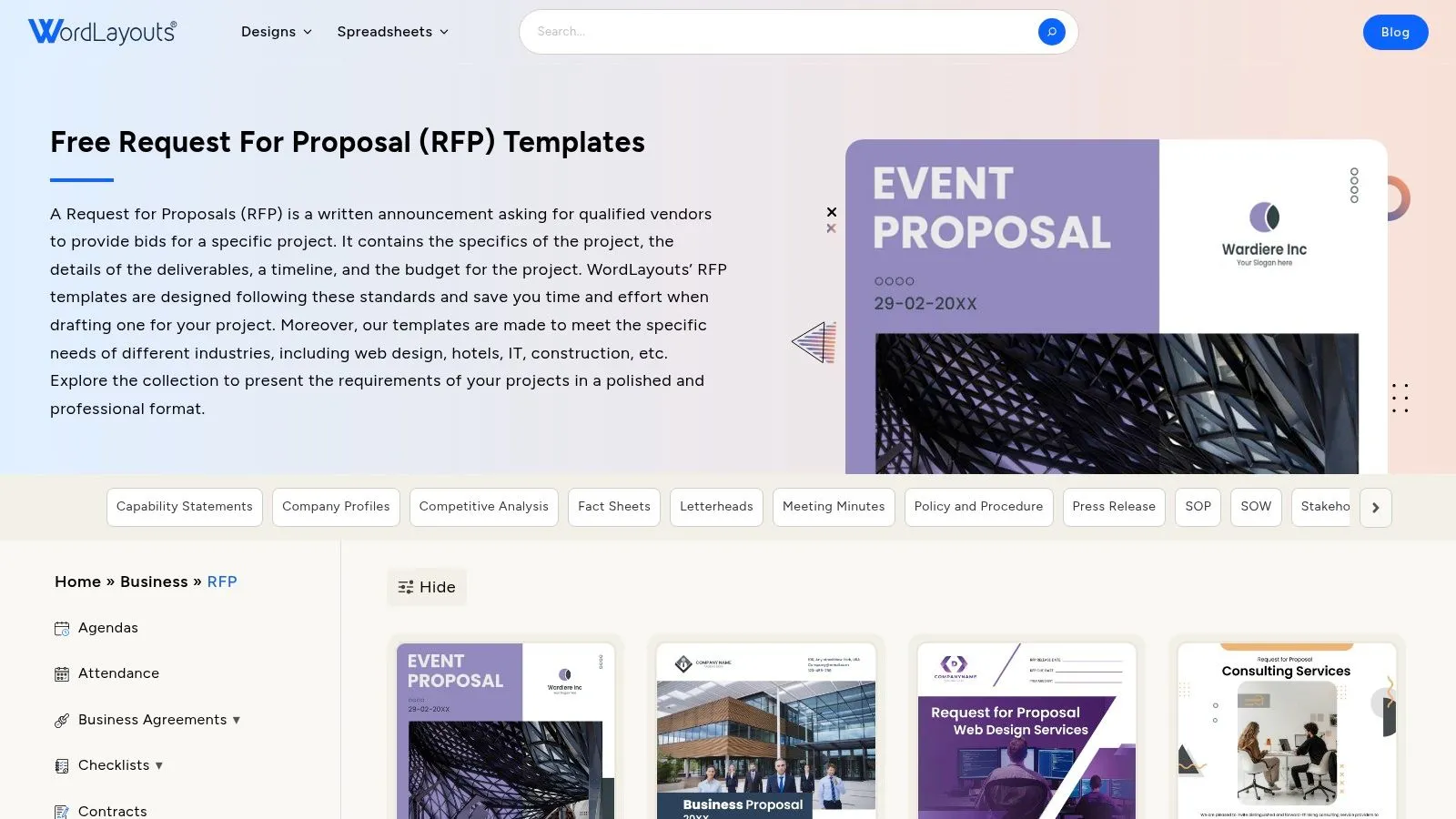
This platform stands out for its no-frills accessibility and industry variety. While more generic template sites offer one-size-fits-all documents, WordLayouts attempts to provide a more tailored foundation with relevant section placeholders for different business needs. The interface is a simple grid-based gallery, making it easy to find and download the required file format. The templates are functional and utilitarian rather than design-led, focusing purely on providing a usable structure for your content.
Practical Implementation
The best way to use these templates for RFP creation is as a structural guide. Download the document most relevant to your project and treat it as a checklist of essential sections to include, such as Scope of Work, Vendor Qualifications, and Pricing Structure. Since the documents are fully editable, you can quickly customise them by adding your company’s branding and inserting specific technical or commercial questions from your internal knowledge base. They are particularly useful for small businesses or teams that need to issue an RFP quickly without the resources to create one from scratch.
Key Details
- Best Use Case: Small to medium-sized businesses needing a simple, industry-specific RFP structure without cost or sign-up.
- Focus: Providing basic, editable document templates for a range of common business procurement needs.
- Access: Free and direct download.
- Link: WordLayouts RFP Templates
| Pros | Cons |
|---|---|
| Fully Editable & Free: No sign-up or payment is needed to access and use the files. | Utilitarian Design: Templates are functional but lack professional branding or advanced formatting. |
| Niche Industry Coverage: Offers templates for specific sectors beyond generic business use. | Variable Quality: The depth and quality of content can vary significantly between templates. |
| Multiple Formats: Available in Word, Google Docs, and ODT for broad compatibility. | Lacks Strategic Guidance: Provides a structure but no advice on how to write effective questions. |
12. Viewpoint Analysis (UK) — Free “Rapid RFP” template for technology/vendor selection
Viewpoint Analysis, a UK-based consultancy, offers a free “Rapid RFP” (RRFP) template specifically designed for enterprise technology selection and vendor comparison. This resource is ideal for organisations that need a more pragmatic and accelerated approach to procurement, focusing on shortlisting vendors efficiently without the overhead of a traditional, lengthy RFP process. It provides a structured yet agile framework for gathering the most critical information needed for tech evaluation.
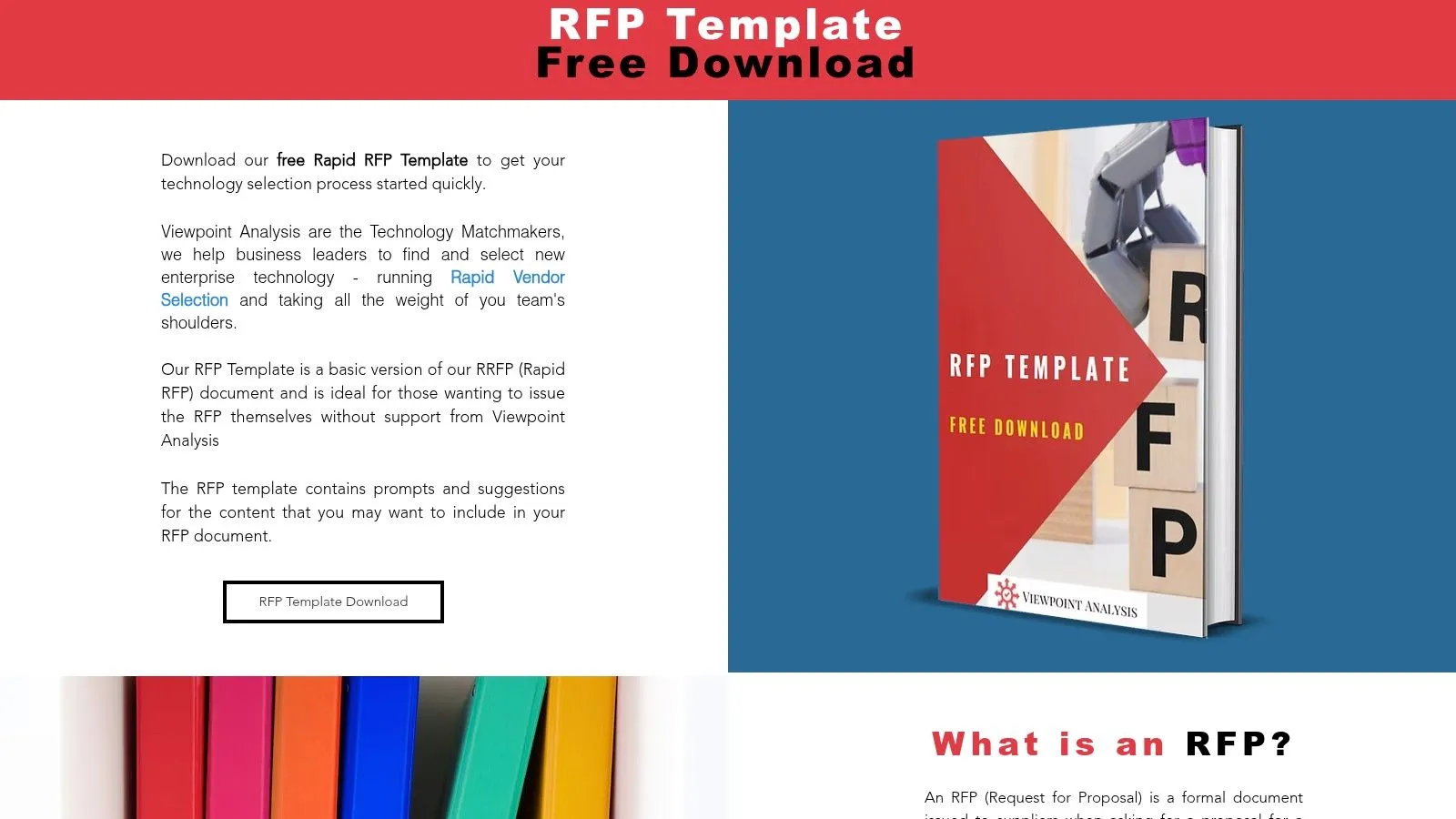
What makes this one of the more practical templates for RFP development is its direct focus on rapid results. The template cuts through the usual complexities to concentrate on core requirements, vendor capabilities, and pricing structures. The user experience is straightforward; you provide an email address on their clean website, and the template is sent directly to you. This no-fuss access makes it an excellent starting point for teams new to technology procurement or those operating under tight deadlines.
Practical Implementation
This RRFP template is best used at the start of a vendor selection project to quickly build a shortlist of viable candidates. Its structure guides you to ask targeted questions about functionality, implementation, support, and total cost of ownership. For response teams, being familiar with this concise format is useful for understanding how modern buyers are streamlining their processes. When using this template for procurement, it’s a key part of the initial vendor due diligence, allowing you to standardise the information you collect from potential suppliers for easier side-by-side comparison. It serves as a powerful filtering tool before committing to more detailed evaluations or demonstrations.
Key Details
- Best Use Case: Rapidly shortlisting and comparing enterprise technology vendors.
- Focus: Accelerated technology and vendor selection.
- Access: Free download after email submission.
- Link: Viewpoint Analysis RFP Template
| Pros | Cons |
|---|---|
| Practical and Focussed: Designed specifically for efficient tech/vendor selection. | Narrow Scope: Less suited for general services or non-technology RFPs. |
| Free Resource: No cost to access and use the template. | Needs Supplementing: May require additional documents for full contractual detail. |
| Accelerates Procurement: Ideal for short, pragmatic procurement cycles. | UK-Centric: Terminology and approach may be tailored to the UK market. |
Top 12 RFP Template Resources Comparison
| Item | Core features | Quality ★ | Price/Value 💰 | Target 👥 | Unique/USPs ✨🏆 |
|---|---|---|---|---|---|
| GOV.UK — PPN 03/24 SQ templates | Official 2024 SQ (Annex C); selection-stage Qs & exclusions | ★★★★★ | 💰 Free | 👥 Public‑sector buyers & suppliers | ✨ Authoritative, up‑to‑date; 🏆 government source |
| Procurement Pathway — PA 2023 templates | PA 2023‑mapped selection templates + lifecycle guidance | ★★★★★ | 💰 Free | 👥 Contracting authorities & suppliers | ✨ Mapped to Procurement Act 2023; 🏆 process guidance |
| NHS England — Procurement terms & templates | NHS terms for non‑clinical procurements; PCR/PA alignment | ★★★★☆ | 💰 Free | 👥 NHS bodies & healthcare suppliers | ✨ NHS‑specific contract norms; 🏆 sector authority |
| Smartsheet — Free RFP templates & guides | Multiple RFP files (Word/Excel/Google) + process guides | ★★★★ | 💰 Free (some upsell) | 👥 Project managers & first‑time issuers | ✨ Practical editable downloads; 🏆 strong educational content |
| HubSpot — Free RFP templates & guides | 3 templates + how‑to articles and responder templates | ★★★★ | 💰 Free (short form) | 👥 Marketing & agency teams | ✨ Structured examples & guides; 🏆 good for issuing+responding |
| ProjectManager — Free Word RFP template | Single editable Word RFP with short explainer | ★★★ | 💰 Free | 👥 Small teams / quick starters | ✨ No‑frills, brandable Word file; fast to deploy |
| Canva — RFP templates in Canva Docs | Template docs with design, collaboration, AI help | ★★★★ | 💰 Freemium (account/Pro assets) | 👥 Design/brand teams & collaborators | ✨ Polished branding + team editing; 🏆 visual templates |
| Envato Elements — Proposal/RFP template library | Large design packs (Word/InDesign/PPT); print‑ready | ★★★★ | 💰 Paid subscription | 👥 Designers & agencies needing high production | ✨ Vast design variety; 🏆 commercial licensing |
| Template.net — RFP templates & bundles | Sector bundles, Word/Google formats, free+Pro items | ★★★ | 💰 Free + Paid options | 👥 Sector‑specific issuers | ✨ Volume & sector variants; good editability |
| LegalTemplates — Free RFP generator | Step‑by‑step prompts; instant Word/PDF export | ★★★ | 💰 Free | 👥 Small businesses / legal novices | ✨ Guided generator for plain‑English RFPs |
| WordLayouts — Free RFP templates | Industry‑specific editable templates (Word/Docs/ODT) | ★★★ | 💰 Free | 👥 Niche industry issuers | ✨ Wide niche coverage; fully editable files |
| Viewpoint Analysis — Rapid RFP (UK) | RRFP for tech/vendor shortlisting & comparisons | ★★★★ | 💰 Free | 👥 Enterprise tech buyers & shortlists | ✨ Rapid vendor comparison format; 🏆 tech procurement focus |
Supercharge Your Response Process with Intelligent Automation
Navigating the landscape of Request for Proposals (RFPs) can be a formidable challenge, but as we have explored, the right foundation makes all the difference. This article has guided you through a curated collection of templates for rfp documents, from the rigorous Standard Selection Questionnaires of GOV.UK to the versatile, user-friendly layouts offered by platforms like Smartsheet and Canva. We have seen how specialised resources from the NHS and Procurement Pathway provide sector-specific frameworks, while tools like Viewpoint Analysis offer a rapid route for technology vendor selection.
Each template serves as a critical starting point, providing the structure and clarity needed to either issue a comprehensive request or understand the expectations of one you have received. However, for the teams on the receiving end, the template is just the beginning of a resource-intensive process. The real bottleneck lies in the manual effort required to populate these documents with accurate, consistent, and compelling information. This is where the strategic implementation of technology becomes a game-changer.
From Static Templates to a Dynamic Response Engine
The true power of these templates is unleashed when they are integrated into an intelligent response workflow. A static document, no matter how well-structured, still requires your team to hunt for answers in disparate folders, consult subject matter experts, and manually copy-paste information from previous submissions. This process is not only inefficient but also prone to error, leading to inconsistent messaging and outdated information.
Imagine transforming this fragmented process into a streamlined, automated system. By centralising your company’s knowledge, including past RFP responses, security policies, product documentation, and technical specifications into a platform like ResponseHub, you create a single source of truth. This knowledge base becomes a dynamic asset that learns and improves with every completed questionnaire.
When your team faces a security questionnaire or a complex proposal, an AI-powered platform can automate up to 90% of the answers, drawing directly from your verified knowledge base. This frees up your experts to focus on the strategic, high-value questions that truly differentiate your bid.
Actionable Next Steps: Choosing Your Path Forward
To elevate your response process, consider the following steps:
Select a Foundation: Review the templates discussed in this article. Choose one or two that most closely align with the types of RFPs you typically issue or receive. For UK public sector bids, the GOV.UK and NHS templates are indispensable. For commercial SaaS proposals, HubSpot or Smartsheet might offer a better fit.
Establish a Knowledge Base: Begin consolidating your core information. Gather your most recent security documentation, product feature lists, pricing appendices, and successful past proposals. This initial effort is the most critical step in building your response engine.
Integrate with an Automation Platform: The real efficiency gains come from leveraging a purpose-built tool. A platform like ResponseHub doesn’t just store information; it intelligently retrieves it. It can parse complex spreadsheets, identify nuanced questions, and suggest the most relevant, pre-approved answers, complete with confidence scores and source citations.
Refine and Maintain: Your knowledge base is not a one-time project. Implement a process for regular updates. After each successful submission, review the new questions and answers and add them to your centralised repository. This ensures your information remains current, accurate, and ready for the next opportunity.
By bridging the gap between high-quality templates for rfp and intelligent automation, you transform a reactive, administrative burden into a proactive, strategic advantage. You equip your team to respond faster, with greater accuracy, and a unified voice. This shift doesn’t just save time; it positions you to win more business and build a scalable foundation for future growth.