· Jane Iamias · due diligence questionnaire meaning · 17 min read
Understanding the Due Diligence Questionnaire Meaning A UK Guide
What is the due diligence questionnaire meaning? This guide explains the DDQ process, its purpose, and how to respond effectively for UK business compliance.
A due diligence questionnaire (DDQ) is essentially a formal set of questions one company sends to another to kick the tyres before making a big commitment. Think of it as a deep-dive investigation before a partnership, a merger, or a significant investment.
The whole point is to get a clear, unvarnished picture of a company’s health, stability, and overall operations, uncovering any hidden risks before it’s too late.
What a Due Diligence Questionnaire Actually Means

Let’s put it in simple terms. If you were buying a house, you wouldn’t just trust the seller’s assurance that “everything is fine.” You’d bring in a surveyor to check for dodgy wiring, hidden damp, or a leaky roof. A DDQ is the business equivalent of that surveyor’s report.
It’s a structured way for one company to get under the bonnet of another and see how the engine is really running. This isn’t a casual chat; it’s a meticulous, formal process designed to identify and assess risks before any contracts are signed.
A Tool for Structured Risk Assessment
At its heart, a due diligence questionnaire is all about managing risk. For UK organisations, it’s a vital line of defence against financial, legal, and operational pitfalls. This isn’t just a box-ticking exercise; it’s a strategic investigation to verify that a company is what it claims to be.
A well-crafted DDQ helps you methodically check for potential red flags. Specifically, it allows you to:
- Spot Financial Risks: Dig into financial statements, debt levels, and revenue sources to confirm the company is on solid ground.
- Uncover Legal Liabilities: Look for any ongoing lawsuits, messy contract disputes, or compliance gaps that could become your problem down the line.
- Assess Operational Weaknesses: Examine their internal processes, IT systems, and supply chain resilience to make sure the business can actually deliver.
By making the inquiry process formal, a DDQ ensures that no stone is left unturned. It turns a series of informal conversations into a documented, auditable record, which is a cornerstone of good corporate governance today.
To help break this down, the table below summarises the key areas a typical DDQ will investigate.
DDQ At a Glance: Key Areas of Investigation
| Investigation Area | Primary Purpose |
|---|---|
| Corporate Structure & Governance | To understand who owns and controls the company and how decisions are made. |
| Financial Health | To verify the company’s profitability, assets, liabilities, and cash flow. |
| Legal & Compliance | To identify any existing or potential lawsuits, regulatory issues, or contractual risks. |
| Operations & Technology | To assess the efficiency of internal processes, IT infrastructure, and security protocols. |
| Human Resources | To review employee contracts, company culture, and any potential labour disputes. |
| Intellectual Property | To confirm ownership and protection of patents, trademarks, and other key assets. |
Each of these sections drills down into the specifics, creating a comprehensive overview that supports better decision-making.
Ultimately, the DDQ is a foundational tool for making smart, informed choices. It helps prevent nasty surprises and ensures that any new business relationship starts on a footing of transparency and trust.
Why Companies Use Due Diligence Questionnaires
Think of a due diligence questionnaire (DDQ) less as a piece of paperwork and more as a company’s self-defence mechanism. When you’re about to merge with another business, sign a major contract, or bring on a new key supplier, you’re tying your fate to theirs. A DDQ is the tool you use to make sure you know exactly who you’re getting into business with.
It’s all about moving from a handshake-and-a-promise to a clear, documented understanding of a partner’s true health—be it financial, operational, or legal. This isn’t about a lack of trust; it’s about establishing it on a solid foundation of facts.
Mitigating Risk and Ensuring Compliance
At its heart, issuing a DDQ is about managing risk. Stepping into a new partnership without doing your homework is like navigating a minefield blindfolded. You’re exposing your organisation to a whole host of potential disasters, from legal troubles and financial instability to a PR nightmare.
Imagine your new partner suffers a data breach because their security was lax, or they’re found to be non-compliant with a regulation like GDPR. The fallout—and the fines—could easily splash back onto you.
The DDQ is your systematic way of spotting these red flags before they become real problems. It probes into critical areas like:
- Regulatory Adherence: Does the company play by the rules, complying with all the necessary UK and international laws?
- Financial Stability: Are their finances solid, or are they one bad quarter away from going under?
- Operational Security: How robust are their cybersecurity defences and internal controls? Is your data safe with them?
- Supply Chain Integrity: Who are their partners? A weak link anywhere in the chain can affect you.
This structured inquiry helps businesses sidestep catastrophic errors. For a real-world look at how this plays out in major business deals, this example of understanding a comprehensive due diligence process shows just how vital this vetting stage is before any contracts get signed.
A Strategic Tool for Building Trust
While a DDQ is great for sniffing out risks, it’s also a powerful tool for building a strong, transparent relationship from day one. It establishes a culture of open communication and shows that both sides are serious about proper governance.
When a potential partner responds with clear, detailed, and verifiable answers, it does more than just tick boxes. It builds genuine confidence and shows they’re a professional and reliable organisation you can count on.
A well-managed DDQ process isn’t an interrogation; it’s a structured conversation that validates claims and aligns expectations. It provides the requesting company with the assurance needed to move forward confidently with a strategic decision.
Of course, being on the receiving end of a DDQ is a different challenge altogether. Answering these detailed questionnaires effectively is a skill in itself. For a closer look at that side of the table, see our practical guide to vendor’s due diligence, which offers tips for preparing responses that are both accurate and compelling.
A Look Inside a Typical DDQ
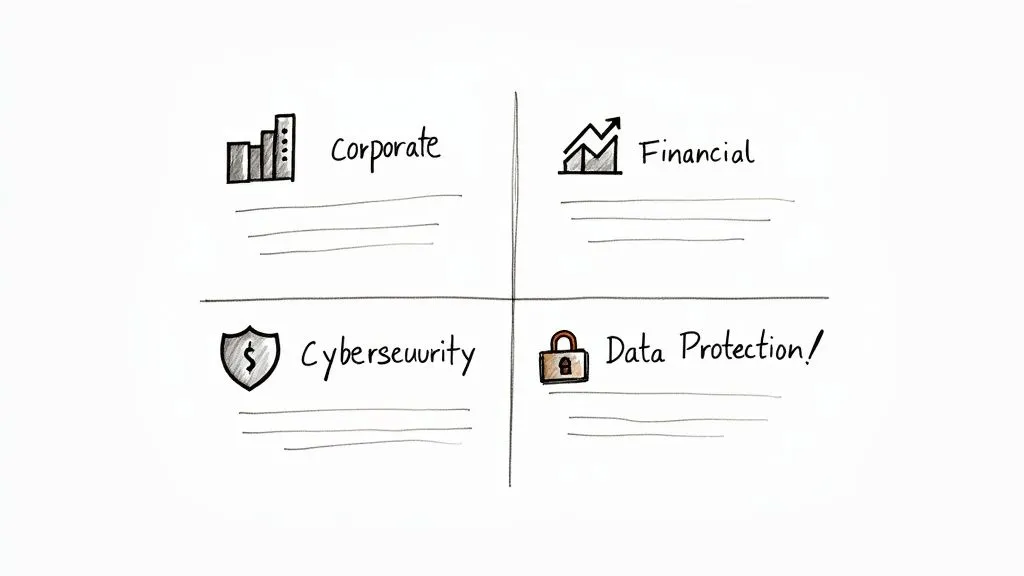
At first glance, a due diligence questionnaire can look like an impossibly long list of questions. But it’s not just a random interrogation. Think of it more like a well-structured inspection, where each section opens a new door to understanding how a business truly operates.
While no two DDQs are identical—they’re always adapted for the specific industry or deal—they almost always revolve around the same core pillars. Knowing what these are helps you anticipate what’s coming and pull in the right people from your team early on.
Corporate and Legal Structure
This is where it all starts. This section is all about the company’s very identity and its legal framework. It’s designed to answer the big, foundational questions: Who owns this business? Who’s in charge? And is it all above board? You can think of it as a background check on the company itself.
The goal here is to confirm the business is a legitimate, properly registered entity and to get a clear picture of its ownership and governance. Questions you’ll almost certainly see include:
- Please provide a current organisational chart, detailing all shareholders and their ownership percentages.
- Are there any agreements that would require an outside party’s consent for a change of control?
- Supply the minutes from all board and shareholder meetings for the last three years.
Financial Health and Performance
Next, it’s time to get into the numbers. This part of the questionnaire takes a deep dive into the company’s financial records to check for stability, profitability, and any skeletons in the closet. It’s a complete financial health check, and nothing is off-limits.
The point is to make sure the financial story a company presents to the world lines up with the hard facts in its accounts. Vague answers or messy records are a huge red flag for any potential partner or investor.
The questions in this section are sharp and focused on data:
- Provide audited financial statements (Income Statement, Balance Sheet, Cash Flow) for the last three fiscal years.
- Detail all outstanding debts, loans, and credit facilities, including their terms and covenants.
- What are your financial projections for the next three years, and what assumptions underpin them?
Cybersecurity and Data Protection
These days, how a company protects its digital assets is just as critical as its balance sheet. This section puts the organisation’s IT systems, security measures, and data privacy practices under the microscope. Any decent DDQ will include questions on the company’s approach to security risk management to see how well it can defend against threats.
With strict rules like GDPR now a global standard, this part of the DDQ is absolutely essential. It’s all about checking if a company can be trusted with sensitive data. For a more detailed breakdown, our due diligence checklist for 2025 covers this in depth. You can expect to be asked things like:
- Do you have a formal information security policy? If so, when was it last reviewed and updated?
- Describe your disaster recovery and business continuity plans.
- Have you had any data breaches in the past five years? If yes, please provide details.
Common Mistakes to Avoid When Responding to a DDQ
Getting a DDQ right is a high-stakes game. Think of it less as filling out a form and more as a crucial moment to build trust. Even tiny slip-ups can create massive red flags for a potential partner or investor.
The biggest tripwire is simply not taking it seriously. When organisations see a DDQ as just another bit of admin, they rush the job. This almost always leads to incomplete, vague, or sloppy answers that can kill a deal before it even gets going.
Failing to Assemble the Right Team
One of the most frequent blunders is handing the entire questionnaire to one person. It might seem efficient to let someone in sales or administration run with it, but a DDQ cuts right across the entire business.
Your head of IT security needs to tackle the data protection questions. Your legal counsel has to weigh in on compliance. Your finance director is the only one who can properly address the financial queries. Without getting these subject matter experts involved, your answers will lack depth and accuracy, which looks amateurish at best.
The stakes are incredibly high. Globally, a staggering 76% of failed deals are blamed on poor due to diligence. On top of that, new regulations are stretching timelines by 30-50 days, meaning there’s no room for error. You can learn more about how due diligence strategies are adapting for 2025 to stay ahead.
Providing Vague or Inconsistent Answers
Nothing erodes trust faster than ambiguity. Answering a direct question with “This is under review” or “We follow industry best practices” is a classic dodge that just won’t fly. Every response needs to be direct, specific, and backed up with evidence wherever you can.
Key Takeaway: Your DDQ responses are a direct reflection of your organisation’s transparency and competence. Vague answers suggest you either don’t have the information or you’re trying to hide something—neither of which inspires confidence.
Inconsistency is just as bad. If your answers in one section contradict what’s in your attached policies or what you’ve said previously, it screams disorganisation. It suggests you don’t have a single source of truth, which is a major concern when it comes to internal controls and understanding the real due diligence questionnaire meaning for your processes.
Treating It as a One-Off Task
Finally, too many companies treat every DDQ as a brand-new emergency. They scramble to pull together answers from scratch, reinventing the wheel every single time. This isn’t just slow and inefficient; it’s a recipe for errors and inconsistency.
A far smarter way to work is to build a central library of pre-approved, accurate answers and all your supporting documents. This turns a frantic, reactive fire drill into a smooth, strategic process. It not only saves a huge amount of time but also paints a picture of your company as a well-organised, reliable, and trustworthy partner.
Best Practices for Crafting Your DDQ Responses
https://www.youtube.com/embed/0q4kuSPexUc
A well-prepared response to a due diligence questionnaire is far more than just a box-ticking exercise. Think of it as a strategic opportunity to build real confidence with a potential partner and get the deal moving faster. When you shift your mindset from a defensive chore to a chance to showcase your organisation’s competence, the entire process changes.
The key is to be proactive. Instead of scrambling when a questionnaire lands in your inbox, the best approach is to treat DDQ readiness as a normal, ongoing part of your business operations.
Assemble a Dedicated Response Team
First things first, you need to give the DDQ the respect it deserves by pulling together a cross-functional team. No single person in your organisation has all the answers, and trying to handle it alone is a recipe for disaster.
A solid team usually brings in key people from across the business:
- Legal and Compliance: They’re essential for checking that every response aligns with regulations and contracts.
- Finance: You’ll need them to provide and sign off on all the financial data and projections.
- IT and Cybersecurity: They handle all the technical questions about your security measures and how you protect data.
- Human Resources: For anything related to company policies, employee information, and organisational structure, they’re your go-to.
When you bring these experts together, you ensure every answer is not just accurate but also has the depth and authority to build trust. It’s the difference between a vague, unconvincing reply and a powerful, confidence-inspiring one.
Establish a Central Source of Truth
Consistency is everything. If a potential partner sees contradictory answers in your DDQ, it’s a huge red flag. It immediately makes them question your internal controls and organisation.
To avoid this, you need a centralised repository for all the information that DDQs typically ask for. This ‘source of truth’ acts as your internal knowledge base, storing pre-approved answers, updated policies, certifications, and any supporting documents you might need.
Having this in place doesn’t just make you faster; it guarantees that every questionnaire you complete tells the same consistent, accurate story about your business.
A DDQ is a direct reflection of your company’s operational maturity. Answering with speed, accuracy, and consistency demonstrates that you are a reliable and well-organised partner worth doing business with.
This structured approach has become particularly important in UK sectors like research and finance. The Association of Research Managers and Administrators (ARMA), for example, introduced a standardised questionnaire to make risk assessment in UK research collaborations more efficient. It cuts down the admin work while keeping the standards incredibly high. You can discover more about this consolidated due diligence approach and the difference it’s made.
Practise Proactive Transparency
Finally, don’t be afraid to be open. If your organisation has a known weakness or a potential issue, it’s almost always better to address it upfront. Explain what the issue is and, crucially, what your plan is to fix it.
Trying to hide a problem can cause far more damage to your reputation than simply owning it. This kind of honesty actually builds a tremendous amount of trust. It shows you’re a mature organisation committed to good governance, and it can turn what looks like a weakness into a demonstration of your strength and integrity.
How Technology Is Taming the DDQ Process
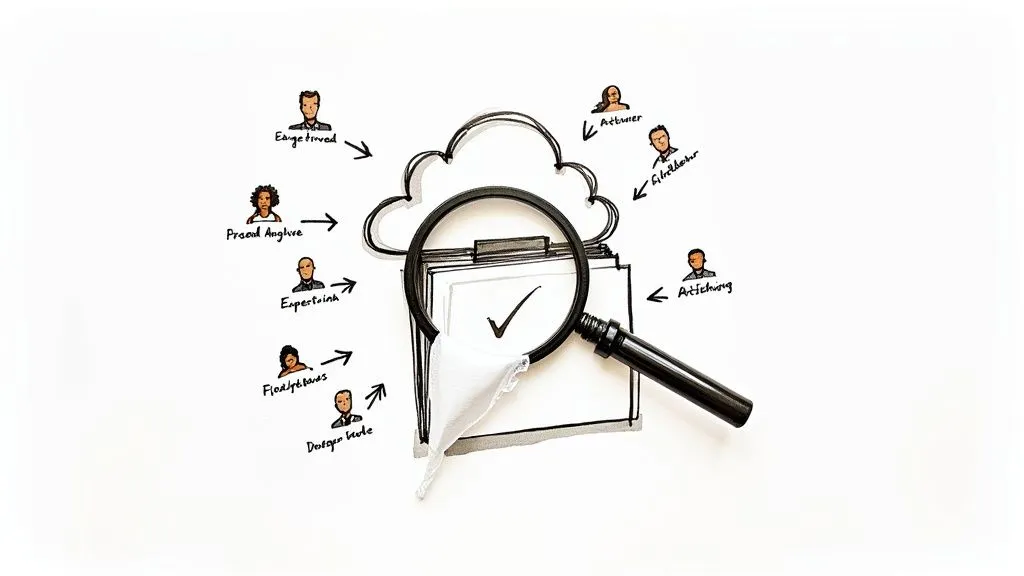
Let’s be honest, the old way of tackling a due diligence questionnaire is broken. Chasing down subject matter experts, sifting through ancient documents, and endlessly copying and pasting answers is not just slow; it’s a recipe for mistakes and a huge drain on your best people.
Thankfully, technology is finally catching up and changing the game. Modern response automation platforms are swapping out the chaotic spreadsheets and email threads for smart, centralised systems. The result? A DDQ process that’s faster, more accurate, and remarkably consistent.
The Power of a Centralised Knowledge Base
The heart of this new approach is a centralised knowledge base. Picture it as your company’s single source of truth—a curated library holding everything from your security policies and compliance certificates to every meticulously crafted answer from past questionnaires.
Instead of starting from scratch every single time, these platforms dip into the knowledge base to pull up accurate, pre-approved answers in an instant. The benefits become clear very quickly:
- Massive Time Savings: AI-driven search finds what you need in seconds, not the hours it used to take.
- Rock-Solid Consistency: Every answer comes from the same approved well, so you can forget about embarrassing contradictions.
- Seamless Collaboration: Teams across legal, IT, and finance can all work from and contribute to the same central hub.
This isn’t just a nice-to-have; in heavily regulated fields, it’s essential. Take the UK financial industry, which relies on incredibly detailed frameworks like the AFME Post Trade Due Diligence Questionnaire to manage third-party risk. You can see the latest AFME DDQ guidelines to get a feel for the depth required. Using technology here ensures every response is both quick and perfectly compliant.
Automation and Intelligent Workflows
These tools do more than just store information; they actively run the entire response process. When a question pops up that needs a fresh answer, the system can automatically route it to the right person, keep tabs on its progress, and log the final sign-off.
This intelligent routing gets rid of the bottlenecks and creates a clear, auditable trail for every single response. It turns the DDQ from a frantic fire drill into a controlled, transparent process.
By pairing a solid knowledge base with smart automation, organisations can get through questionnaires faster and with a lot more confidence. That’s a powerful advantage, because a high-quality response is central to the due diligence questionnaire meaning—it’s all about building trust. To see how this works in the real world, it’s worth exploring the benefits of security questionnaire automation for your own team.
Frequently Asked Questions About DDQs
You’ve got the basics down, but when it’s time to actually tackle a DDQ, some very practical questions always pop up. Let’s get into the most common ones we hear.
How Long Does a DDQ Take to Complete?
This is the classic “how long is a piece of string?” question. The answer can be anything from a few days to several weeks, and in some cases, even longer.
A simple questionnaire for a small software vendor might be wrapped up in a week. But for a full-blown M&A deal? You could easily be looking at a process that stretches over two months.
The timeline really depends on a few key things:
- The scale of the deal: Vetting a new marketing tool is worlds apart from the scrutiny involved in a company merger.
- Your own preparedness: If you have a centralised knowledge base with pre-approved answers, you’re already miles ahead. Starting from scratch every time is what grinds things to a halt.
- Internal collaboration: The biggest bottleneck is often just waiting for feedback. Chasing down responses from busy legal, IT, or finance teams can add days or even weeks to the process.
Who Is Responsible for Answering a DDQ?
Answering a DDQ is a team sport, not a solo mission. It should never be the responsibility of a single person. While one person might act as the project manager, corralling all the information, the answers themselves have to come from the experts.
A DDQ is a collaborative document. The strongest, most credible responses pull in specialist knowledge from across the business—think legal, finance, IT security, and HR. This ensures every answer is not just accurate but also authoritative.
Trying to have one person answer everything is a recipe for mistakes and shows a lack of organisational depth.
Is a DDQ Legally Binding?
While the questionnaire itself isn’t a contract, your answers carry significant legal weight. Think of them as formal statements of fact.
If you intentionally provide false or misleading information, it can be viewed as fraudulent misrepresentation. This could sink a deal, or worse, lead to legal action down the line. Honesty and transparency aren’t just good practice; they’re your best protection.