· Jane Iamias · process of procurement · 20 min read
Mastering the Process of Procurement
Discover the end-to-end process of procurement. Our expert guide breaks down key stages, roles, and strategies for business success.
So, what exactly is the process of procurement? Think of it as the complete, strategic journey a company takes to get the goods, services, or work it needs from an outside source. It’s an end-to-end affair, covering everything from spotting a need and finding suppliers to hammering out contracts, paying the bills, and managing the relationship long-term. This is way more than just “buying stuff”—it’s a methodical way to manage costs, reduce risk, and get the best possible value for the business.
Getting to Grips with the Procurement Process

It’s a common mistake to use ‘procurement’ and ‘purchasing’ as if they mean the same thing, but that really undersells the scope of what’s involved. Purchasing is just one, transactional piece of the puzzle—it’s the simple act of placing an order and settling an invoice.
Procurement, however, is the entire strategic framework built around that transaction. Imagine building a skyscraper. The purchasing part is like ordering the steel and glass. But procurement is the whole grand design, from start to finish:
- The Blueprint: Realising you need a new building and meticulously defining what it needs to do.
- The Sourcing: Finding and checking out reputable construction firms and material suppliers.
- The Contract: Negotiating fair terms, timelines, and costs with every partner involved.
- The Project Management: Overseeing the actual build, delivery, and signing off on the final payment.
This shows you that procurement isn’t just a reactive admin task; it’s a proactive, strategic function that forms the operational backbone of a company.
Why Procurement is a Strategic Game-Changer
When you get procurement right, it becomes a powerful competitive advantage. A well-managed process ensures projects land on time, stay on budget, and meet the highest quality standards. It shifts the focus from just chasing the lowest price to securing the best overall value. That includes crucial factors like how reliable a supplier is, how much risk you’re taking on, and the potential for a strong long-term partnership.
Take a software company, for example. It doesn’t just buy laptops; it procures a complete technology solution. This means finding vendors who offer solid support, great warranty terms, and secure hardware that ticks all the company’s compliance boxes. This bigger-picture approach helps prevent expensive downtime and keeps sensitive company data safe.
A well-run procurement process is the engine that drives operational efficiency and fiscal responsibility. It directly impacts a company’s bottom line by controlling costs, ensuring quality, and building resilient supply chains that can withstand market volatility.
To give you a clearer picture, here’s a quick summary of the entire lifecycle.
Quick Guide to the Procurement Lifecycle
This table breaks down the core stages of the procurement journey, showing what each step aims to achieve and what the final result should be.
| Stage | Primary Goal | Key Outcome |
|---|---|---|
| Need Identification | To clearly define a business need and its requirements. | A detailed specification or Statement of Work (SOW). |
| Sourcing & Evaluation | To find and vet potential suppliers who can meet the need. | A shortlist of qualified, reliable vendors. |
| Contracting | To negotiate and finalise a legally binding agreement. | A signed contract with clear terms and conditions. |
| Purchase & Delivery | To place the order and receive the goods or services. | The required solution is delivered on time and as specified. |
| Payment & Management | To process payment and manage the ongoing relationship. | A strong supplier partnership and continuous value. |
Ultimately, understanding the full scope of the procurement journey provides a high-level map for any organisation that wants to grow sustainably. It builds the discipline needed to manage resources wisely and hit those all-important strategic goals. Every single stage, from that first flicker of a need to managing the relationship years down the line, plays a vital role.
Mapping the End-to-End Procurement Lifecycle
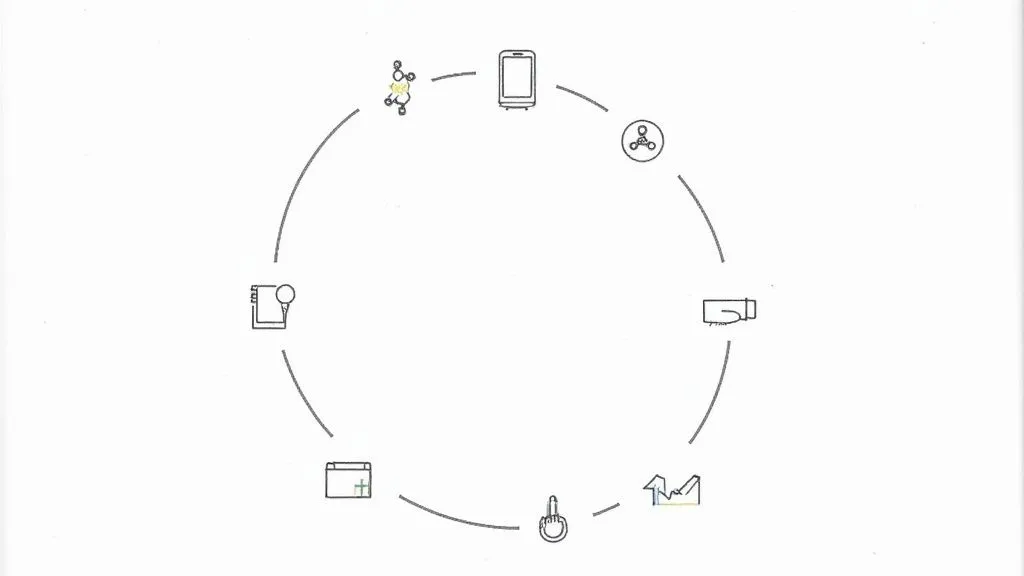
To really get to grips with the process of procurement, we have to go deeper than just a bird’s-eye view. Let’s break down the individual steps that make up the entire journey from start to finish. Think of it as a well-oiled relay race—each stage has to be nailed before the baton is passed to the next, making sure everything runs smoothly and efficiently.
This lifecycle isn’t some rigid checklist. It’s more of a dynamic roadmap that guides a company from the first inkling of a need all the way to building a solid, valuable partnership with a supplier. Every phase has its own purpose, challenges, and critical outcomes that all feed into the bigger picture of procurement success.
Stage 1: Identifying and Defining the Need
Every single procurement journey starts with a spark: someone realises a need. This could be anything, really. Maybe a department needs new project management software, or a factory is running low on a critical part for its production line. This first step is arguably the most important, because if you don’t define the need properly, you’re setting yourself up for a poor outcome.
It’s just not enough to say, “we need a new system.” You’ve got to be precise. This thinking usually gets formalised into a document like a Statement of Work (SOW) for services or a detailed specification sheet for goods. This document becomes the blueprint for every decision that follows.
Stage 2: Sourcing and Vetting Potential Suppliers
Once the need is crystal clear, the hunt for the right partner begins. This is a lot more involved than a quick Google search. Proper, strategic sourcing involves digging into market research, identifying a pool of potential suppliers, and then sending out feelers like a Request for Information (RFI) to gather some initial data.
From there, the real vetting starts. This is where due diligence is everything. The goal is to whittle that long list down to a shortlist of suppliers who aren’t just capable, but also financially stable, compliant, and a good cultural fit for your organisation. This is where you’ll want to run thorough background checks. For a solid framework on how to approach this, you can check our guide on building a due diligence checklist here: https://responsehub.ai/your-due-diligence-checklist-for-2025-10-core-areas.
A supplier is more than just a provider of goods or services; they are an extension of your own operations. Thorough vetting isn’t about mistrust—it’s about building a foundation for a reliable and secure partnership.
Stage 3: Evaluating Proposals and Selecting a Partner
With a solid shortlist of vetted suppliers in hand, it’s time to ask for formal proposals. This is typically done through a Request for Proposal (RFP) or a Request for Quote (RFQ). These documents ask suppliers to lay out their solution, pricing, implementation plan, and how they’ll support you.
When the responses come in, you need a structured way to evaluate them. Using a scoring matrix is a great way to compare suppliers objectively against the criteria you’ve already decided are important, such as:
- Technical capability: Does their solution actually meet all the requirements you laid out in the SOW?
- Cost-effectiveness: Is the price reflective of genuine value, or are there hidden costs?
- Company stability and reputation: What’s their track record? Are they built to last?
- Cultural fit: Do their values and way of working gel with yours?
This methodical approach makes sure the final choice is based on a complete picture of value, not just who came in with the lowest price.
Stage 4: Negotiating Terms and Awarding the Contract
Once you’ve picked your preferred supplier, you move into the negotiation phase. This is a team sport, usually involving people from procurement, legal, and the business unit that needs the service. The aim is to finalise everything—pricing, service levels, delivery schedules, payment terms, and crucial data security obligations.
A good negotiation ends in a win-win agreement that minimises risk for everyone involved. As soon as all the terms are agreed, the formal contract is drawn up, signed, and awarded. This document is now the single source of truth for the relationship.
Stage 5: Managing the Purchase Order and Fulfilment
With a contract signed, the process becomes transactional. Your company issues a Purchase Order (PO), which is a legally binding document that officially kicks off the request for the goods or services. The PO locks in the details like quantities, agreed-upon prices, and delivery dates, all while referencing the main contract.
The supplier then gets to work on fulfilment, delivering what they promised. Keeping the lines of communication wide open between you and the supplier is vital here to manage expectations and get ahead of any potential delays. For major projects, like following an ultimate guide to office relocation, getting this fulfilment stage right is essential to keep everything on track.
Stage 6: Receiving and Inspecting Goods or Services
When the order arrives, the receiving team needs to give it a thorough inspection to make sure it matches the PO and meets all the quality standards you expect. For physical goods, this means counting items and checking for damage. For services or software, it might involve user acceptance testing (UAT) to confirm it all works as it should.
If everything checks out, the delivery is formally accepted. If not, you’ll trigger the dispute resolution process that was laid out in the contract.
Stage 7: Processing Invoices and Ensuring Timely Payment
After acceptance, the supplier sends over an invoice. Your accounts payable team then performs a three-way match—a critical internal control where they compare the PO, the delivery receipt, and the supplier’s invoice. This is just a smart way to ensure the company only pays for what was actually ordered and received.
Once it’s all verified, the invoice is approved and paid according to the terms you negotiated. Paying on time isn’t just good manners; it’s fundamental to maintaining a healthy, long-term relationship with your suppliers.
Stage 8: Reviewing Performance and Managing the Relationship
The procurement lifecycle doesn’t just stop once the invoice is paid. This is a common mistake. Ongoing supplier relationship management (SRM) is what separates decent procurement from truly great procurement. This final, ongoing stage is all about monitoring and evaluating your supplier’s performance against the Key Performance Indicators (KPIs) you both agreed to in the contract.
Holding regular performance reviews, sharing feedback, and planning together helps turn a simple transaction into a real partnership. This continuous dialogue drives improvement, sparks new ideas, and makes sure the relationship keeps delivering maximum value for years to come.
Understanding the Key Roles and Responsibilities
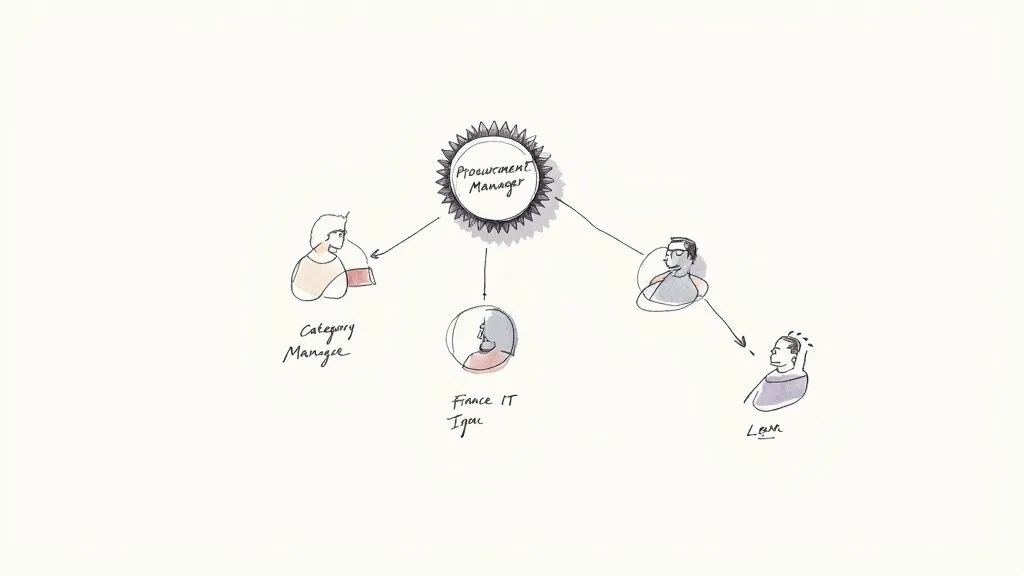
A really effective process of procurement is never a one-person show. Think of it more like an orchestra, where every musician has a unique part to play, but they all need to be perfectly in sync to create something brilliant. If you’re a B2B vendor, figuring out who plays which instrument is fundamental to navigating the sales cycle and building strong, lasting relationships.
Trying to sell to a company without knowing who does what is like trying to sell a new CRM to the legal team—you’re simply talking to the wrong person. Pinpointing the real decision-makers and influencers at each stage is what separates a stalled deal from a successful one. It helps you tailor your conversations, address the right concerns, and ultimately, get the deal done more efficiently.
Let’s meet the key players.
The Strategic Orchestrators
At the very centre of the action, you’ll find the core procurement professionals. These are the people managing the strategy and the day-to-day execution, making sure the entire project stays on track and actually delivers value to the business.
- Procurement Manager: This is your big-picture strategist. They design and look after the entire procurement process, manage the team, and make sure every purchase aligns with the company’s wider financial and operational goals. They’re focused on everything from risk management to overall cost savings.
- Category Manager: A true specialist, the Category Manager dives deep into specific areas of spending, like IT software, marketing services, or raw materials. They build up serious market expertise, nurture key supplier relationships, and map out long-term strategies to get the best possible value in their niche.
- Contract Administrator: Think of this person as the guardian of compliance. Once a supplier has been chosen, the Contract Administrator takes over the entire contract lifecycle. They handle everything from drafting and negotiation to ensuring all the terms and conditions are actually being met. They live and breathe legal clauses, service level agreements (SLAs), and regulatory rules.
The Crucial Collaborators
Procurement rarely, if ever, works in a silo. It depends heavily on the expertise, input, and approval from all sorts of other departments. These stakeholders are the vital supporting cast, providing the context and requirements needed for a good outcome. Without their buy-in, a deal often can’t move forward.
A successful procurement decision is rarely made by one person. It’s a collective judgement call, informed by specialists from across the organisation who each bring a critical piece of the puzzle—be it financial viability, technical feasibility, or legal integrity.
Understanding these cross-functional dynamics is absolutely key. For instance, a SaaS vendor selling a new marketing tool needs to win over not just the Category Manager but also the Head of Marketing (who will actually use it), the CFO (who holds the budget), and the IT Security team (who will assess the risk).
The Cross-Functional Team
Here’s a breakdown of the most common internal players and what they’re typically focused on during the procurement process:
| Department | Key Responsibility | What They Care About Most |
|---|---|---|
| Finance | Approving budgets and ensuring fiscal prudence. | ROI, total cost of ownership (TCO), and payment terms. |
| IT/Security | Vetting technical specs and data security. | Integration capabilities, compliance, and risk mitigation. |
| Legal | Reviewing contracts for risk and compliance. | Liability, data privacy clauses, and termination rights. |
| End-Users | Defining the need and using the product/service. | Functionality, ease of use, and day-to-day performance. |
By mapping out these roles within a target company, vendors can move beyond relying on a single point of contact. You can build a multi-threaded engagement strategy, speaking directly to the unique priorities of each stakeholder and showing how your solution delivers value across the board. This turns a simple sales pitch into a collaborative, problem-solving conversation, massively increasing your chances of success.
Navigating UK Public Sector Procurement
Trying to win work with the public sector is a whole different world compared to dealing with private companies. While the private sector can often move quickly and flexibly, the UK government’s process of procurement is deliberately built on a foundation of transparency, fairness, and squeezing every drop of value from taxpayer money. If you’re a business looking to become a government supplier, getting your head around this unique environment is the essential first step.
And it’s a massive market. In the UK, public sector procurement accounts for a huge slice of government spending. A recent analysis found the UK public sector spent around £249 billion in the 2024/25 financial year, and that doesn’t even include capital projects. This figure reflects a conscious push by the government to spread contracts more widely, moving away from relying on a handful of massive contractors to encourage more competition. You can dive deeper into who these strategic suppliers are in Tussell’s full report.
The Core Principles of Public Procurement
A private company might pick a supplier based on a long-standing relationship or even a gut feeling, but public bodies don’t have that luxury. They have to follow strict, legally-binding rules designed to remove bias and give every potential supplier a fair shot.
You’ll find that almost every decision comes down to three core principles:
- Transparency: Every opportunity has to be advertised publicly, and the scoring criteria must be laid out clearly from the start. Decisions are recorded and are often public, holding everyone accountable.
- Fairness and Non-Discrimination: All suppliers, big or small, local or national, must be treated exactly the same. The entire system is structured to prevent any kind of favouritism and create a level playing field.
- Value for Money: This is probably the most misunderstood principle. It’s not just about finding the cheapest option. It’s a careful balancing act of cost, quality, and long-term benefits, often called the ‘Most Economically Advantageous Tender’ (MEAT).
Finding and Winning Government Contracts
Getting through this process takes a systematic approach. You’ll find most opportunities listed on official government websites, like Contracts Finder and Find a Tender. Your success will almost always come down to how well you can answer the detailed requirements set out in the tender documents.
To give yourself the best chance, your proposals need to reflect public sector values. This isn’t just about proving you can do the job; it’s about showing how you support wider social value goals. That could mean anything from your environmental policies to creating apprenticeships or supporting local communities. The bidding itself is very formal, so you really need to understand how tenders work. To get to grips with it, have a look at our guide on what tenders are and how to approach them.
Winning a public sector contract is less about a slick sales pitch and more about submitting a meticulously detailed, compliant, and evidence-backed proposal. Your document has to prove, beyond any doubt, that you meet every single requirement and offer the best overall value.
Ultimately, cracking the public sector market takes patience and a lot of prep work. It means putting in the time to learn the unique rules, making sure your business aligns with government priorities, and crafting bids that aren’t just competitive, but completely bulletproof.
How to Ensure Compliance and Manage Risk
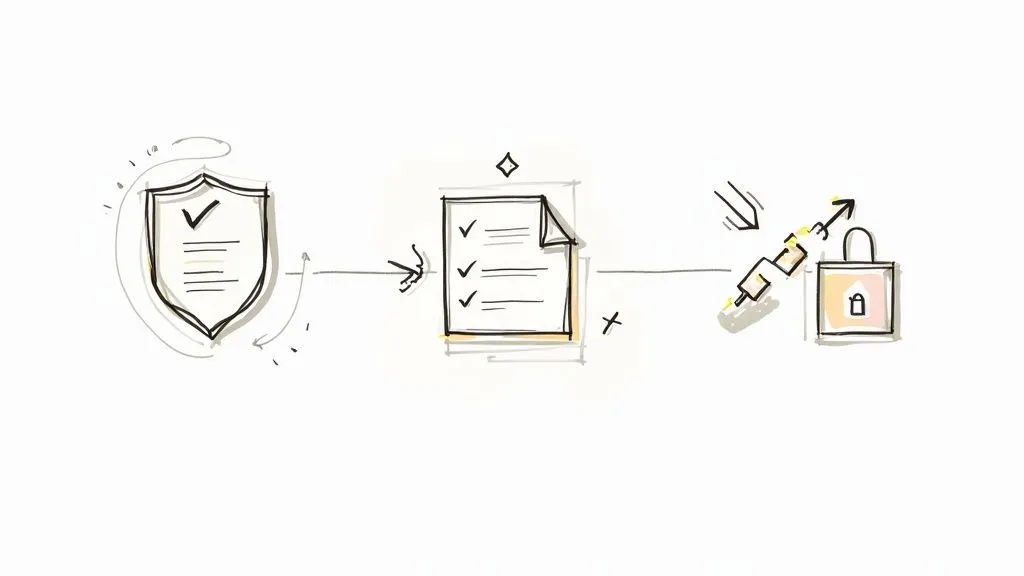
A world-class procurement process isn’t just about getting the best price. It’s built on a bedrock of strong compliance and smart risk management.
Without these safeguards, you’re leaving your organisation wide open to legal trouble, financial losses, and a damaged reputation. This is where procurement transforms from a simple buying function into a strategic guardian of the entire business.
Operating in this space means every move must be ethical, legal, and secure. For any serious supplier, proving you have a tight grip on compliance isn’t just a bonus—it’s a fundamental requirement, especially as regulations get tougher every year.
The Pillars of Procurement Compliance
Think of compliance as the rulebook for every purchase. It’s a complex web of internal policies and external laws that ensures every deal is transparent, ethical, and above board. Getting this right means mastering a few critical areas.
Key domains you can’t ignore include:
- Regulatory Adherence: This covers massive pieces of legislation like the General Data Protection Regulation (GDPR), which dictates how you handle data, and the Modern Slavery Act, which demands companies report on efforts to stamp out forced labour in their supply chains.
- Ethical Standards: This is all about establishing and enforcing strict anti-bribery and corruption policies, making sure every supplier conversation is handled with complete integrity.
- Internal Controls: These are your own internal rules—things like spending limits, approval hierarchies, and separating duties to stop fraud or unauthorised spending in its tracks.
To get your team up to speed, exploring actionable compliance training best practices can make a huge difference in ensuring everyone understands their role.
Mitigating Risk Through Diligent Vetting
If compliance is the rulebook, then risk management is your game plan. It’s about spotting potential threats in your supply chain and having measures in place to neutralise them before they can cause any real damage. One of the most effective tools in your arsenal here is thorough supplier due diligence.
This isn’t just a quick credit check. It’s a deep dive into a potential partner’s operational stability and financial health. We break down a solid approach in our practical guide to vendor due diligence, showing you how to properly assess suppliers. For SaaS and technology vendors, this almost always includes a security questionnaire—a detailed assessment designed to pick apart their cybersecurity defences and data protection practices.
Effective risk management isn’t about avoiding all risk—it’s about understanding it, preparing for it, and ensuring your organisation is resilient enough to withstand unforeseen shocks, from cyber threats to supply chain disruptions.
New laws are constantly reshaping this field. For instance, the UK Procurement Act, implemented in late 2024, brought significant improvements to data transparency. We saw direct award contracts jump from 15% of published procedures in March of the following year to 24% by May. This flood of new data helps businesses better monitor competition and fairness, making strong, provable compliance more critical than ever for suppliers who want to win.
Got Questions About Procurement? We’ve Got Answers
It’s completely normal to have questions when you’re navigating the world of procurement, whether you’re new to a procurement team or a vendor trying to understand your customer’s buying process. Let’s clear up some of the most common queries.
Getting these fundamentals right helps everyone involved—buyers and suppliers alike—work together more effectively, paving the way for smoother deals and much stronger business relationships.
What’s the Difference Between Procurement and Purchasing?
It’s a classic mix-up, but the distinction is really important. Purchasing is one specific action: the nuts and bolts of buying something. It’s about raising a purchase order, taking delivery of the goods, and paying the bill.
Procurement, on the other hand, is the whole strategic picture. It’s the end-to-end journey that happens long before and long after the actual purchase. This includes figuring out what the business actually needs, finding and vetting the right suppliers, negotiating contracts, and managing those relationships for the long haul.
A simple way to think about it: purchasing is just one scene, but procurement is the entire movie—from the opening credits to the final sequel.
How Does Technology Actually Improve the Procurement Process?
Modern tech, like e-procurement software and Source-to-Pay (S2P) platforms, has dragged procurement out of the filing cabinet and into the 21st century. It takes a function that was once buried in paperwork and transforms it into a smart, data-led operation. By automating things like matching invoices to purchase orders, it slashes human error and frees up the team to focus on strategy instead of admin.
For vendors, this is great news. It often means a faster, more transparent sales cycle. When everyone’s working from a central platform, communication is clearer, proposals are easier to submit, and you can actually see the status of your payments. It just makes life easier for everybody.
What Are the Most Important Metrics to Track in Procurement?
How do you know if a procurement team is actually doing a good job? You measure it. Tracking the right Key Performance Indicators (KPIs) is essential for proving the department’s value and finding ways to get better.
While there are dozens of things you could track, a few metrics stand out as critical:
- Cost Savings: The real, hard-and-fast value you’ve brought in through smart negotiations and sourcing.
- Purchase Price Variance (PPV): This is the gap between what you planned to spend (the standard or budgeted cost) and what you actually paid.
- Supplier Performance Scorecards: An objective way to rate your vendors on things like quality, reliability, and whether they deliver on time.
- Procurement ROI: The big-picture number that shows the overall efficiency and financial return the procurement team delivers to the business.
What Is Strategic Sourcing All About?
Strategic sourcing is so much more than just hunting for the lowest price. It’s a proactive and methodical approach to buying, where you’re constantly re-evaluating and improving how the company sources everything it needs. The goal isn’t just a one-off saving; it’s about getting the best possible value over the long term.
This means digging into company-wide spending data, keeping a close eye on market trends to spot opportunities, and building genuine, collaborative partnerships with your most important suppliers. Ultimately, it’s about using procurement to spark innovation, minimise risk, and give your company a real competitive edge.