· Jane Iamias · procurement manager · 21 min read
What is a procurement manager? Roles, Skills & Career Path
What is a procurement manager? Explore the role, essential skills, and how they drive strategic value in modern procurement.
At its heart, a procurement manager is the strategic mind behind a company’s purchasing. They’re responsible for getting all the goods, services, and work the business needs to function. But this is a far cry from simple “buying.” It’s about squeezing the most value out of every pound spent, heading off risks before they become problems, and building a genuine competitive edge through smart sourcing and strong supplier relationships.
The Real Role of a Modern Procurement Manager

Think of a procurement manager as the conductor of a business orchestra. They might not play every instrument themselves, but their job is to make sure every supplier, contract, and purchase works in perfect harmony to hit the company’s biggest goals. It’s a delicate balance of financial savvy, tough negotiation, and airtight risk management.
The role has changed massively over the years. Not long ago, procurement was all about cutting costs—finding the absolute lowest price, no matter what. Today, it’s about creating value.
More Than Just a Buyer
A modern procurement manager’s plate is full of strategic tasks that go way beyond placing orders. Their work is crucial for the company’s overall health and involves:
- Driving Efficiency: They fine-tune the entire purchasing process, making sure the business gets what it needs, right when it needs it, without overspending or getting bogged down by delays.
- Mitigating Critical Risks: They are the first line of defence against everything from supply chain chaos and dodgy vendor security to non-compliance penalties.
- Creating a Competitive Edge: By finding innovative suppliers and locking in great terms, they can directly boost product quality and help the company move faster than its rivals.
This strategic weight is reflected in what they earn. In the United Kingdom, for instance, the average salary for a Procurement Manager hovers around £49,496 per year. Seasoned pros can easily command over £60,000. These figures show just how much businesses rely on top-tier procurement talent.
To give you a quick snapshot, here’s a breakdown of what the role entails.
Procurement Manager at a Glance
| Core Function | Primary Objective | Key Collaborators |
|---|---|---|
| Strategic Sourcing & Vendor Management | Maximise value, minimise risk, and secure competitive advantage. | Finance, Legal, IT/Security, Engineering, Sales |
| Contract Negotiation & Lifecycle Management | Ensure favourable terms, compliance, and performance. | Legal, Department Heads, Finance |
| Risk Assessment & Mitigation | Identify and manage supply chain, security, and compliance risks. | Security, Compliance, Legal, Operations |
This table just scratches the surface, but it shows how the procurement manager acts as a central hub, connecting different parts of the business.
A Strategic Business Partner
Ultimately, the procurement manager’s job is to turn business needs into smart purchasing decisions. Whether the company is buying new software, sourcing raw materials, or hiring consultants, the procurement team ensures the deal aligns with budgets, security protocols, and long-term strategy.
They are deeply woven into the supply chain and need a firm grasp of essential supply chain metrics to track performance and spot areas for improvement.
A great procurement manager doesn’t just buy things for the company; they build strategic partnerships that fuel the company’s growth, protect its assets, and enhance its reputation in the market.
This requires a deep understanding of market trends, what suppliers are capable of, and what internal teams actually need. They manage the entire bidding process, a complex world of its own—our guide on what tenders are provides a clear look at bidding and contracts.
From Strategy to Signature: A Day in the Life

So, what does a procurement manager actually do all day? It’s easy to picture someone just buying things, but the reality is far more strategic. Their work isn’t a random to-do list; it’s a well-defined cycle that takes a business need from a vague idea to a fully managed supplier relationship. This whole journey is often called the procurement lifecycle, and it’s the blueprint for their daily work.
It all kicks off with identifying a need. This is rarely as simple as someone asking for a new laptop. It might be the engineering team needing a specific raw material for a new product, or the marketing department searching for a specialised analytics platform. The procurement manager’s first job is to dig in and understand the why behind the request.
This means sitting down with internal teams to pin down exactly what’s required. A fuzzy request almost always leads to a poor purchase, so they work to translate broad departmental goals into concrete specifications. Getting this right from the start prevents costly mix-ups down the line and ensures the final solution actually solves the original problem.
Mastering Strategic Sourcing
Once the need is crystal clear, the hunt for the right partner begins. This is where strategic sourcing comes in—a methodical process of finding, evaluating, and ultimately selecting suppliers. Forget a quick Google search; this is about deep market analysis.
The manager dives into the supplier landscape, figuring out who can meet the company’s technical, financial, and even ethical standards. It’s about much more than just comparing prices. They’re analysing a supplier’s stability, their production capacity, and their reputation in the industry to build a solid shortlist of candidates.
To keep things fair and transparent, this process relies on formal documentation:
- Request for Information (RFI): Think of this as casting a wide net. It’s a preliminary document used to gather general information from a broad range of potential suppliers.
- Request for Proposal (RFP): This is far more detailed. It asks suppliers to propose a specific solution to the company’s challenge, including how they would deliver it.
- Request for Quotation (RFQ): The most straightforward of the bunch, this is a direct request for pricing on a clearly defined list of goods or services.
Knowing which tool to use is a key skill. You wouldn’t use an RFP for buying office chairs, just as an RFQ wouldn’t work for a complex software implementation. This structured approach creates a level playing field and provides the data needed to make decisions you can stand behind.
Navigating Negotiations and Contracts
After sifting through proposals and picking a preferred supplier, the procurement manager puts on their negotiator hat. This is where they work to secure the best possible terms for the company. The goal isn’t just to squeeze the supplier on price; it’s about hammering out a balanced agreement that sets the stage for a healthy, long-term partnership.
Negotiations can cover everything from delivery schedules and payment terms to service levels and warranties. All the data gathered during the sourcing phase gives them the leverage they need to push for favourable conditions. Interestingly, recent industry reports show that AI-powered procurement tools are starting to speed this up, automating parts of the supplier decision and feeding negotiators real-time data.
A signed contract isn’t the finish line; it’s the starting pistol for the relationship. The procurement manager’s job is to make sure that agreement is a living document, not just something filed away in a drawer.
Once the terms are settled, the legal team usually steps in to draft the formal contract. The procurement manager then reviews it with a fine-tooth comb, making sure every negotiated point is captured accurately before it goes for signature.
Managing Ongoing Relationships and Performance
The final, and perhaps most crucial, phase is supplier relationship management (SRM). This is the ongoing work of monitoring a supplier’s performance against what was promised in the contract. Is the quality up to scratch? Are deliveries on time? Are they hitting their service-level agreements (SLAs)?
Regular performance reviews, scorecards, and simply keeping the lines of communication open are all vital. A great procurement manager acts as a bridge, connecting the supplier with the internal teams who rely on their service. They step in to resolve issues, manage contract renewals, and ultimately ensure the company is getting the full value it paid for.
This cycle—from need to management—is the heart of the procurement manager’s role. It’s a powerful blend of strategic planning, sharp analysis, and skilled communication that turns simple purchasing into a real competitive advantage.
The Skills That Define a Great Procurement Leader

Success in procurement isn’t just about haggling for the lowest price. It’s a sophisticated blend of analytical savvy and sharp people skills. A truly effective procurement manager is part data scientist, part diplomat, and part strategist. They need to be able to dive deep into a spreadsheet and then surface to navigate a high-stakes negotiation with total confidence.
This unique combination of hard and soft skills is what separates a good procurement manager from a great one. While the technical know-how provides the foundation, it’s the ability to communicate, influence, and build relationships that elevates their impact from simple cost-cutting to genuine, long-term value creation.
The Foundation of Hard Skills
Certain technical skills are simply non-negotiable for anyone in this role. These are the practical, measurable abilities that allow a procurement leader to analyse situations, manage complex processes, and make data-backed decisions that protect the company’s bottom line.
Without a solid grasp of these fundamentals, any procurement strategy is built on shaky ground.
These core hard skills include:
- Financial and Data Analysis: This is the bedrock of procurement. A manager has to be comfortable performing spend analysis to see where the money is going, evaluating a supplier’s financial health to gauge risk, and building a compelling business case using return on investment (ROI) calculations.
- Contract Management: Knowing your way around a contract is vital. This means being fluent in key clauses, liability terms, and service-level agreements (SLAs) to make sure the company is protected and suppliers are held accountable for their promises.
- Mastery of Procurement Software: Proficiency with e-procurement platforms (like Coupa or SAP Ariba) and Enterprise Resource Planning (ERP) systems is now standard. These tools are essential for automating workflows, managing supplier data, and providing the visibility needed for smart decisions.
For example, when looking at proposals for new cloud infrastructure, the manager uses their analytical skills to compare not just the sticker price but the total cost of ownership. This means factoring in implementation fees, support costs, and the potential financial hit from downtime. This data-first approach shifts the conversation from subjective preference to objective value.
The Amplifier of Soft Skills
While hard skills get you in the game, soft skills are what ultimately win it. These are the interpersonal abilities that allow a procurement manager to translate their analysis into action, align stakeholders with competing priorities, and forge the strong supplier partnerships that create lasting value.
You can’t always measure these skills on a spreadsheet, but their presence—or absence—is immediately obvious.
An exceptional procurement manager doesn’t just manage transactions; they orchestrate relationships. They know that the best deals are built on a foundation of trust, clear communication, and a shared understanding of what success looks like.
Three soft skills stand out as particularly crucial:
- Masterful Negotiation: This goes far beyond arguing over price. It’s about understanding the other party’s motivations, finding creative win-win solutions, and maintaining a professional relationship even when the discussions get tough. The goal is always a sustainable agreement, not a one-sided victory.
- Stakeholder Management and Diplomacy: A procurement manager is constantly balancing the needs of different departments. The engineering team might want the shiniest new software, while the finance team is laser-focused on the budget. The manager acts as a mediator, using their influence to guide everyone towards a consensus that serves the entire business.
- Unwavering Ethical Judgment: Procurement holds both the company’s purse strings and its reputation in its hands. It is absolutely essential to maintain the highest ethical standards, avoid conflicts of interest, and ensure supplier selection is always fair and transparent. This builds trust internally and with the entire supply base.
Imagine a critical software renewal is coming up. The vendor is pushing for a steep price increase, and the internal teams are starting to panic. A skilled procurement manager uses diplomacy to calm everyone down, negotiation to challenge the price hike with hard market data, and ethical judgment to ensure the final deal is fair and defensible. This blend of skills turns a potential crisis into a strategic win.
Becoming the First Line of Defence Against Vendor Risk
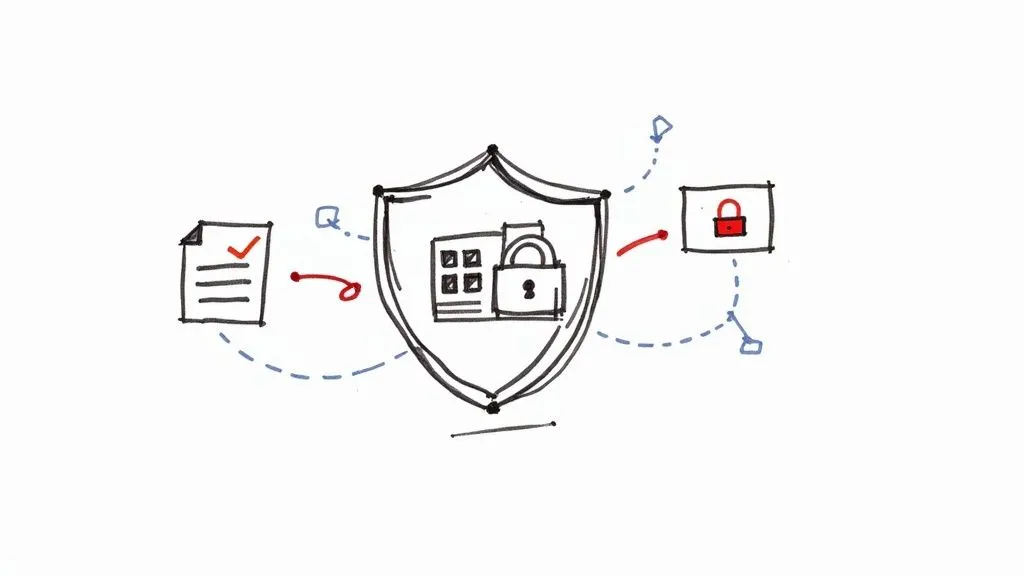
In today’s interconnected business world, every new supplier brings both opportunity and potential threat. That game-changing technology you’re onboarding could just as easily become the source of a catastrophic data breach if it’s not vetted properly. This is where the procurement manager’s role has shifted dramatically; it’s no longer just a commercial function but a critical security one.
Think of them as the gatekeepers. They are the first line of defence against a rising tide of supply chain, compliance, and cybersecurity risks.
Bringing a new vendor into the fold is no longer just about haggling over price and ticking off feature boxes. It’s now a rigorous exercise in trust and verification. A single weak link in your supply chain can have devastating consequences, and with a significant percentage of data breaches originating from third-party vendors, due diligence has never been more important. The procurement manager leads this charge, making sure every partner meets the company’s strict security standards before they get anywhere near sensitive systems or data.
Navigating the Vendor Due Diligence Process
At its heart, modern vendor due diligence is a structured investigation into a supplier’s operational and security integrity. The procurement manager orchestrates this entire process, working hand-in-glove with security, legal, and compliance teams to build a complete risk profile for each potential partner. This isn’t about asking a few surface-level questions; it’s about gathering and analysing hard evidence of a vendor’s security posture.
This is where industry-standard frameworks and questionnaires come into play. They create a common language for assessing risk and allow for consistent, repeatable evaluations across all potential suppliers.
Key parts of this assessment usually include:
- Security Questionnaires: These are detailed surveys designed to probe a vendor’s security controls. Popular standardised questionnaires include the Consensus Assessments Initiative Questionnaire (CAIQ) or the Standardised Information Gathering (SIG) questionnaire.
- Compliance Certifications: The procurement manager will check if a vendor holds relevant certifications, such as SOC 2 reports or ISO 27001 certification. These third-party audits offer objective proof of a vendor’s commitment to security.
- Policy and Procedure Review: This involves a close look at the vendor’s internal documentation—their information security policy, incident response plan, and data privacy policies—to ensure they align with your own company’s standards.
This deep dive into a vendor’s security is a complex and often time-consuming task. For a more detailed walkthrough, have a look at this practical guide to vendor due diligence, which breaks down the entire process.
The Crucial Partnership Between Procurement and Security
No procurement manager can do this alone. The most effective vendor risk management programmes are built on a solid partnership between the procurement and information security teams. Procurement brings a deep understanding of the commercial drivers and the supplier landscape, while the security team provides the technical expertise needed to interpret complex security assessments.
This collaboration transforms due diligence from a simple box-ticking exercise into a strategic risk management function. The security team helps the procurement manager understand what the answers in a questionnaire really mean, spotting red flags that might otherwise be missed. For a deeper look into how procurement contributes to securing the supply chain, consider exploring resources on Third-Party Risk Management (TPRM).
A signed contract with a new vendor isn’t the end of the security process; it’s the beginning. The procurement manager’s responsibility extends to ongoing monitoring to ensure the vendor remains compliant and secure throughout the entire relationship.
Automating Security Reviews for Speed and Accuracy
Let’s be honest: the old way of doing things is broken. Manually sending spreadsheets, chasing vendors for answers, and then painstakingly reviewing hundreds of responses is slow, error-prone, and simply doesn’t scale. This is where modern tools are making a huge difference.
Platforms like ResponseHub are designed to automate and centralise the entire security questionnaire and due diligence workflow. Instead of getting lost in chaotic email threads and spreadsheets, procurement and security teams can use a central hub to manage vendor assessments, track progress, and build a reusable knowledge base of security information. This approach doesn’t just dramatically speed up vendor onboarding; it ensures a more thorough and consistent review every single time.
Building Your Procurement Career Path
A career in procurement isn’t a dead-end job; it’s a dynamic journey with a surprisingly clear path for those with ambition. You don’t just sit in one spot. People who thrive in this field are constantly moving, progressing from tactical buying roles into positions with real strategic influence. The route from an entry-level Buyer to a Chief Procurement Officer (CPO) is paved with experience, specialist skills, and a genuine understanding of how the business ticks.
Most people get their start as a Procurement Specialist or Buyer. This is where you cut your teeth, learning the fundamentals like processing purchase orders, looking after smaller supplier accounts, and getting to grips with the company’s internal procure-to-pay systems. It’s the essential groundwork—learning the operational nuts and bolts of the profession before you can run.
Climbing the Ladder to Management
After a few years of solid, hands-on experience, the natural next step is often to Procurement Manager. This is a major shift. Your focus moves from purely day-to-day tasks to a much more strategic outlook. As a manager, you’ll take ownership of entire spending categories, lead high-stakes negotiations, and become the go-to person for managing key supplier relationships and heading off potential risks.
From there, the path continues upwards:
- Senior Procurement Manager: In this role, you’ll likely manage a small team of specialists and take the lead on bigger, more critical sourcing projects.
- Procurement Director: Now you’re responsible for the entire procurement function for a business unit or even a whole region. You’re the one setting the strategy for your department and reporting directly to senior leadership.
- Chief Procurement Officer (CPO): This is the top of the mountain. As a CPO, you’re part of the executive team, shaping the global procurement strategy and making sure every purchasing decision aligns with the company’s biggest goals.
Accelerating Your Growth with Certifications
Experience on its own is powerful, but formal qualifications can give your career a serious boost. Professional certifications are more than just a piece of paper; they prove you have a verified level of expertise and show a real commitment to your craft.
In the UK and internationally, the gold standard is the Chartered Institute of Procurement & Supply (CIPS). Earning your MCIPS status (Member of CIPS) sends a clear message to employers: you have a comprehensive and professional grasp of procurement and supply chain management.
Other valuable certifications let you specialise in niche areas like contract management or supply chain logistics, helping you build a unique skill set that makes you stand out from the crowd. Learning to put together a winning proposal is also a game-changer, and our guide on how to write a tender that wins contracts is packed with practical tips for any stage of your career.
Understanding the Current Hiring Landscape
The demand for skilled procurement professionals is high, but what companies are looking for is changing. The UK procurement workforce, estimated to have around 73,900 buyers and procurement officers, really highlights this shift. There’s a clear preference for candidates who are comfortable with digital tools and data analytics. Yet, a major skills gap remains, with 58% of UK hiring managers saying they struggle to find people with the right talent. For a deeper dive, you can discover more insights about the UK procurement workforce on Statista.com.
To get ahead, anyone aiming for a manager role needs to show they’re proficient with spend analytics, e-procurement platforms, and risk management software. Businesses aren’t just looking for cost-cutters anymore. They want strategic partners who can navigate complex supply chains, manage vendor security, and create sustainable value across the entire organisation.
Answering Your Questions About the Procurement Manager Role
As procurement becomes more central to business strategy, a lot of questions pop up. What does a procurement manager really do all day? What are their biggest headaches? And how do they actually help the business?
This section cuts through the jargon to give you straight answers. Think of it as a quick guide for anyone curious about this vital and ever-changing career, whether you’re thinking of becoming one, hiring one, or just working alongside them.
What’s the Biggest Challenge for a Procurement Manager Today?
Without a doubt, the single biggest challenge is the constant tug-of-war between cutting costs and managing a growing list of critical risks. It’s no longer a simple game of finding the lowest price.
Not long ago, procurement was judged almost entirely on one thing: savings. Now, that’s just one piece of a much larger, more complex puzzle. Today’s procurement manager has to navigate a minefield of potential disasters that could hurt the business far more than paying a little extra for a product.
It’s a constant balancing act between competing priorities:
- Supply Chain Stability: With everything from global politics to freak weather events causing disruption, just getting the things you need can be a huge challenge. This often means paying a premium for more reliable, local suppliers or bringing on backup vendors—moves that can go directly against old-school cost-cutting goals.
- Cybersecurity Threats: Every new software vendor or cloud service is another potential door for a data breach. The procurement manager has to lead the charge on rigorous security checks, a process that adds time and complexity to every deal.
- Ethical and Sustainable Sourcing: Customers, investors, and even regulators are demanding to know that products are made ethically and sustainably. Procurement managers are on the front line, responsible for vetting suppliers and making sure the company lives up to its Environmental, Social, and Governance (ESG) promises.
Juggling these strategic demands while still delivering real financial value requires a whole new level of skill. It’s a shift from being a simple buyer to a strategic risk manager.
How Is a Procurement Manager Different from a Purchasing Manager?
While you might hear the titles used interchangeably, their roles are worlds apart. The easiest way to think about it is this: one is about tactical execution, the other is about strategic direction.
A purchasing manager is laser-focused on the day-to-day, operational side of buying. Their world is all about executing the purchase. This means cutting purchase orders, watching inventory levels to meet immediate demands, and chasing down late deliveries. They are absolutely essential for keeping the lights on.
A purchasing manager makes sure the company buys things correctly. A procurement manager makes sure the company buys the right things, from the right partners, under the right terms.
A procurement manager, on the other hand, plays the long game. They’re looking at the entire process from start to finish, always thinking about the bigger picture. Their goal is to create long-term value and protect the company from risk. This involves finding new suppliers, negotiating complex, multi-year contracts, managing key vendor relationships, and making sure the entire procurement plan supports the company’s overall goals.
What Software and Tools Are Essential for a Procurement Manager?
You can’t run a modern procurement department on spreadsheets alone. Today’s pros rely on a whole “tech stack” to get data, automate tedious tasks, and make smarter decisions. Getting comfortable with these tools is non-negotiable.
Here are the key players:
- Enterprise Resource Planning (ERP) Systems: Think of big systems like SAP or Oracle as the central nervous system. They connect procurement data with everything else—finance, inventory, and the wider supply chain.
- E-Procurement Platforms: Tools like Coupa or SAP Ariba are workhorses. They handle the whole procure-to-pay process, from someone requesting a new laptop to paying the final invoice.
- Spend Analysis Software: These specialised platforms dig into the company’s spending data, showing managers exactly where the money is going. This is how they spot opportunities to save money or combine suppliers.
- Vendor Risk Management Platforms: Managing security and compliance risk is a huge job, and specialised software is now a must-have. For instance, a platform like ResponseHub can automate the painful process of sending and chasing security questionnaires, moving all that due diligence out of messy spreadsheets and into a single, organised workflow.
How Does Procurement Actually Help a Company’s Profitability?
Procurement’s impact on the bottom line goes way beyond just squeezing suppliers for a better price. While that’s still a big part of the job, the real value they bring is much broader and more strategic.
First, yes, cost savings are the most obvious contribution. A skilled negotiator with deep market knowledge can secure better prices and payment terms, which immediately cuts expenses and frees up cash.
But their impact on profit doesn’t stop there. They also contribute by:
- Avoiding Disasters (Risk Mitigation): By thoroughly vetting suppliers for financial health and security weaknesses, they prevent incredibly expensive problems down the line. A key supplier going bankrupt or causing a data breach can cost a company millions, making any “savings” from a cheaper, riskier vendor look tiny in comparison.
- Keeping Things Running Smoothly (Operational Efficiency): Getting high-quality parts and services delivered on time prevents factory shutdowns and project delays, which directly protects revenue.
- Driving Innovation: Great procurement isn’t just about buying things; it’s about building partnerships. By working with innovative suppliers, they can bring new technologies or better processes into the company. This can lead to better products and a stronger competitive edge, which is a direct driver of growth.
When it’s done right, a great procurement team acts as a powerful engine for profitability. It protects the company from harm while actively creating new opportunities to grow.