· Jane Iamias · role of procurement · 17 min read
The Strategic Role of Procurement in Business
Explore the modern role of procurement and how it drives value, mitigates risk, and shapes business strategy beyond simple cost-cutting.
At its core, procurement is all about strategically acquiring the goods, services, and work a company needs to function. But it’s a world away from simply “buying things.” Think of it as a strategic hub, expertly managing relationships with suppliers to ensure the business gets the best possible value, not just the lowest price tag.
Understanding the Modern Role of Procurement
Forget the old idea of procurement as a back-office admin task. A modern procurement team is more like the company’s central nervous system for external partnerships. It coordinates every purchase and supplier relationship to make sure the entire business runs smoothly, efficiently, and securely. This is a huge shift from its old reputation as a department that just cuts costs.
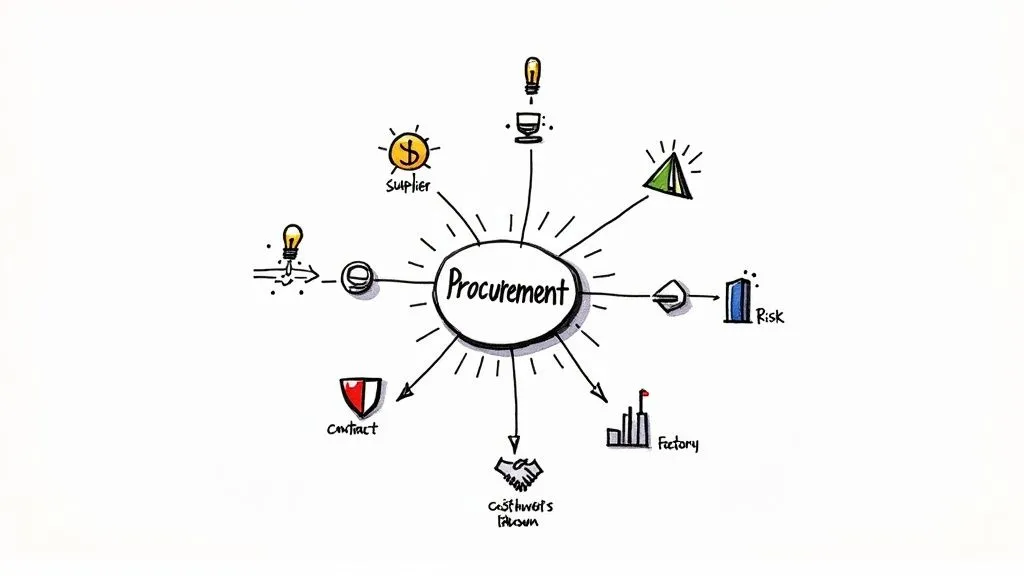
Today, procurement has evolved into a key driver of overall business strategy. Its responsibilities are wide-ranging and deeply woven into other departments. When it’s done right, it can become a powerful competitive advantage.
Core Responsibilities and Strategic Goals
Great procurement is a constant balancing act between day-to-day tactical execution and long-term strategic vision. It’s a dynamic function that touches nearly every part of an organisation.
The main activities really boil down to a few key areas:
- Strategic Sourcing and Negotiation: This involves finding, vetting, and choosing suppliers that truly align with the company’s goals. Once they’re selected, it’s all about negotiating contracts that deliver maximum value while minimising potential risks.
- Supplier Relationship Management (SRM): It’s not just about the deal; it’s about the partnership. Building and nurturing strong, collaborative relationships with key suppliers is crucial for driving innovation, guaranteeing quality, and ensuring reliability.
- Risk Management and Compliance: This is where the team protects the company. They vet vendors for everything from security posture and financial stability to ethical practices, shielding the business from supply chain headaches and legal trouble.
- Cost Management and Optimisation: This goes way beyond haggling over the initial price. A skilled team analyses the total cost of ownership (TCO), making sure that purchasing decisions are financially sound for their entire lifespan.
To see how these day-to-day tasks connect to the bigger picture, here’s a quick summary.
Procurement at a Glance: Core Functions and Strategic Goals
| Core Function | Strategic Objective |
|---|---|
| Strategic Sourcing | Secure partnerships that align with long-term business goals and innovation. |
| Negotiation & Contract Management | Create agreements that deliver maximum value and legally protect the company. |
| Supplier Relationship Management | Build resilient and collaborative supply chains that can adapt to market changes. |
| Risk & Compliance | Protect the business from financial, operational, and reputational damage. |
| Cost Optimisation (TCO) | Improve profitability and ensure sustainable, long-term financial health. |
As you can see, each function is directly tied to a critical business outcome, moving procurement far beyond a simple transactional role.
Procurement’s influence is profound. Its ability to deliver in each core area directly affects everything from product quality and time-to-market to customer satisfaction and, ultimately, profitability.
In the end, the goal isn’t just to buy resources. It’s to do it in a way that fuels growth, manages risk, and actively supports the company’s bigger mission. This gives you a high-level map of procurement’s true impact before we dive into the details of each area.
Navigating the Procurement Lifecycle
To really get to grips with procurement’s strategic value, it’s best to see it as a journey, not just a one-off transaction. This journey is what we call the procurement lifecycle, a methodical process that takes a business need and turns it into a valuable, well-managed asset. It’s all about making sure every pound spent is a smart, compliant investment that delivers the best possible result for the company.
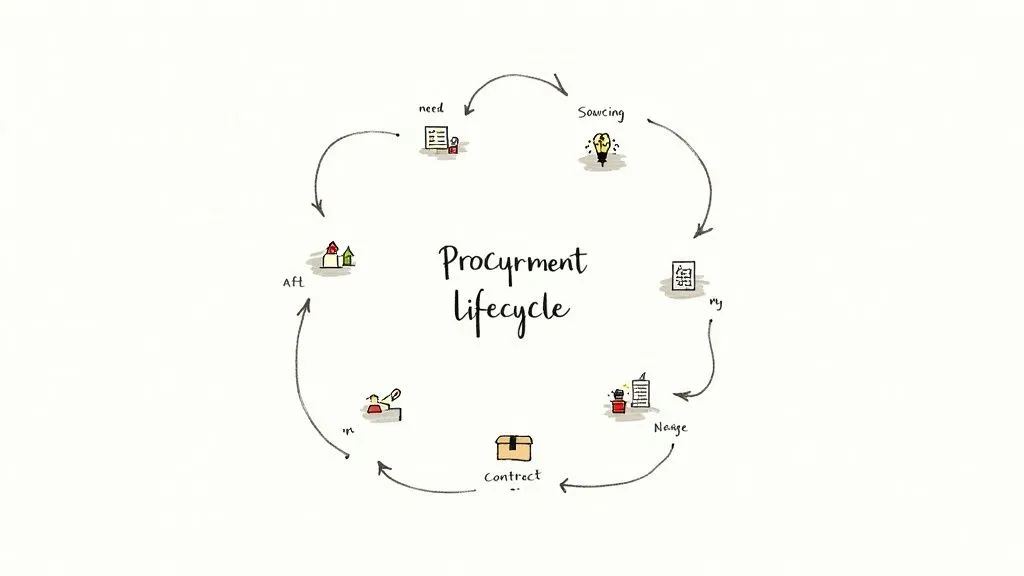
Let’s use a real-world example. Imagine a fast-growing tech firm realises it needs a new Customer Relationship Management (CRM) platform. The lifecycle doesn’t kick off with a frantic search for software vendors. It starts much earlier, with a clear, well-defined business need. This disciplined approach stops people making rushed, reactive decisions and gets everyone on the same page from the get-go.
Identifying Needs and Sourcing Suppliers
The whole process usually starts when a department—let’s say the sales team—hits a wall. Their current system is clunky, inefficient, and can’t keep up with their growth. The first job for the procurement team isn’t to start calling vendors. It’s to sit down with the sales team and properly understand and document their requirements.
What are the absolute must-have features? What’s the budget? Who needs to be involved in the decision?
Only when that need is crystal clear does the sourcing phase begin. This is where the team dives into market research to find potential suppliers who can actually deliver on those specific requirements. It’s a bit of detective work, involving online searches, reading industry reports, and tapping into professional networks to create a solid shortlist of qualified vendors.
From there, it’s time to get formal. The team will send out a Request for Proposal (RFP) or a Request for Quotation (RFQ) to the shortlisted suppliers. This structured process is vital because it ensures every vendor is measured against the exact same yardstick, making the final comparison fair and transparent.
Evaluating Vendors and Negotiating Contracts
Once the proposals are in, the evaluation phase is where a good procurement team really earns its stripes. They’ll assess each vendor not just on price, but on a whole host of other critical factors.
- Technical Fit: Does the software actually do everything the sales team needs it to do?
- Financial Stability: Is this vendor a solid, viable business we can partner with for the long term?
- Security and Compliance: Can they meet our strict data protection and regulatory standards?
- Reputation and References: What are their current customers saying about them?
This stage is all about managing risk. A cheap solution from an insecure or unreliable vendor can end up costing a fortune in data breaches, downtime, and legal headaches. It’s procurement’s job to shield the organisation from these hidden threats.
Proper vetting is absolutely non-negotiable. For many businesses, using a methodical approach is the only way to make sure nothing gets missed. You can get a better sense of what this involves by looking at resources for a comprehensive due diligence checklist.
After the best-fit vendor has been chosen, the contract negotiation begins. This is a critical moment where procurement works to secure the best possible terms on pricing, service levels, and all the legal protections that matter.
Managing Performance and Renewal
The job isn’t done once the ink is dry on the contract. Far from it. After the new CRM is up and running, procurement moves into a phase known as supplier relationship management (SRM). This means keeping a close eye on the vendor’s performance against the agreed-upon Service Level Agreements (SLAs), managing payments correctly, and stepping in to resolve any issues that crop up.
Regular performance reviews are held to make sure the company is actually getting the value it paid for. Then, as the contract period starts to wind down, the cycle comes full circle. Procurement will assess whether to renew the agreement, try to renegotiate the terms, or kick off the sourcing process all over again to find a new supplier. This continuous loop ensures the business always has the best possible solutions the market can offer.
Creating Value Beyond Cost Savings
Getting through the procurement lifecycle smoothly is one thing, but a truly strategic team sees far beyond the immediate transaction. The best procurement professionals know their job isn’t just about shaving pounds off a purchase order; it’s about creating real, lasting value for the whole business. This is where the mindset shifts from simply buying things to strategic sourcing.
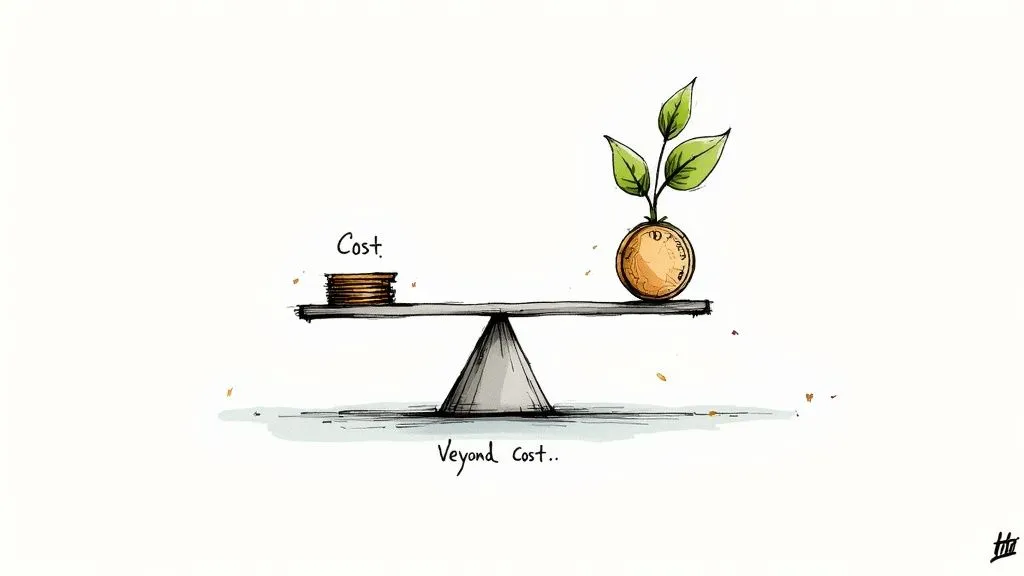
This change in perspective is central to the modern role of procurement. Instead of just grabbing the cheapest option off the shelf, a strategic team looks at the bigger picture to make sure every single decision helps the company hit its main goals.
Understanding Total Cost of Ownership
A key idea behind this value-first approach is the Total Cost of Ownership (TCO). It’s a deceptively simple concept: the cheapest product often isn’t the least expensive one in the long run. TCO makes you look past the initial price tag and add up every single cost that comes with an asset over its entire life.
These “hidden” costs can pop up everywhere:
- Implementation and training fees for new software.
- Ongoing maintenance and support subscriptions.
- Energy consumption for physical equipment.
- Potential downtime and repair costs for unreliable hardware.
Think about it this way: a server that’s 20% cheaper to buy but uses 50% more energy and needs constant maintenance will bleed the business dry over time. While the goal is to find value, understanding the fundamentals, like strategies for reducing operational costs, is crucial for calculating an accurate TCO. By thinking in these terms, procurement turns a simple purchase into a smart financial investment.
Fostering Supplier Relationships
Another massive part of creating value is Supplier Relationship Management (SRM). This is all about moving away from a purely transactional “us vs. them” dynamic with suppliers and building a genuine partnership. Instead of just haggling over every last penny, smart procurement teams focus on building trust and working together.
By treating suppliers as partners, procurement can unlock innovation, improve product quality, and build a more resilient supply chain. A strong relationship encourages suppliers to bring new ideas to the table and offer better support during unexpected disruptions.
This collaborative approach has a direct impact on everything from how quickly new products get developed to whether the company can meet its sustainability targets. You can see this in the public sector, too. In 2023, a massive 86% of public sector procurement spending went to British suppliers, showing a real commitment to building strong domestic partnerships to bolster the UK economy.
Ultimately, by championing both TCO and SRM, the procurement team transforms itself from a simple cost centre into a powerful engine for growth and stability.
Managing Risk and Ensuring Compliance
In any modern business, procurement is your first line of defence. It’s so much more than just a buying department; think of it as a gatekeeper, carefully shielding the organisation from the constant flow of threats that can hide within the supply chain. These risks can be anything from a key supplier suddenly going bust to a software partner getting hit by a major data breach.
At the heart of this protective role is good old-fashioned due diligence. Before any ink dries on a contract, the team needs to thoroughly vet every potential partner. This isn’t just about ticking boxes on a form; it’s a deep dive into a supplier’s operational, financial, and ethical health.
The Gatekeeper Role in Practice
Picture procurement as the security checkpoint for your business relationships. Every new vendor has to pass through a structured screening process to prove they meet your standards before they get anywhere near sensitive data or become part of a critical workflow.
This vetting process looks at several key areas:
- Financial Stability: Is this supplier on solid ground? A partner teetering on the edge of bankruptcy is a massive disruption waiting to happen.
- Security Posture: How seriously do they take data security? We’re looking for proof, like ISO 27001 or SOC 2 certifications.
- Compliance with Regulations: Can they show they’re compliant with major laws like GDPR? A vendor’s slip-up here can bring heavy fines down on your own company.
- Operational Resilience: What happens if disaster strikes their business? A solid business continuity plan is non-negotiable.
By working through these points systematically, procurement spots and neutralises risks before they have a chance to cause any real damage. It’s all about protecting the company’s reputation and keeping the lights on.
Turning Vetting into a Strategic Advantage
This thorough vetting isn’t just about dodging bullets; it’s about building a stronger, more resilient business from the ground up. When every supplier has been properly checked out, your entire supply chain becomes more reliable and secure. You start turning potential liabilities into genuinely trusted partnerships.
A huge part of this is managing the risks that come with any external partner. For some practical ideas on how to approach this, you can find some helpful third-party risk assessment tips to sharpen your own processes. A structured approach like this ensures every new partner makes your organisation stronger, not weaker.
The goal of proactive risk management is to build a network of suppliers who are not just vendors, but true partners in compliance and security. This creates a powerful competitive advantage by ensuring business continuity and protecting customer trust.
For teams handling complex software and SaaS vendors, this whole process becomes even more crucial. Really getting to grips with vendor due diligence is essential for protecting your data and keeping operations running smoothly. For a closer look, our team has put together a practical guide to vendor due diligence that breaks down the steps.
Ultimately, by weaving risk management and compliance checks into every stage of the procurement lifecycle, the function stops being a simple purchasing agent and becomes a strategic guardian of the company’s long-term health.
How Procurement Forges Connections Across the Business
Procurement doesn’t live on an island. Far from it. The best procurement teams act as a central nervous system, connecting and coordinating different departments to make sure everyone is pulling in the same direction.
Think of procurement as the skilled conductor of an orchestra. Their job is to ensure every section—from Finance and Legal to IT and Marketing—plays in perfect harmony. This collaborative role is what separates a reactive purchasing department from a strategic business partner.
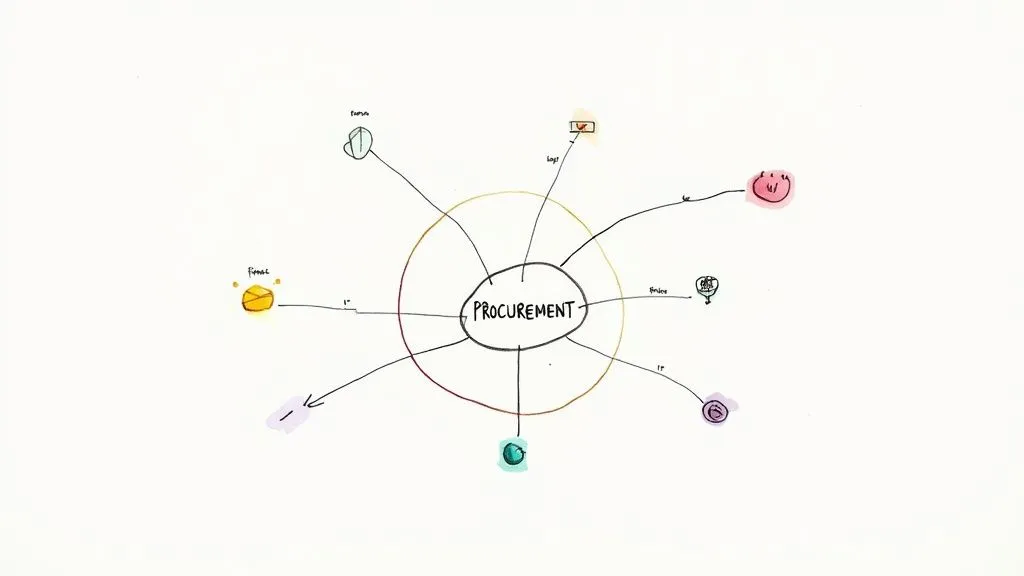
Without this coordination, you get chaos. A marketing team might sign up for a shiny new software tool without realising IT has serious security concerns, or that the legal team would never approve its risky terms of service. Procurement steps in to bridge these gaps, turning potential conflicts into smart, cohesive decisions.
Building Bridges Between Key Departments
The real magic of procurement happens in its day-to-day interactions with other teams. Each collaboration is a unique puzzle, piecing together specialised expertise to get the best possible outcome for the business.
- With Finance: Procurement and Finance are two sides of the same coin. Together, they align departmental requests with company-wide budgets, manage cash flow by negotiating better payment terms, and hold every purchase accountable.
- With Legal: This is all about managing risk. Procurement works hand-in-glove with the legal team to draft, review, and negotiate contracts, making sure every agreement protects the company from liability and complies with regulations.
- With IT and Security: In a world of constant cyber threats, the link between procurement and IT is absolutely critical. They team up to vet technology vendors, ensuring any new software or hardware meets strict security and data protection standards.
The core role of procurement here is to act as an internal business consultant. It translates the needs of one department into the language and requirements of another, ensuring everyone is aligned before any money is spent.
A Catalyst for Smarter Sourcing
By nurturing these cross-functional relationships, procurement ensures sourcing decisions are holistic and well-informed, not just focused on the lowest price.
This joined-up approach is especially important in the world of public sector tendering, where goals like value for money and supplier diversity are paramount. If you’re new to this area, our guide on what tenders are is a great place to start.
We see this in action with UK government policy, which actively tries to bring more small and medium-sized enterprises (SMEs) into the fold. In 2023, the public sector directed an impressive £39.7 billion to SMEs, which made up 20% of its total direct procurement spending. You can dig deeper into how SME public sector spending is evolving in recent analyses.
Measuring What Matters in Procurement
To prove its worth, procurement has to speak the language of the business: results. For too long, the function was judged almost exclusively on cost savings. But that’s only one part of the story. To show how the role of procurement truly drives the business forward, you have to measure what really matters.
Good measurement is what transforms procurement from a back-office cost centre into a genuine value driver. When you have the data, you can fine-tune your strategies, back up your decisions with hard evidence, and show the C-suite exactly how your work impacts the bottom line. It’s less about justifying your existence and more about proving your influence.
Key Metrics for Modern Procurement
So, what should you be tracking? A modern procurement team looks at a blend of KPIs that give a complete picture of efficiency, risk management, and overall value.
Here are a few of the big ones:
- Spend Under Management (SUM): This is simply the percentage of the company’s total spend that procurement actively has its hands on. A higher SUM means more control, better visibility, and a greater opportunity to make smart, strategic decisions across the board.
- Procurement ROI: Think of this as the return on investment for the procurement team itself. It weighs the annual savings and other value you’ve generated against the cost of running the function. It’s a powerful way to show you’re more than paying for yourself.
- Cost Avoidance: This is all about the money you didn’t spend. It captures the savings you’ve made by negotiating a better deal than the initial quote or sidestepping a price hike. It’s a measure of proactive, savvy financial management.
- Supplier Performance Ratings: Are your suppliers delivering on their promises? This metric scores them on critical factors like reliability, quality, and communication. High scores mean you’ve built a strong, resilient supply chain you can count on.
Tracking these KPIs isn’t just a box-ticking exercise. It’s about gathering the evidence to demonstrate how strategic sourcing and strong supplier relationships create real, tangible advantages for the business.
The sheer scale of procurement’s economic impact is staggering. In 2022-23, the UK public sector spent a colossal £393 billion on goods and services, which is roughly a third of all public spending. This figure alone underscores just how critical procurement is to the functioning of government and the health of the wider economy. You can dig into the details in the full report on efficiency in government procurement from the NAO.
Your Top Procurement Questions Answered
To finish up, let’s tackle a few questions that pop up all the time. These quick answers should clear up any lingering confusion and help you see how modern procurement really works inside a thriving business.
What’s the Real Difference Between Procurement and Purchasing?
It’s a common mix-up, but the distinction is a big one. Think of purchasing as the moment you click ‘buy’—it’s the simple act of placing an order and paying the bill for something you need. It’s a tactical, one-off event.
Procurement, on the other hand, is the entire strategic journey. It’s everything that happens before and after that click. This includes spotting a business need, hunting for the right suppliers, checking them out thoroughly, hammering out contract details, and nurturing that relationship for the long haul. Purchasing is just one stop on the much longer procurement road trip.
How Can a Small Business Actually Do Procurement Well?
You don’t need a huge, complicated system to get procurement right, especially when you’re small. The trick is to focus on simple, high-impact steps that lay a strong foundation for managing your spending as you grow.
Here’s where to start:
- Create a clear buying process: Map out a simple, repeatable way for your team to request and get approval for purchases.
- Build a go-to supplier list: Find a handful of reliable vendors for your most frequent buys and vet them ahead of time.
- Negotiate the basics: Even with smaller deals, you can push for better payment terms or clearer agreements on what you’ll get.
- Keep an eye on the money: Before you splash out on fancy software, a simple spreadsheet can do wonders for tracking where your cash is going.
How Is Technology Like AI Changing the Game for Procurement?
Technology, and AI in particular, is fundamentally changing what a procurement professional does all day. AI and automation are getting really good at the repetitive, admin-heavy tasks—things like processing invoices, sifting through spending data, and even doing the first round of checks on new suppliers.
But this isn’t about replacing people; it’s about upgrading their roles. By taking over the routine stuff, AI gives procurement experts the headspace to focus on the high-value strategic work that truly needs a human touch.
This shift means more time for tricky negotiations, collaborating with suppliers to come up with new ideas, and using data to spot potential supply chain problems before they happen. In short, technology is making procurement more strategic than ever.