Key Takeaways
- Always Be Closing was built for an era when sellers controlled information. Buyers now complete most of their research before engaging a salesperson, so pressure tactics accelerate disqualification rather than conversion.
- According to Gartner, B2B buyers spend only 17% of their purchase journey meeting with potential suppliers. The rest is independent research, internal consensus-building, and vendor evaluation. Your closing skill matters less than your ability to reduce friction in that other 83%.
- The deals that slip quarter after quarter tend to sit in procurement limbo long after the champion gives a verbal yes. Security reviews, vendor risk questionnaires, and compliance documentation are what keep contracts unsigned, and most sales teams have no plan for them.
The Chalkboard, the Steak Knives, and a Dead Playbook
If you have spent any time in sales, you have seen the scene. Alec Baldwin walks into a real estate office in Glengarry Glen Ross, writes A.B.C. on the chalkboard, and proceeds to humiliate every person in the room. First prize is a Cadillac. Second prize is a set of steak knives. Third prize is you are fired. The speech became a cultural shorthand for sales aggression, quoted in onboarding decks and pinned to break-room walls for three decades. It is also, if you watch the film closely, a portrait of a broken system. Every salesman in that room is desperate, dishonest, or both. The speech produces a burglary, not a closed deal.
The reason the scene still resonates has nothing to do with effectiveness. It feels true to anyone who has been on the wrong end of a pipeline review. But the information asymmetry that made high-pressure closing viable, where the seller knew things the buyer could not easily find, is gone.
What Always Be Closing Originally Meant
Always Be Closing is a sales philosophy that instructs salespeople to treat every interaction as an opportunity to move toward a signed deal. The acronym ABC entered mainstream sales training in the 1980s and was popularised further by David Mamet’s 1992 film adaptation of his play. In practice, it meant trial closes throughout the conversation (“If I could show you X, would you be ready to move forward?”), persistent follow-up, and an assumption that the buyer’s default answer was no unless the seller applied enough pressure to change it.
The approach worked in transactional, one-call-close environments: timeshares, insurance, print advertising. It shaped an entire generation of sales methodology. Zig Ziglar, Tom Hopkins, and Brian Tracy all built training empires on variants of the same idea, treating the close as a continuous act rather than a single moment at the end of the conversation.
For enterprise software, where the average deal involves 6 to 10 decision-makers (Gartner) and sales cycles run months, that model was already straining by the early 2000s.
Why Always Be Closing Stopped Working
The short answer is that buyers gained access to the same information sellers used to gatekeep. Product reviews on G2 and Gartner Peer Insights, pricing benchmarks shared in Slack communities, and competitor comparison content mean that a prospect often arrives at a demo call with a shortlist already formed.
Gartner’s research on B2B buying behaviour found that buyers spend only 17% of the total purchase journey in meetings with potential suppliers. When you account for the fact that they are usually evaluating three or more vendors, any single seller gets roughly 5% of the buyer’s time. If you spend that 5% on pressure tactics, you get eliminated.
There is also a pattern-recognition problem. Buyers in technical roles, the CTOs and engineering leads who evaluate SaaS tools, have sat through these techniques enough times to spot them instantly. A manufactured urgency play (“This pricing expires Friday”) reads as manipulation. A guilt close (“I went out on a limb for you with my manager”) damages trust. The buyer does not raise an objection you can overcome. The buyer mentally crosses you off the list.
The shift applies whether your buyer is 30 or 55 because it is structural. When information is freely available, the seller’s role changes from gatekeeper to guide.
The ABC Reframe: Three Behaviours That Actually Close
If you want to keep the acronym, give the letters new meaning. Here is what A, B, and C should stand for in enterprise sales today.
A: Ask Before You Assert
Lead with questions. The best enterprise sellers spend the first half of a discovery call listening. They ask about the buyer’s evaluation criteria, internal approval process, and timeline before presenting a single feature. This is intelligence gathering that makes every subsequent interaction more relevant. Who are the stakeholders? What does their procurement process look like? Have they been through a security review with a vendor this year? The answers to these questions tell you more about how to close the deal than any feature matrix.
B: Be the Guide
Offer perspective the buyer cannot get from your website. If your demo is a feature walkthrough, you have already lost. The seller who wins is the one who says, “Based on what you told me about your compliance timeline, here is how teams your size typically sequence this.” You are selling expertise, not a product tour. The consulting mindset also means quantifying the cost of inaction with the buyer’s own numbers. “You mentioned your team spends 30 hours per questionnaire. At your headcount, that is over 1,000 hours a year on a task that generates zero direct revenue.” That kind of urgency comes from the buyer’s reality, not from a fabricated deadline.
C: Clear the Path
Every interaction should have a defined next step, and you should remove the obstacles between those steps. This is the one piece of the original ABC that survives intact: maintaining momentum. A call without a clear follow-up action is a call that goes nowhere. “I will send you the security questionnaire overview and a mutual action plan by Thursday. Does that work?” Small, concrete commitments keep progress moving. But the real work here is anticipating what will slow the deal down after your champion gives the green light (security reviews, compliance documentation, legal redlines) and having a plan for each one before your buyer even asks.
Where the Deal Actually Stalls
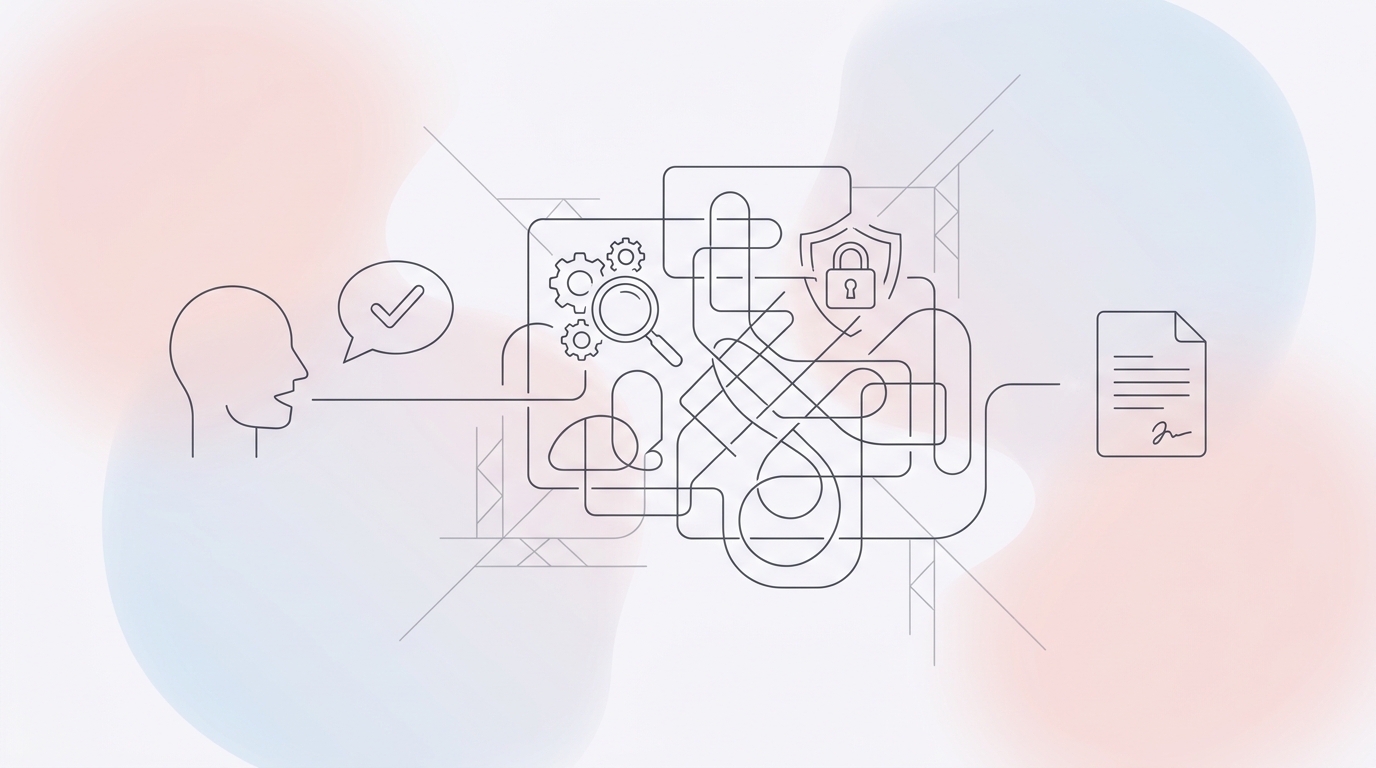
Here is the pattern most sales teams recognise but rarely plan for. The champion says yes. The technical evaluation goes well. The demo is strong. Then procurement sends over a 200-question security questionnaire, a vendor risk assessment, or a full RFP, and your team loses three weeks.
Those questionnaires are process requirements baked into how mid-market and enterprise buyers evaluate vendors. According to Vanta’s 2025 State of Trust Report, 78% of organisations increased the scope of their vendor risk assessments over the prior year. The number of questions is going up.
| Deal Stage | Typical Duration | What Causes Slippage |
|---|---|---|
| Discovery to demo | 1-2 weeks | Scheduling, stakeholder availability |
| Demo to technical eval | 1-3 weeks | Proof of concept, integration testing |
| Technical eval to procurement | 1-2 weeks | Budget approval, legal review |
| Procurement to close | 2-6 weeks | Security questionnaires, vendor risk, compliance docs |
That last row is where forecasts go to die. The team that clears the security review fastest holds the momentum they built in every prior stage. This is the problem ResponseHub was built for: an AI-powered knowledge base that auto-completes security questionnaires and RFP responses in minutes rather than days, so your deal does not sit in procurement limbo while your champion’s enthusiasm cools.
If you are a sales leader looking at your pipeline, count how many deals are sitting in that procurement stage right now. Then ask yourself who owns the process for getting them out.
Who Carries the Cost
For a 30-person SaaS company with a small sales team, the questionnaire is an annoyance. The CTO or a senior engineer gets pulled off product work for a day, maybe two, and the deal eventually closes. Painful but survivable.
Now consider the managed security service provider (MSSP) or virtual CISO practice that supports a dozen software clients. Each client’s deals generate questionnaires that end up on the same small team’s desk. There is no shared answer library across clients. Every response starts from scratch or from a half-remembered spreadsheet last updated six months ago. The work is recurring, unpaid, and invisible in the client’s sales metrics.
This is where the cost compounds. Industry estimates from Ponemon Institute put the average annual spend on completing third-party assessments at roughly $47,000 per organisation. For service providers doing this on behalf of multiple clients, multiply accordingly. If you are an MSSP or vCISO managing security questionnaires across multiple clients, it is worth examining how much of your team’s time goes to work that could be systematised.
Closing Techniques That Still Work
The original ABC playbook applied indiscriminate pressure where targeted precision was needed. Three closing approaches still hold up in enterprise sales:
The summary close. Restate the buyer’s stated goals, the agreed solution, and the implementation plan. “Based on our conversations, you need X, Y, and Z. We have agreed the approach is A. The next step is B. Does that match your understanding?” This works because it demonstrates listening rather than persuasion.
The next-step close. Rather than asking for the contract, ask for the next concrete action. “Can we schedule the security review kickoff for Tuesday?” Small commitments create momentum.
The direct ask. Sometimes you just ask. “Are you ready to move forward?” There is no manipulation in a straightforward question posed at the right moment, after the buyer has confirmed fit, budget, and authority.
What should be retired: artificial deadlines that the buyer knows are artificial, guilt-based appeals, and any variant of “What would it take to get you to sign today?” Those belong to the steak-knives era.
The Cost of Waiting
Always Be Closing shaped how an entire industry thought about sales. The phrase still shows up in training decks and motivational posters, but the behaviour it originally described, relentless pressure applied at every stage, actively damages enterprise deals.
The reframe is practical: ask more than you assert, guide buyers with perspective they cannot find on their own, and clear the obstacles between a verbal yes and a signed contract. That last point is the one most sales teams underinvest in. The security review, the compliance documentation, and the vendor risk assessment deserve the same operational attention you give your demo or your pricing strategy. They are the final mile of the deal, not an administrative afterthought.
Teams that treat procurement as a first-class part of the sales process, rather than someone else’s problem, close faster and more predictably.
Frequently Asked Questions
What does Always Be Closing mean?
Always Be Closing (ABC) is a sales philosophy that treats every buyer interaction as an opportunity to move toward a signed deal. It originated in high-pressure sales environments and was popularised by the 1992 film Glengarry Glen Ross. In modern enterprise sales, the phrase is often reframed to emphasise continuous value delivery rather than continuous pressure.
Does the ABC approach still work in B2B SaaS sales?
The pressure-based version does not. B2B buyers research independently and involve 6 to 10 stakeholders (Gartner), so high-pressure tactics get flagged as manipulation and lead to disqualification. The underlying principle of maintaining deal momentum through defined next steps remains effective when you apply it with discipline rather than aggression.
Why do enterprise deals stall after the buyer says yes?
Most late-stage stalls happen during procurement and security review, not during negotiation. Security questionnaires, vendor risk assessments, and compliance documentation can add 2 to 6 weeks to a deal. Teams that prepare these materials in advance or use automation tools to accelerate responses close faster.
What closing techniques work best for enterprise software sales?
The summary close (restating agreed goals and next steps), the next-step close (asking for a specific small commitment), and the direct ask (“Are you ready to move forward?”) are consistently effective. They work because they demonstrate understanding rather than apply pressure. Artificial deadlines and guilt-based appeals should be retired.